Travel Guide: Malinalco
Malinalco Travel Guide: Things to Do, Attractions & Visitor Tips
Nestled in the mountains northwest of Cuernavaca, Malinalco is one of Mexico’s most charming and fascinating Pueblo Mágicos. Known for its unique Aztec archaeological site, colourful streets, vibrant markets and relaxed atmosphere, it offers visitors a perfect blend of history, culture and natural beauty. In this travel guide, you’ll discover the best things to do in Malinalco, top attractions, practical travel tips and original photography to help you plan an unforgettable visit to one of central Mexico’s hidden gems.
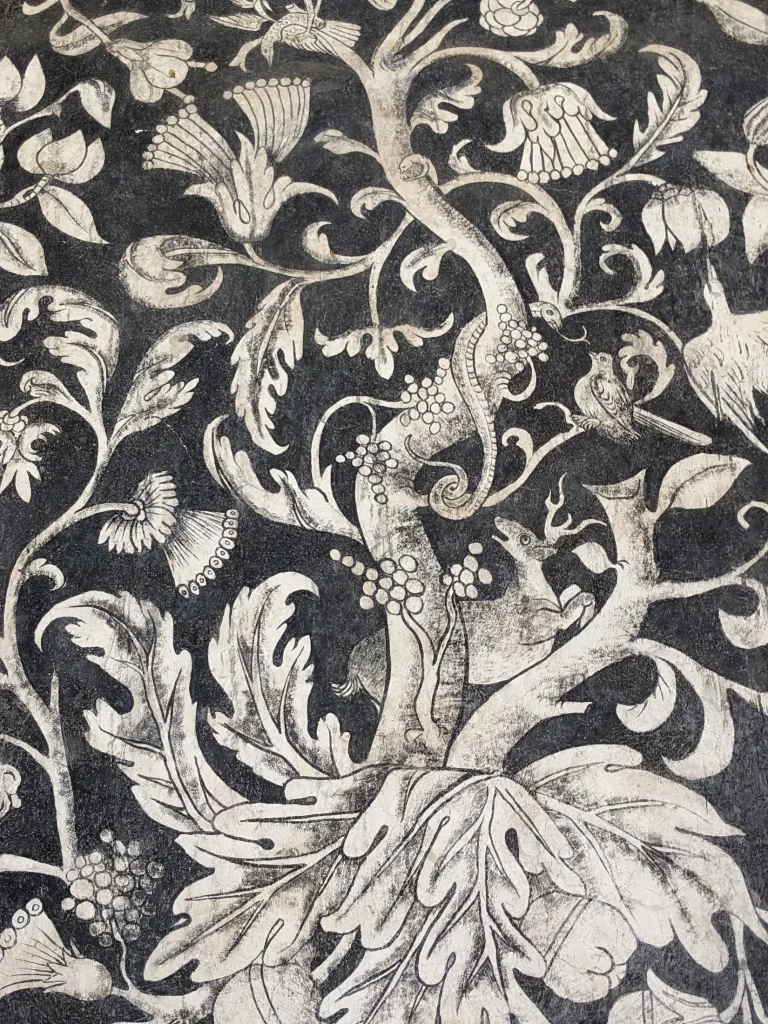
Magical San Salvador Augustinian Monastery
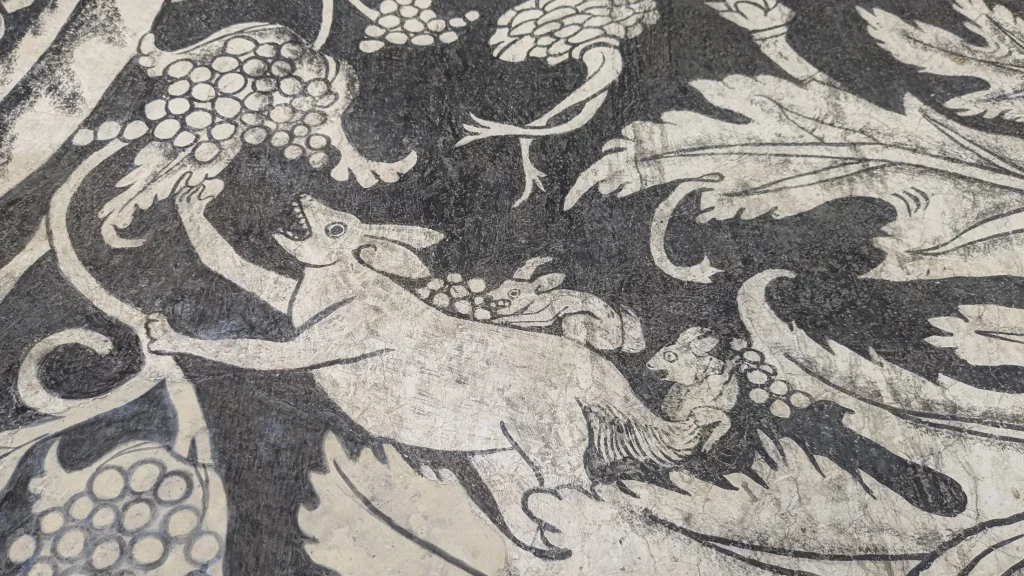
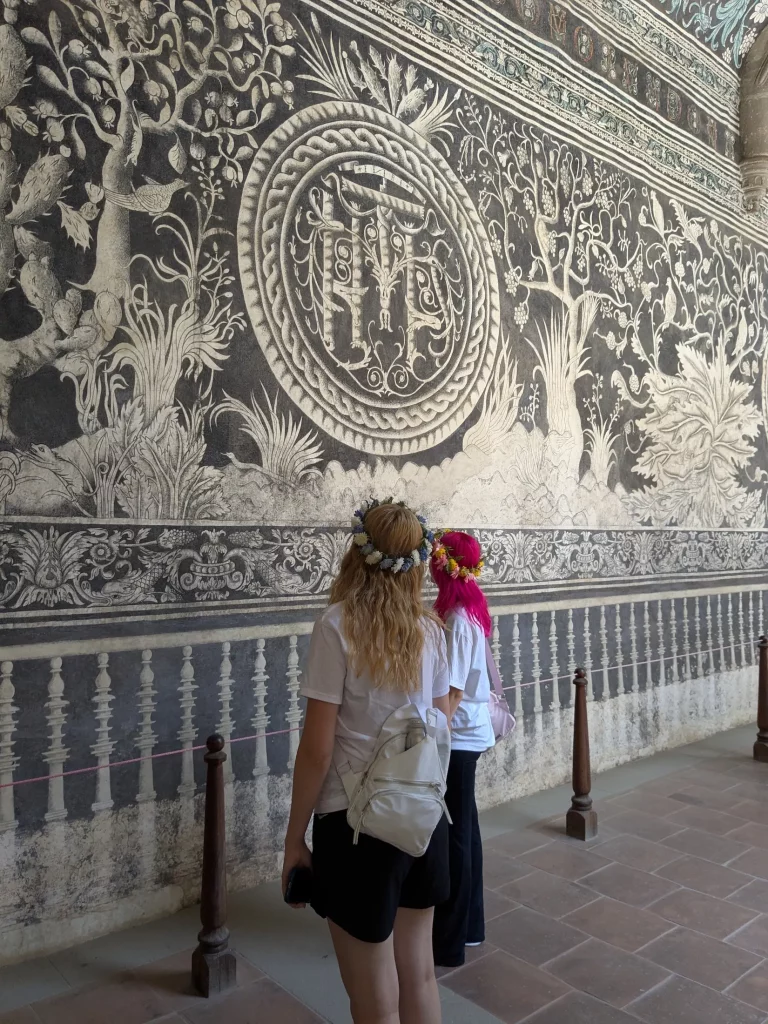
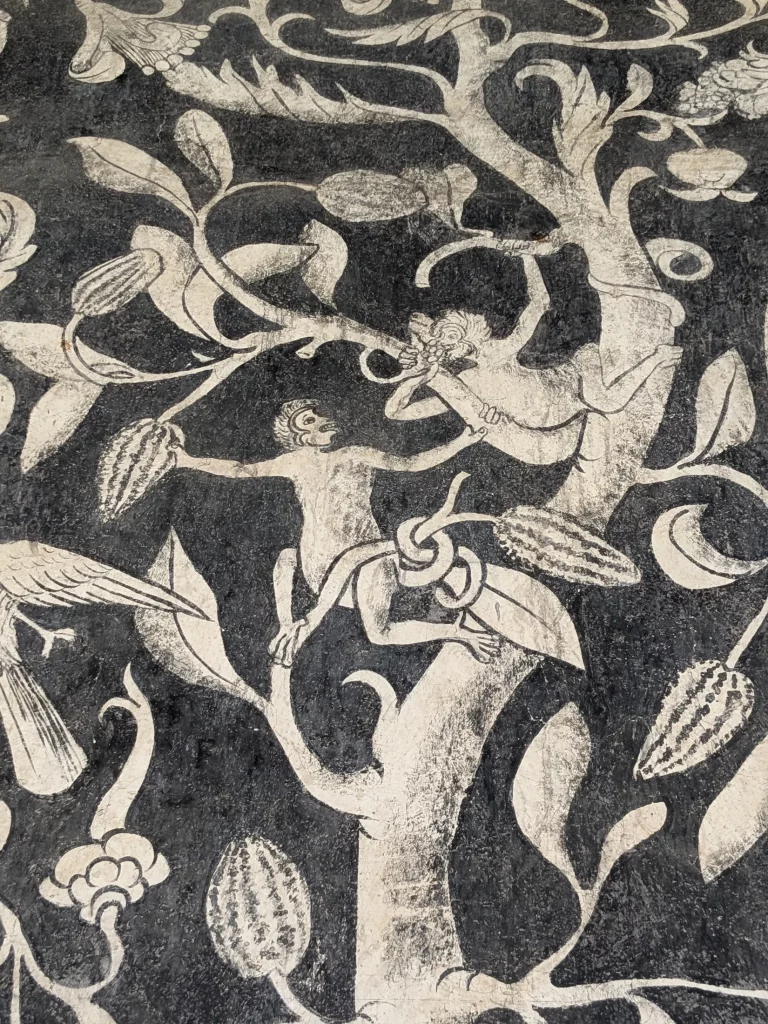
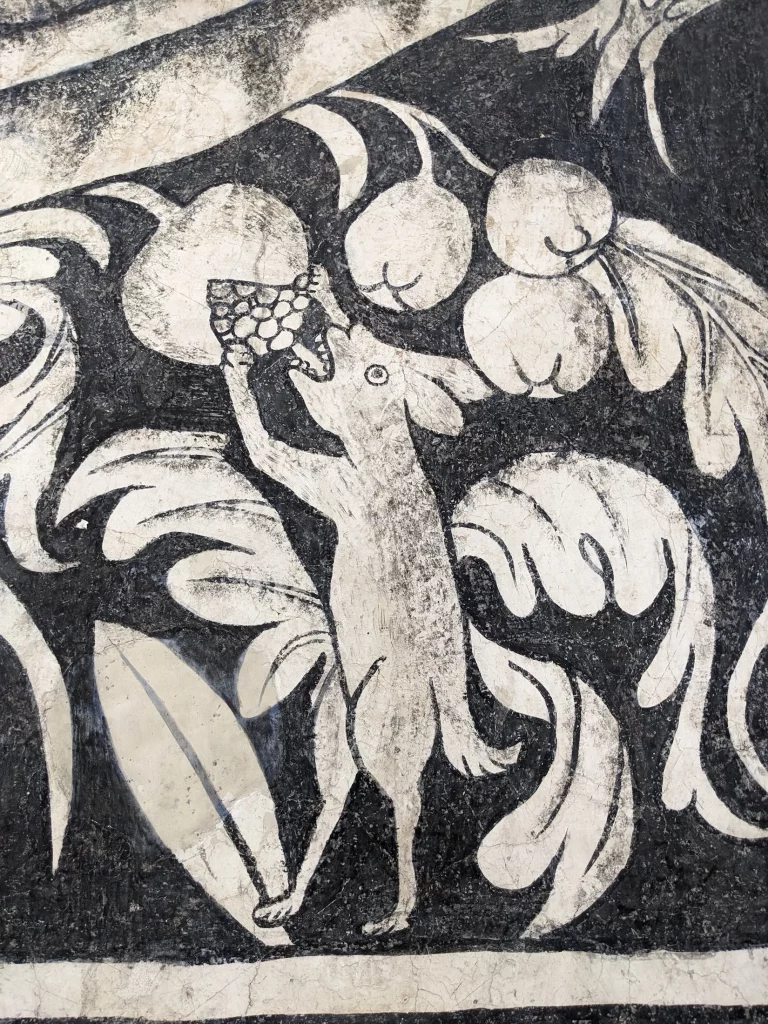
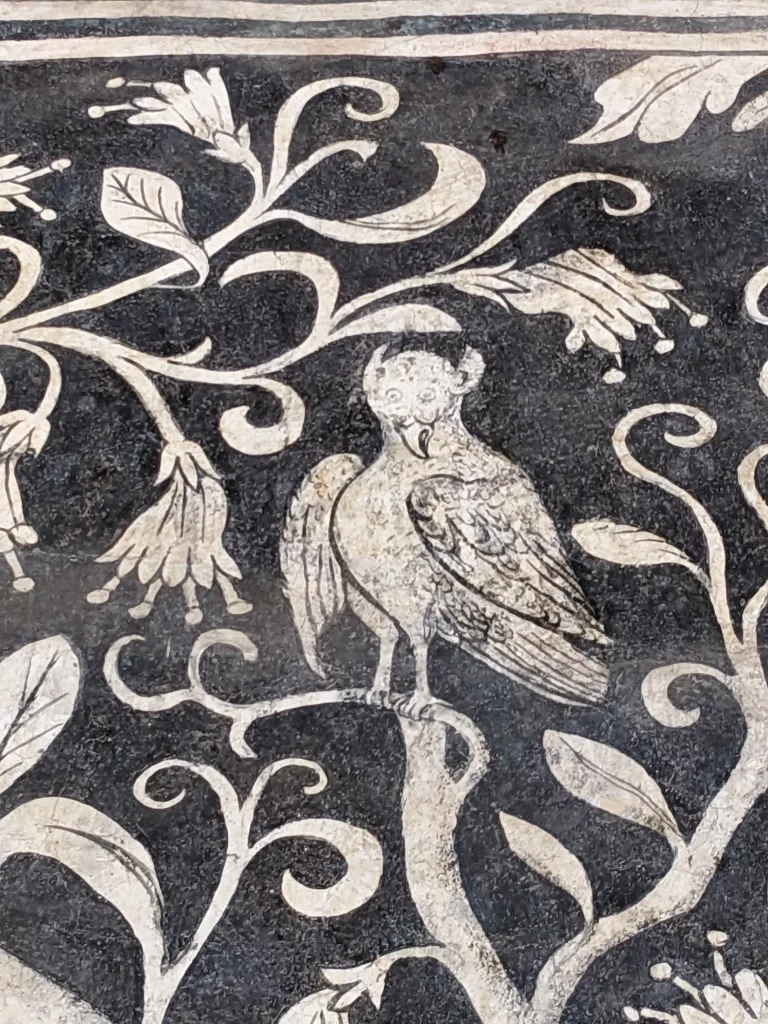
This is honestly one of the most incredible places we’ve ever been to in Mexico. And there is a lot of competition. The story goes like this: in the 16th Century a group of Augustinian friars arrived in Malinalco and asked local indigenous artisans to paint a huge fresco inside the monastery. Rather than painting typical Catholic scenes, the artists painted what they experienced in their daily life: a sumptuous panoply of wild animals, curling vines, dangling fruits and forbidden flowers.
But then one day in 1570, an important Catholic priest arrived in Malinalco from Spain to check on the progress of the Augustinian friars. Upon seeing the huge frescos, he was shocked. “This is not Catholicism!” he exclaimed. “Cover up this heresy!”. And for 400 years the fantastical, wondrous, magical garden of Malinalco was lost under layers and layers of thick whitewash.
Finally, in 1974, while a group of labourers were doing some renovations on the monastery, the magical, forbidden frescos were rediscovered by accident.
Today, the frescos make up part of a UNESCO world heritage site and, since being restored, they can now be once again admired in all their original glory. An absolute must-see when you are in Malinalco.
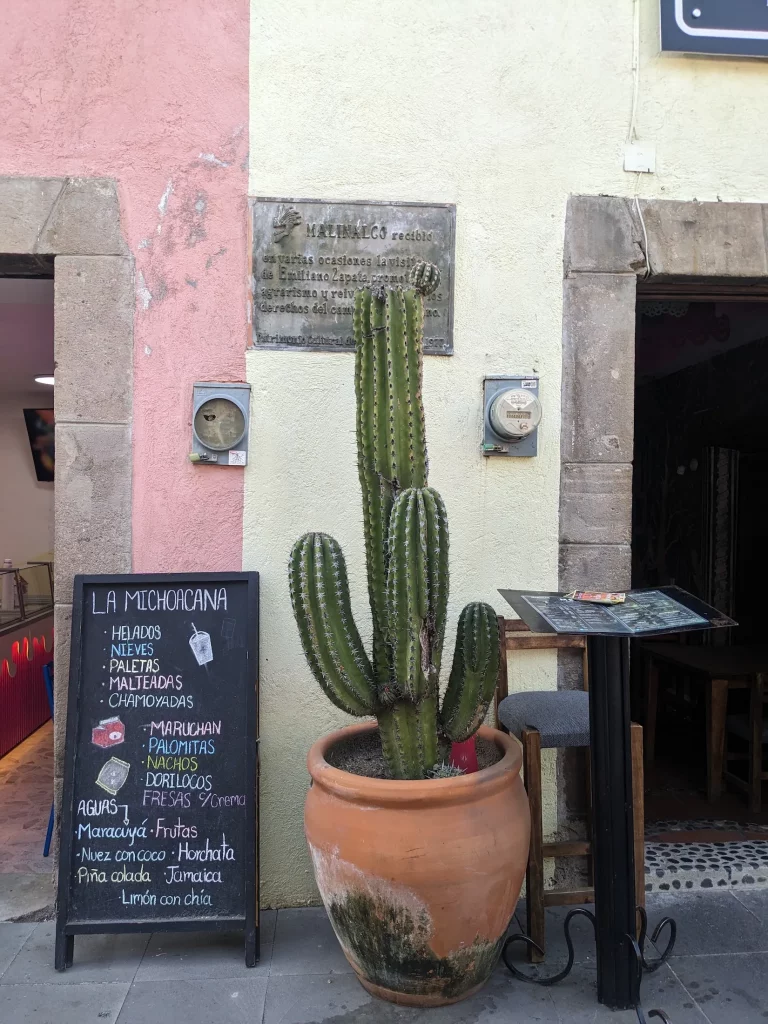
Colonial-Era Architecture
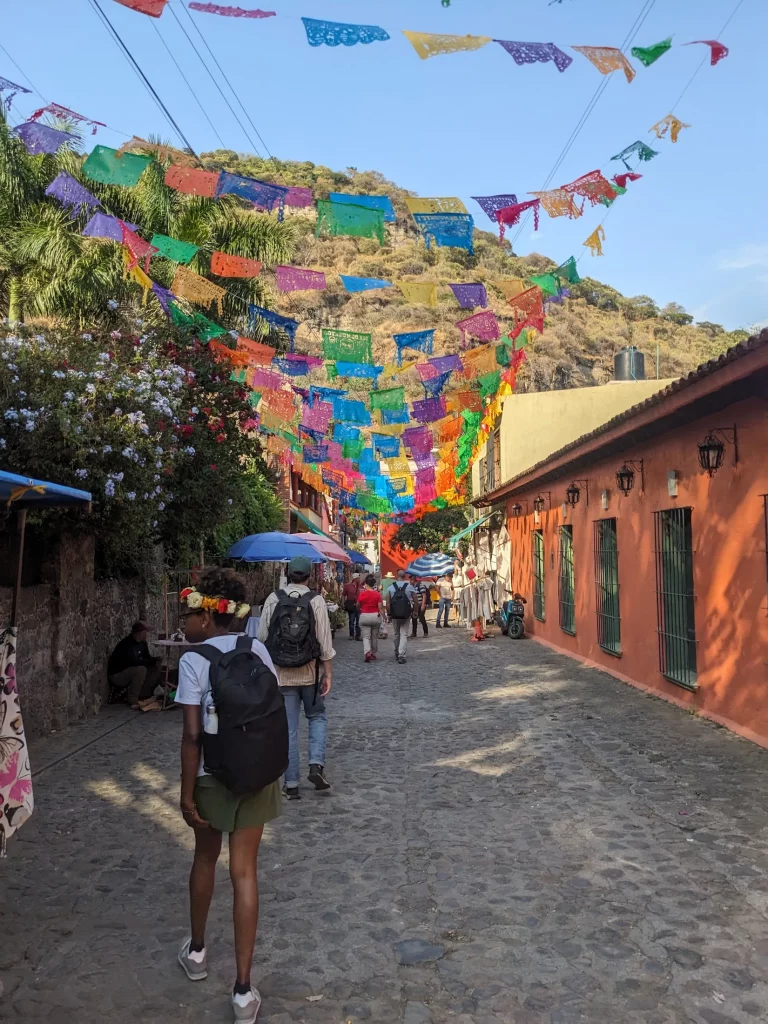
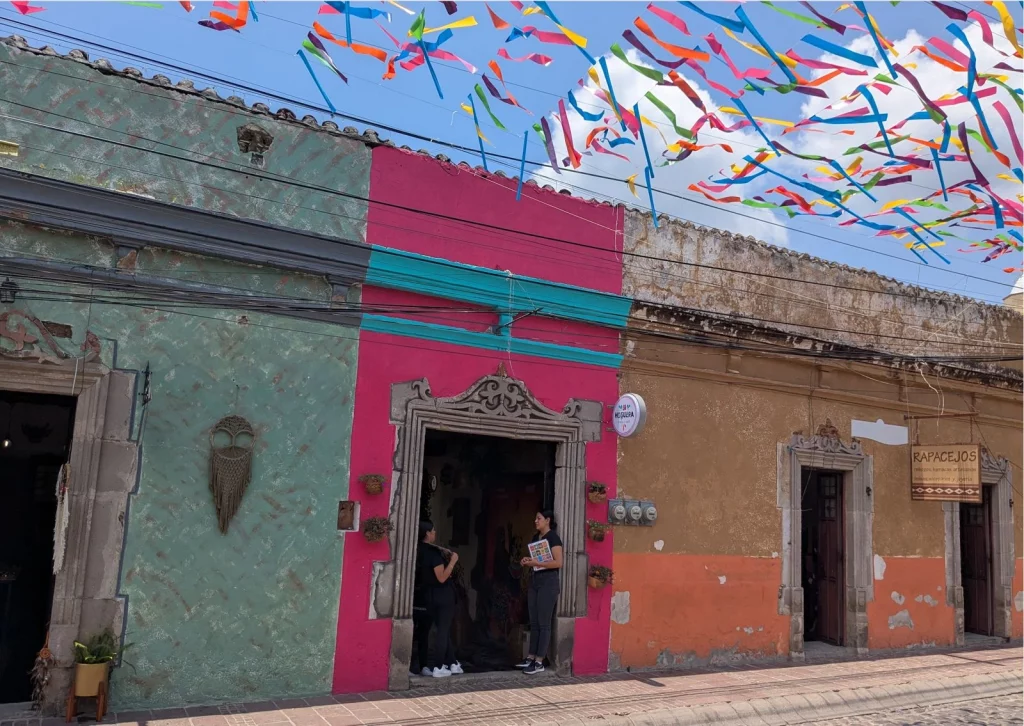
Malinalco’s colonial-era centre is one of the most colorful places in Mexico. The traditional stone houses are painted in vibrant colors, the centuries-old terracotta roofs add mellow earthy tones; fruit trees, Jacarandas and “bugambilia” flowers dangle over every wall, and, to top it off, many of the cobblestoned street of the town centre are decorated with hanging layers of shimmering “papel picada” bunting flags. A real Mexican explosion of color! The town is full of artisan boutiques, pottery workshops, jewellery stores and galleries, giveing the centre a delectably vibrant vibe.
Cuauhcalli: A Unique Aztec Temple
Perched high above the town amongst the trees, Malinalco’s archaeological site is completely unique, not just in Mexico but in the world. Unlike all other Aztec structures, the Cuauhcalli Temple of Malinalco was not built: it was carved directly into solid rock. Even the life-size jaguars that guard the steep ceremonial steps of the temple were chiseled directly into the raw cliff-face of the mountain. There are very few ancient monuments like this anywhere else on the planet (one of the only others is the “lost city” of Petra in Jordan).
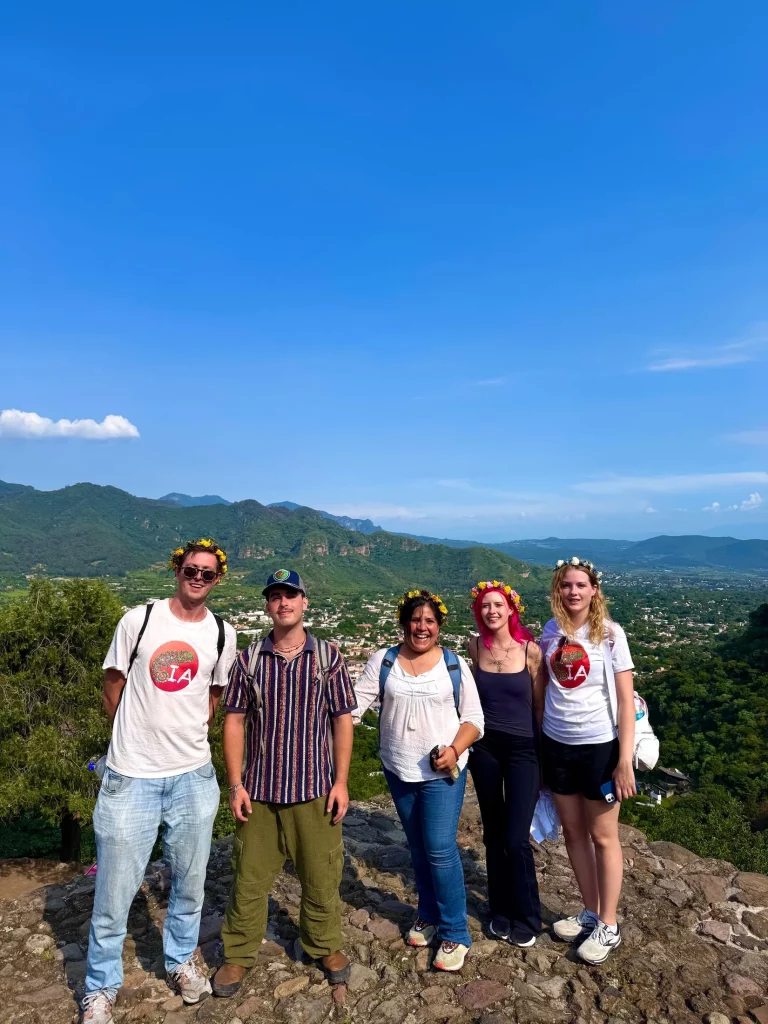
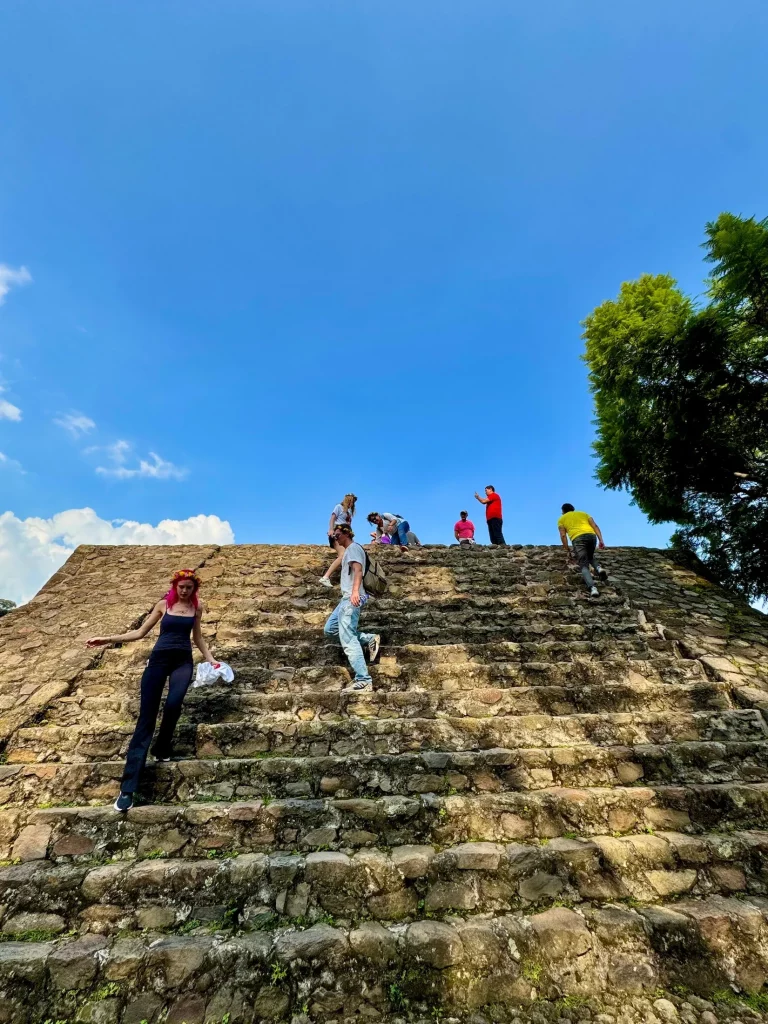
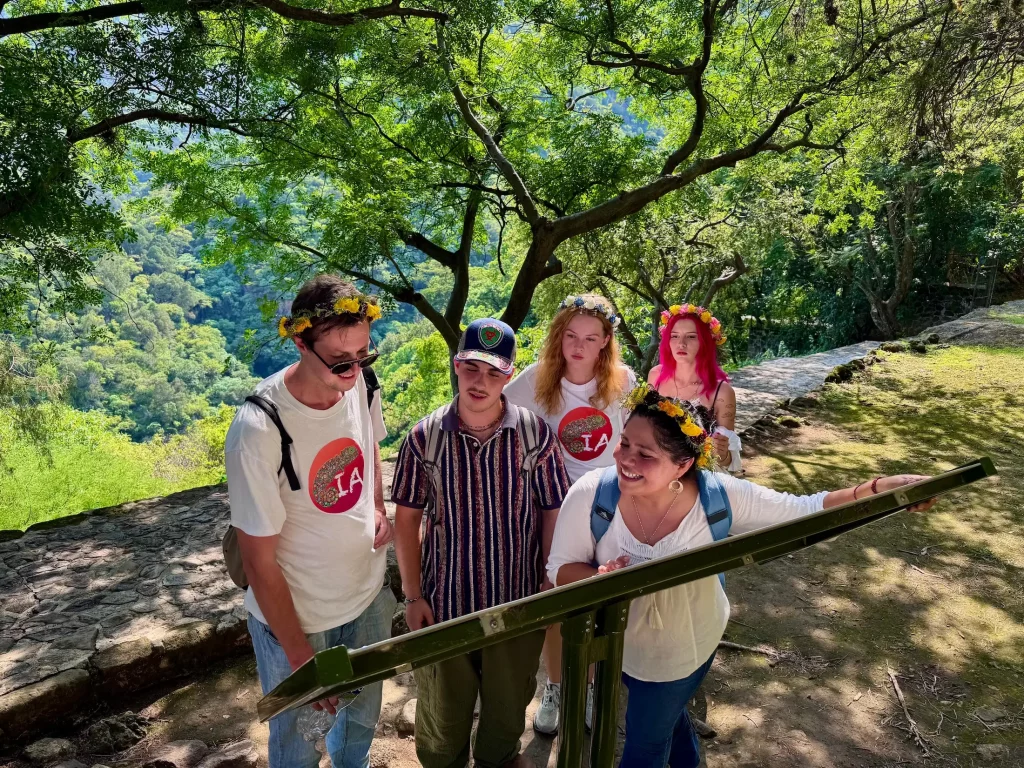
Aside from the Cuauhcalli temple, there is also a traditionally-built Aztec pyramid, made out of local volcanic-stone, which towers high above the valley. The walk up there is strenuous and it can often be hot and humid, so we recommend walking up the 426 stairs to the archeological site either in the morning or the evening, rather than at midday, if you can. That said, there are many ancient trees providing shade and many viewpoints to take a break on your way up, so even during the hottest part of the day it is still a spectacular and rewarding walk. Recently the Mexican government also added some information-boards at several key locations along the path too, so, providing you speak some Spanish, you can read about the region’s rich diversity of plants and animals – as well as its history – while you pause for a moment to rest and get your breath back.
Traditional "Tianguis" Market
Malinalco’s traditional “tianguis” market is always a vibrant sensory experience. Located right in the town centre, we often eat lunch here rather than in one of Malinalco’s more traditional restaurants because the tortillas are always made fresh in the moment and the tacos always smell delicious as we walk past. You can find a wide variety of “artesanías” (souveneers) here, as well as several species of edible insect, such as Mexico’s famous chapulines (grasshoppers) and the less-famous xumiles (stink bugs), which are worth trying if you are brave enough!
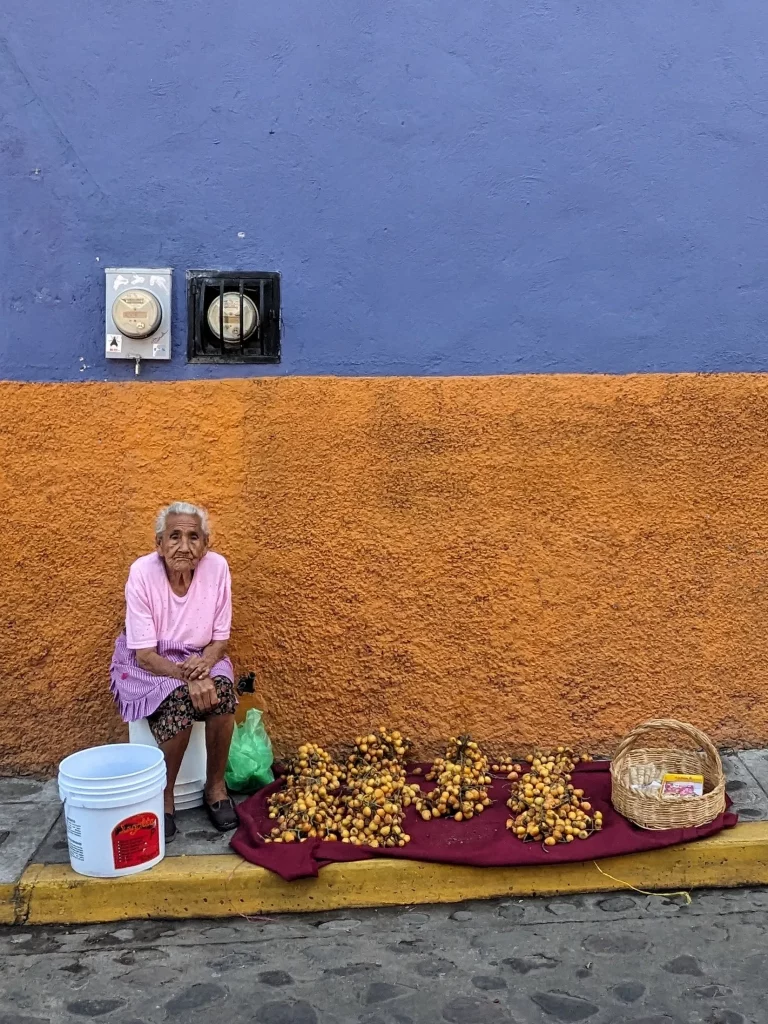
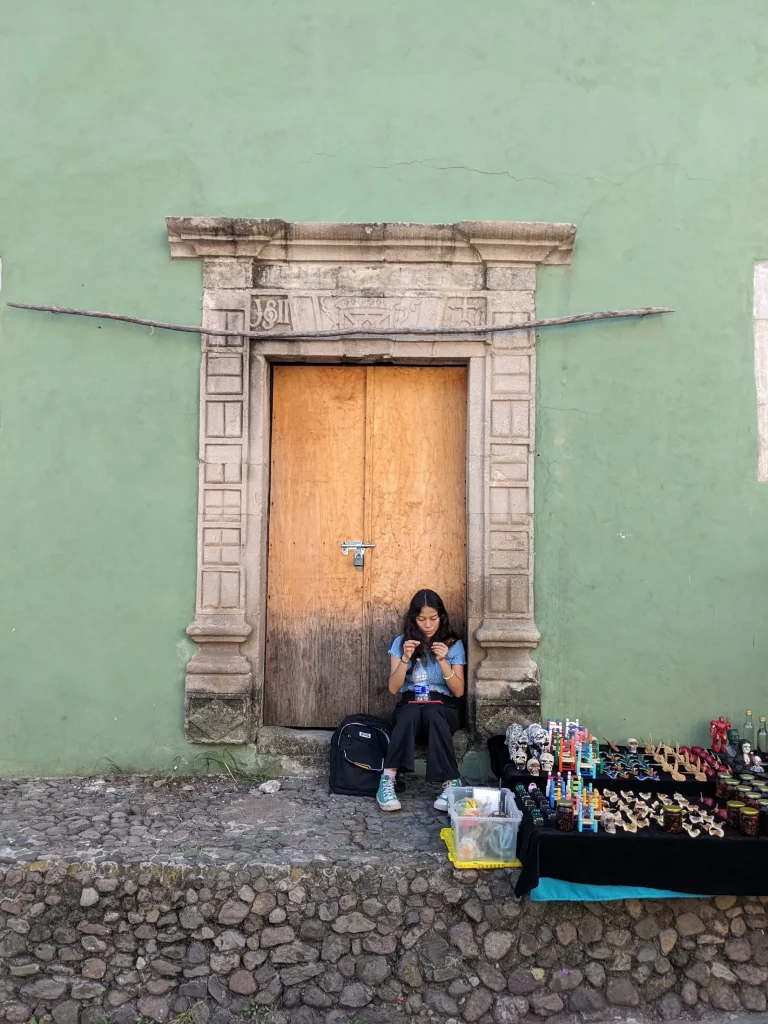
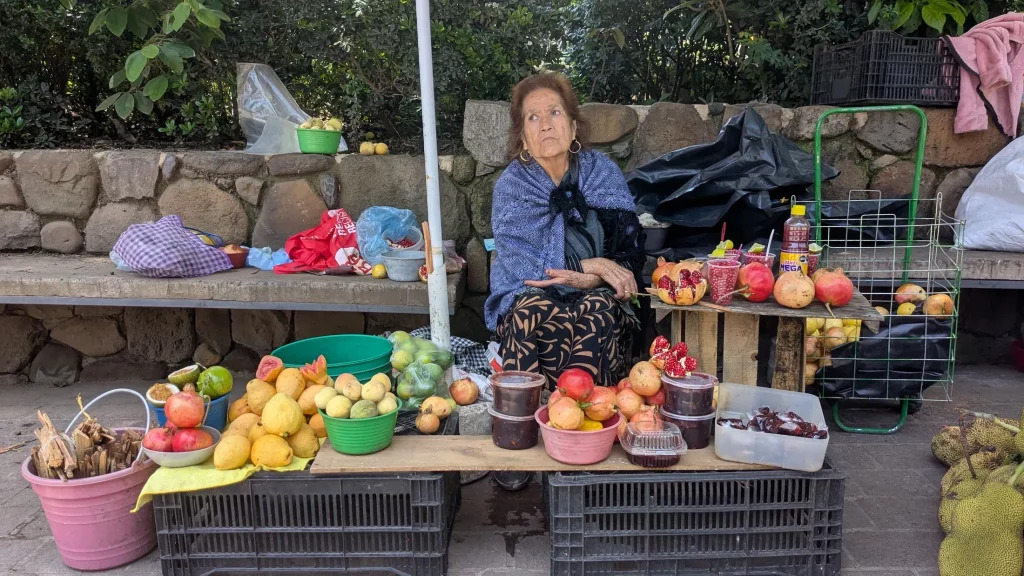
Malinalco is also a central trading hub for many nearby villages so you will often find a wide variety seasonal fruits and vegetables being sold informally on the streets, brought fresh from the gardens and “huertas” of local people who come into Malinalco daily to sell their produce. In the photos above you can see local people selling locally-grown “granada” (pomegranite), “guayaba” (guava) and maracuyá (passion fruit), as well as branches laden with the lesser-known “níspero” (loquat). These photos were taken in April and August though. One thing that we absolutely love about Mexico is that if you visit Malinalco in a different month you are sure to find a completely different selection of seasonal fruits and vegetables being sold – all equally delicious, and many equally unusual. The diversity and abundance of this region of Mexico really is astonishing.
The Hidden "Capilla de San Nicolás"
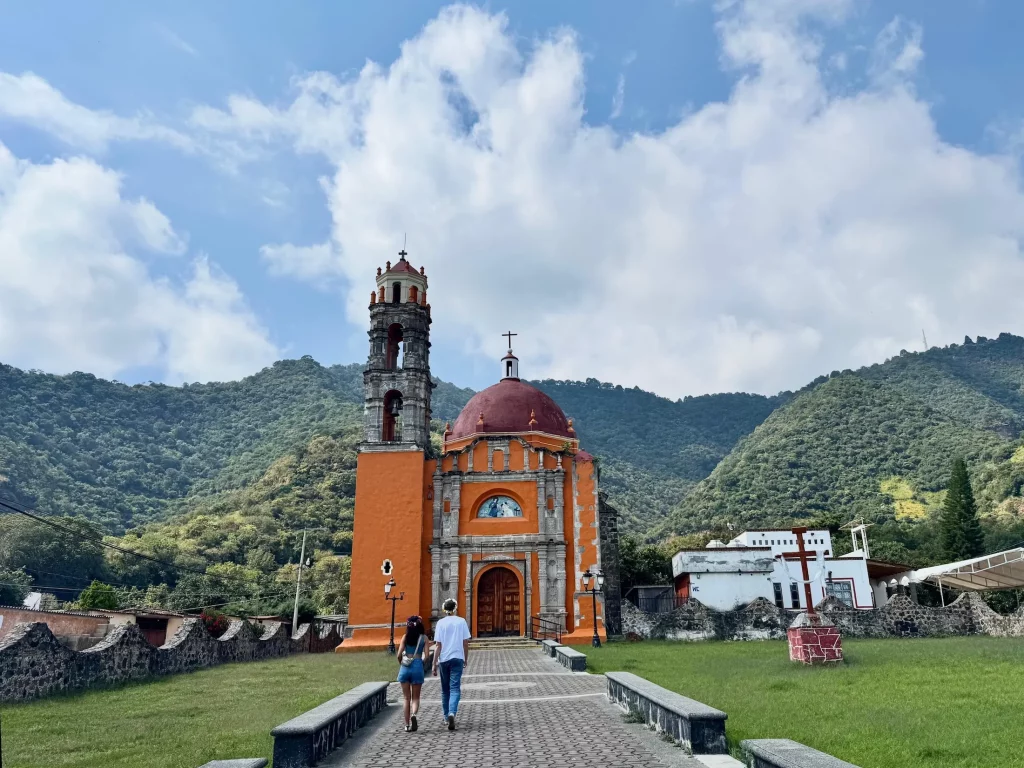
This little “capilla” (chapel) in the nearby hamlet of San Nicolás is a true hidden gem of Malinalco. Despite only being a ten minute drive from Malinalco town centre, this stunning tiny church is completely off the tourist trail. I have never seen another foreigner here so it still has that 100% authentic Mexican small-town charm. It is also one of the oldest churches in Mexico, built in the mid-1500s by Augustinian monks. The bright burnt-orange colour of the facade also contrasts uniquely with the deep shades of green of the wild hills and valleys behind, making this hidden church much more visually striking than any of the more touristic churches towards the centre of town.
Vibrant Street Art
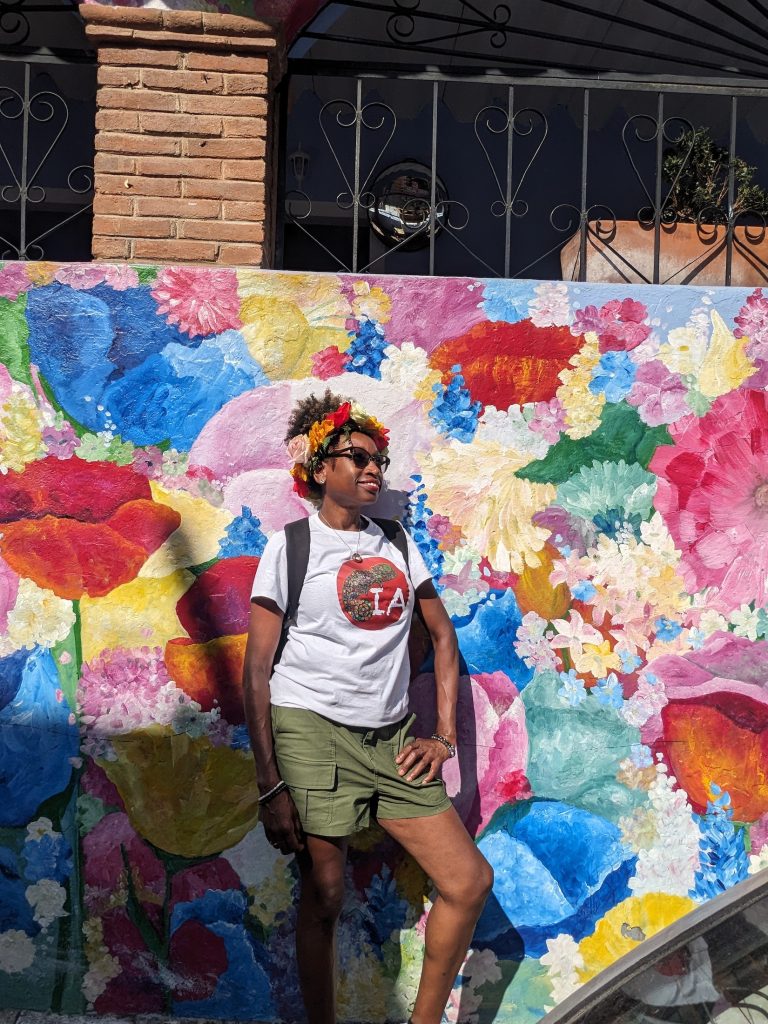
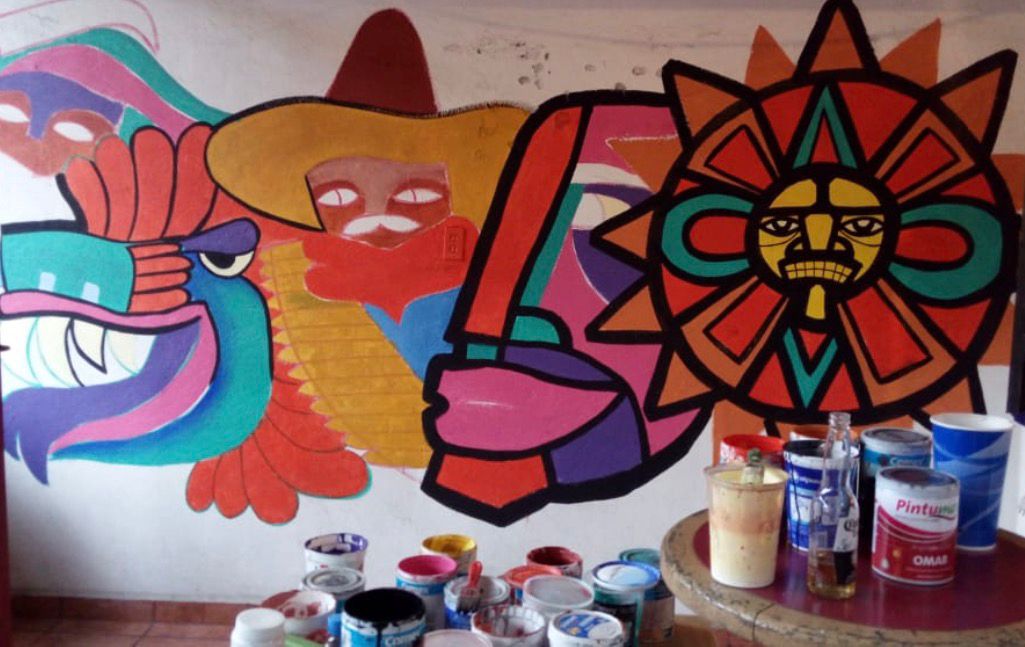
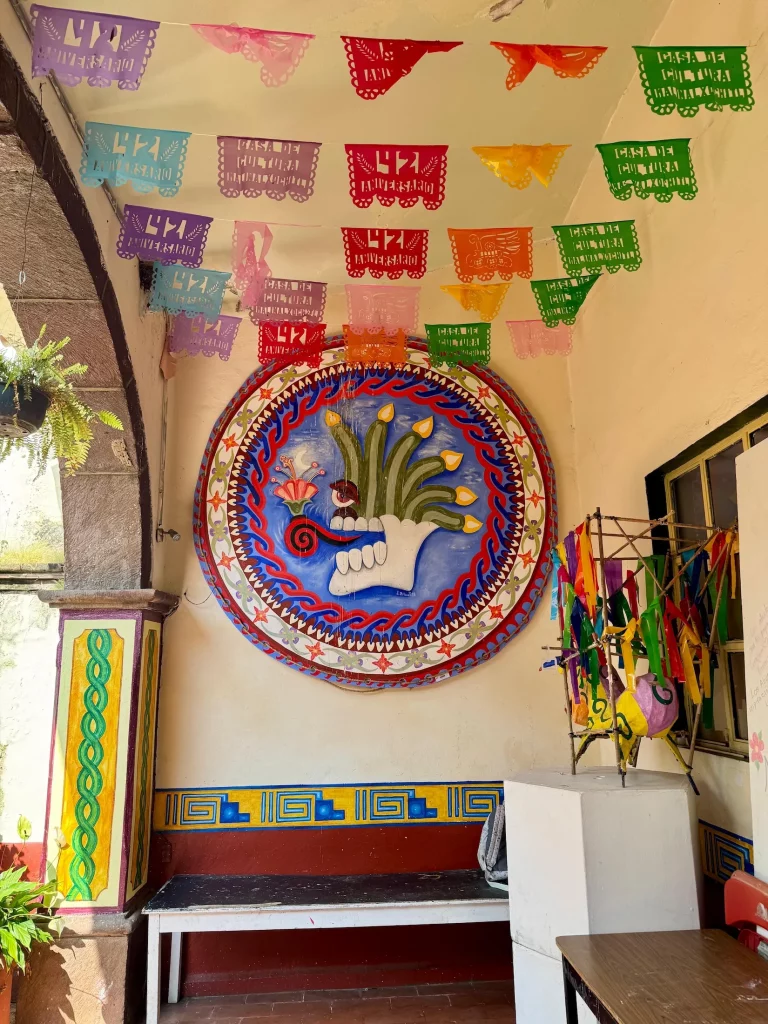
Like many towns in Mexico, especially “Pueblos Mágicos”, Malinalco is wonderfully colorful. In every corner all over town, wherever you look, there are vibrant murals and paintings, some done with spraypaints, others with brushes. One thing that we’ve noticed when we’ve visited is that lots of the local street art seems to be inspired by the rich Aztec history of the Malinalco region, with many of the murals depicting Aztec iconography such as the prehispanic gods Quetzalcoatl and Huitzilopochtli, or the famous circular Aztec “Calendar”, like in the photo below.