Planning on spending Day of the Dead in Cuernavaca, Ocotepec or Tepoztlán? This guide will show you how to make the most of those days if you’re here.
But before we tell you where to go, let us take you back to November 1, 2022. The pandemic is still ongoing, and we are unsure whether Day of the Dead will be happening at all. It had not been celebrated publicly in Mexico in 2020, and celebrations were still restricted in 2021. We remember the previous two years: cemeteries were closed, parades were practically non-existent, and public altars were discouraged.
So we ask a Mexican friend:
“Is there anything happening this year for Day of the Dead?”
“Did you try Ocotepec?” he says.
“Ocotepec?”
At this point, we knew remarkably little about the small community to the north of Cuernavaca. We knew it was one of Cuernavaca’s traditional pueblos originarios, with a strong community identity stretching back centuries. We had heard of its long history of resistance and its fiercely proud traditions. But we knew very little else.
When we arrived we stopped in a bar and ordered pulques: the slightly sour-tasting fermented alcoholic drink made from maguey agave. The bar was decorated with orange cempasúchil flowers and orange papel picado paper bunting. Chavela Vargas was playing on the speakers. It was still light, so we spent an hour drinking and talking with the owner.
“It’s going to be quiet this year,” he said. “Lots of people are still nervous after the pandemic.”
As it got dark we ventured outside. As we approached the village centre we saw a trail of bright orange cempasúchil petals on the floor. We followed the petals as they became a wide bright path, lit intermittently with candles. In the darkness the trail of orange petals looked both ghostly and and magnificent. Following the path we walked through cobbled streets in the shimmering darkness until suddenly the petal-path veered off the road, through a gate, down a driveway and into a private house.
We followed.
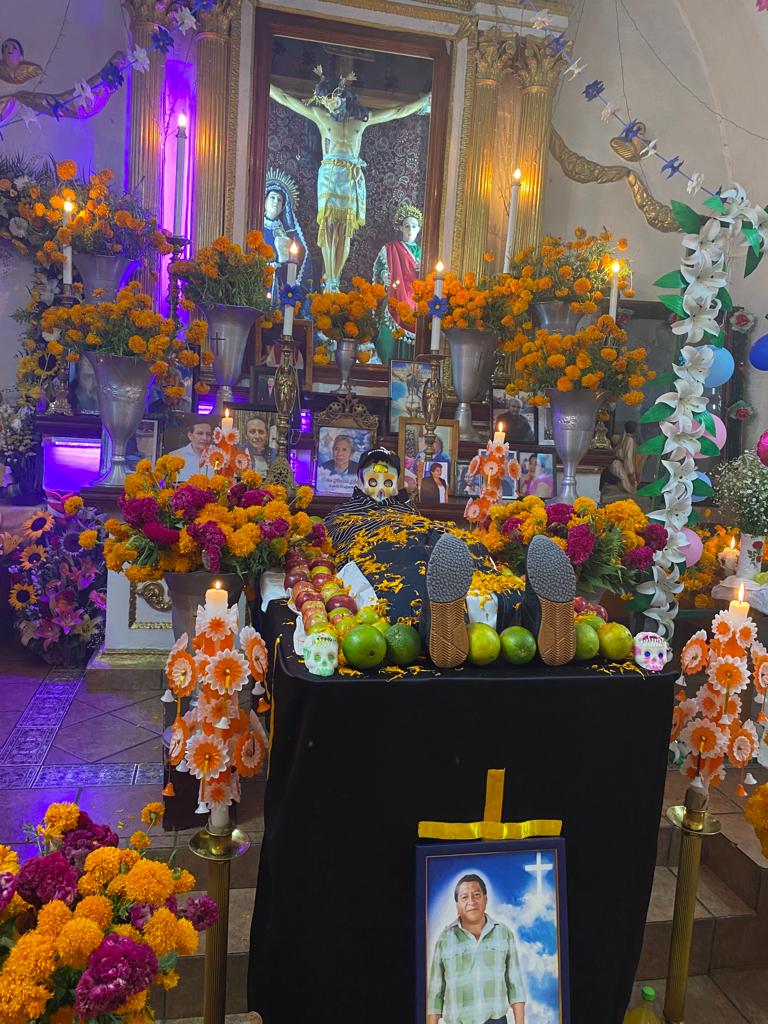
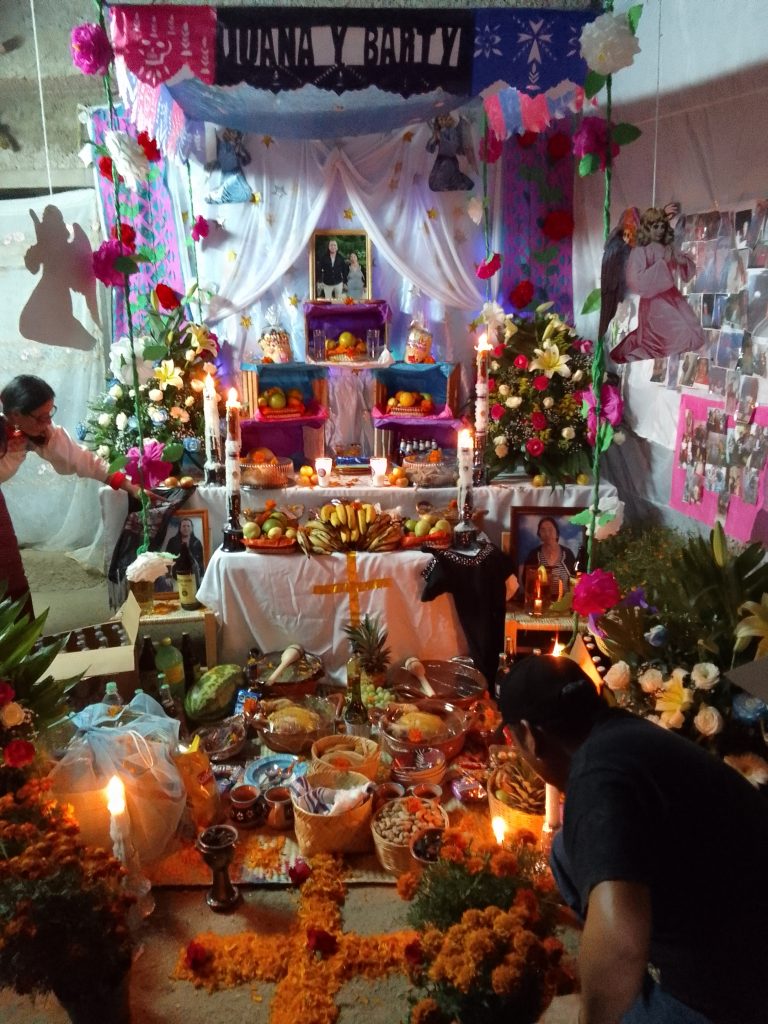
Inside was a spectacular Day of the Dead ofrenda (a homemade offering/altar in honor of a deceased person) overflowing with tropical fruit, drinks, plates of food, candles, flowers, framed black and white wedding photographs, pan de muerto cakes, orange petals and candy skulls. And in the middle, surrounded by this opulence, lay a full-size effigy of a deceased man, dressed in his clothes, wearing his cowboy boots and topped with his sombrero. His face was covered by a decorative skull mask.
This is the tradition of Ocotepec. When a family member has died during the preceding year, the family prepares an elaborate offering in their home, including a full-size representation of the deceased person. Visitors are welcome to enter and pay their respects, on the condition that they bring a wax candle to offer to the family as a sign of respect. In return, the family will often offer visitors a homemade tamal or a warm cup of homemade atole.
Throughout the village, orange cempasúchil pathways lit with candles weave through the streets. Elaborate ofrendas honour the dead. Neighbours pay their respects. It is a tradition that has survived centuries.
Years later, Ocotepec remains one of our favourite places to experience Day of the Dead in the Cuernavaca area. But it is not the only place worth visiting. From the traditional celebrations of Ocotepec to the cemeteries of Cuernavaca and the festivities of nearby Tepoztlán, there are plenty of ways to experience Day of the Dead here. In this guide, we’ll take you through what happens, where to go, and how to make the most of Day of the Dead in Cuernavaca, Ocotepec and Tepoztlán.
Cuernavaca City Center during Day of the Dead
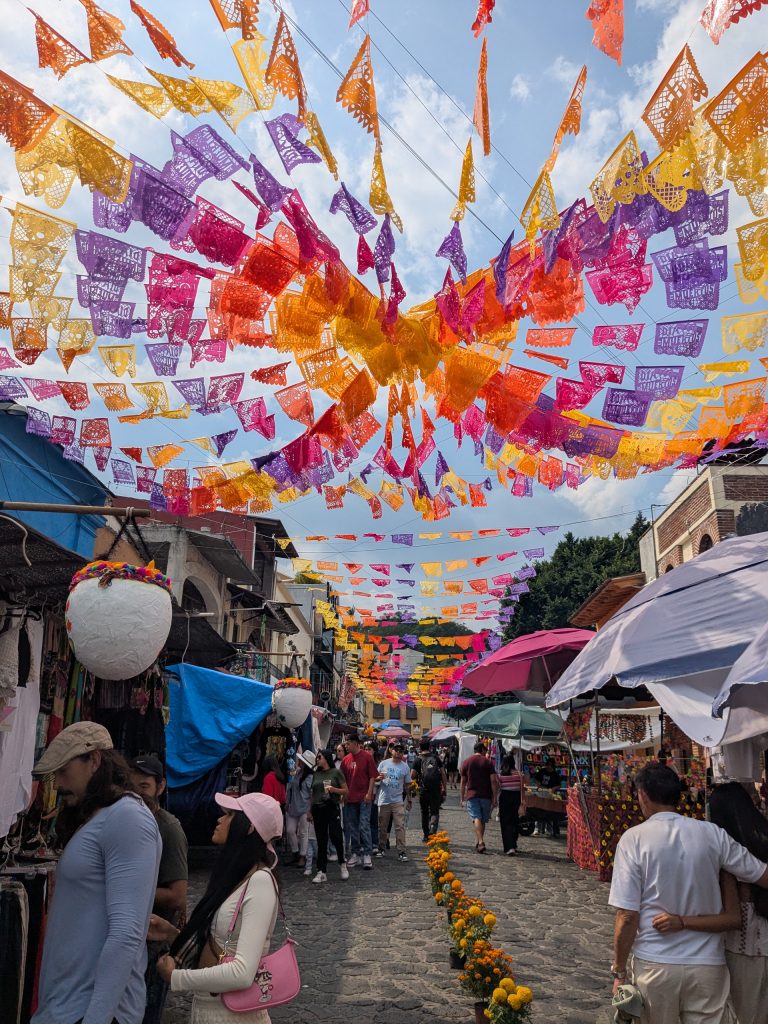
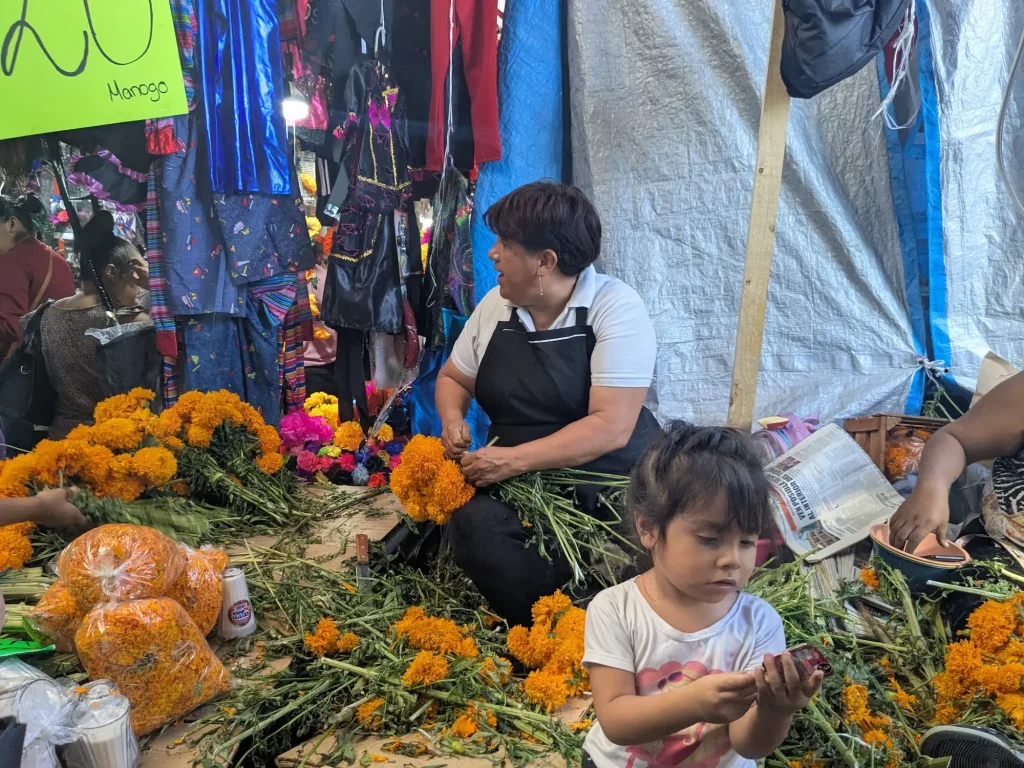
Like other towns and cities in Mexico, October is the month that everything becomes orange. Orange skulls decorate doorways, orange flowers are sold on rugs laid out on the pavements of the city center, orange papel picado bunting is looped around lamposts and woven above the streets between buildings. And at night, in the bars and restaurants, orange candles flicker from the windows. It is one of the most beautiful and magical times to be in Cuernavaca. There is the general sense that something is happening, that something is about to happen.
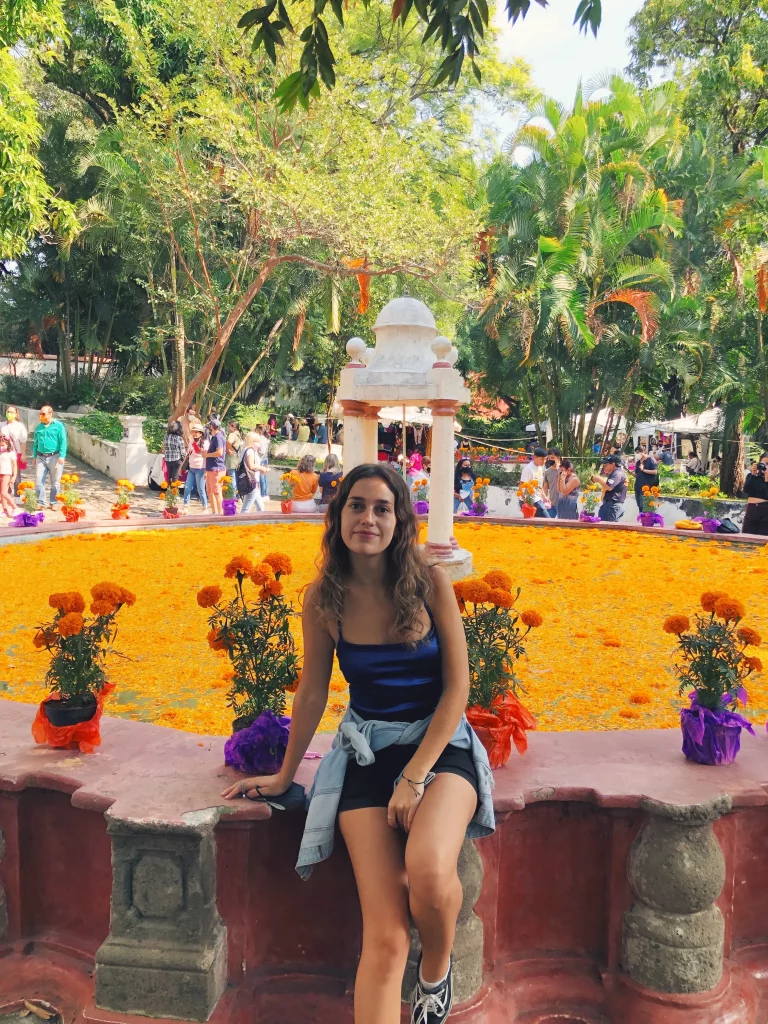
In the lead up to Day of the Dead we love to visit Jardin Borda. This is a museum, art gallery and botanical garden that always has a wonderful Day of the Dead exhibition. Last year they hosted a display of Day of the Dead ofrendas made by local school children. Sculptures hang suspended above 400 year old courtyards. Sometimes the decorative colonial-era fountains in the garden are full of cempasúchil flowers. In the galleries there are exhibitions of paintings and engravings featuring Catrins and Catrinas (Mexico’s famous anthropomorphic skeleton characters, dressed in the fashionable suits, dresses and ostrich-feathered hats of the 1920s). This old colonial house was once the summer residence of Maximiliano and Carlota – the short lived emperor and empress of the Second Mexican Empire. Draped in orange, the residence once again echoes with the ethereal lustre of its imperial glory.
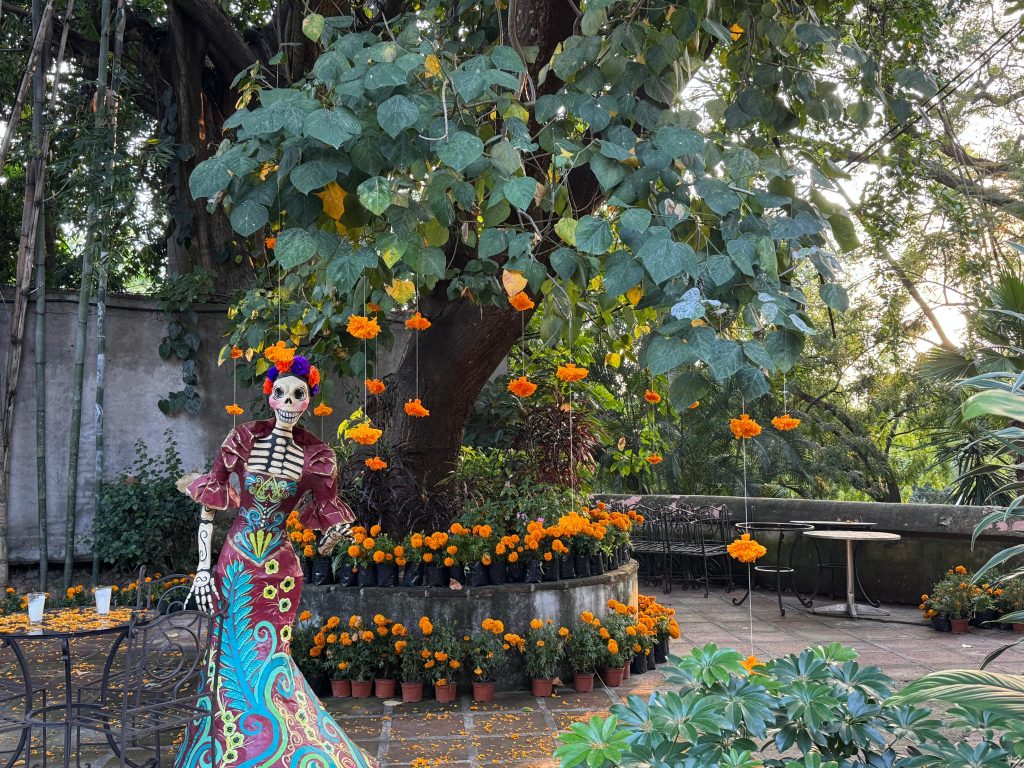
After Jardin Borda we like to visit Casona Spencer – the 16th Century mansion and courtyard opposite the cathedral that has been a museum, art gallery and cultural center since 2006. On Day of the Dead, Casona Spencer transforms into a magnificent tribute to Mexico’s Day of the Dead traditions, with its high-ceilinged rooms displaying intricate ofrendas, artworks and sculptures. Orange cempasúchil petals and candles cover every surface. In the courtyard at the back of the building artisans sell traditional foods and artworks. Some of the ofrendas are topical and tragic. Last year we spoke to a old woman in the gallery who had made an ofrenda in memory of her son who had been killed in the state of Guerrero the previous year. There was another offering in remembrance of the victims of LGBTQ+ violence in Mexico and elsewhere in Latin America.
Day of the Dead Parade in Cuernavaca
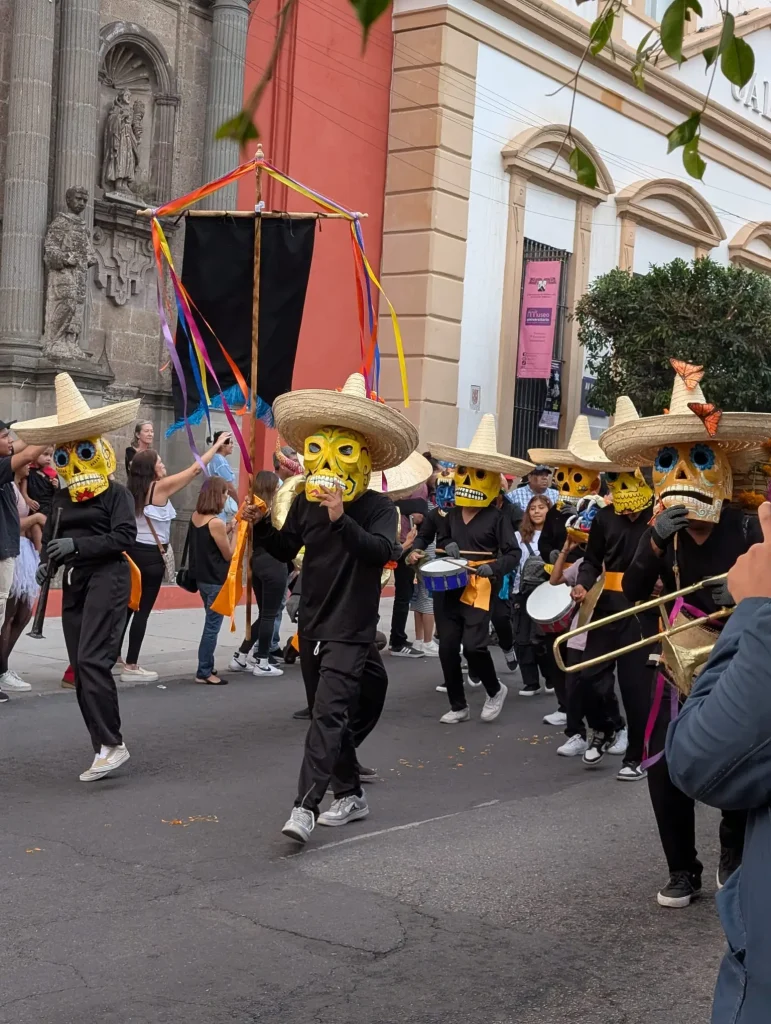
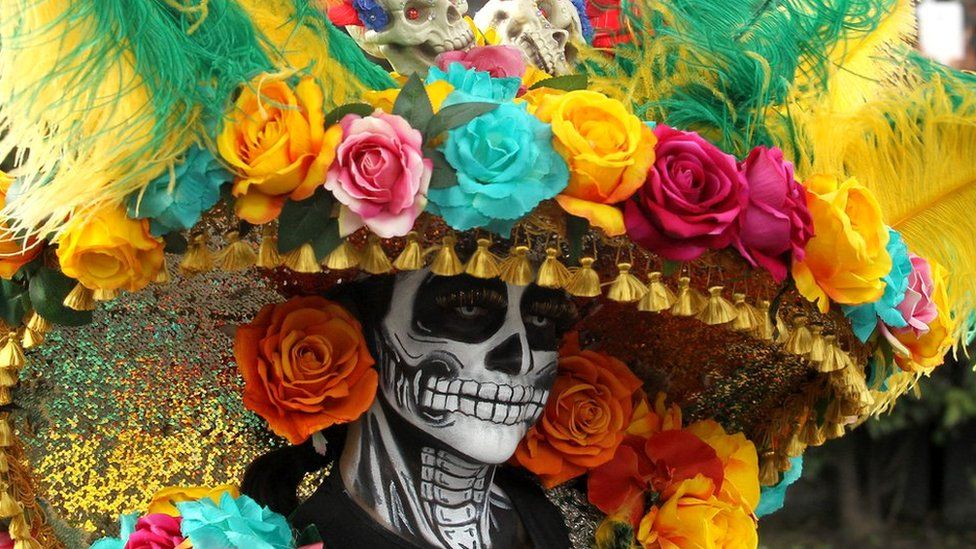
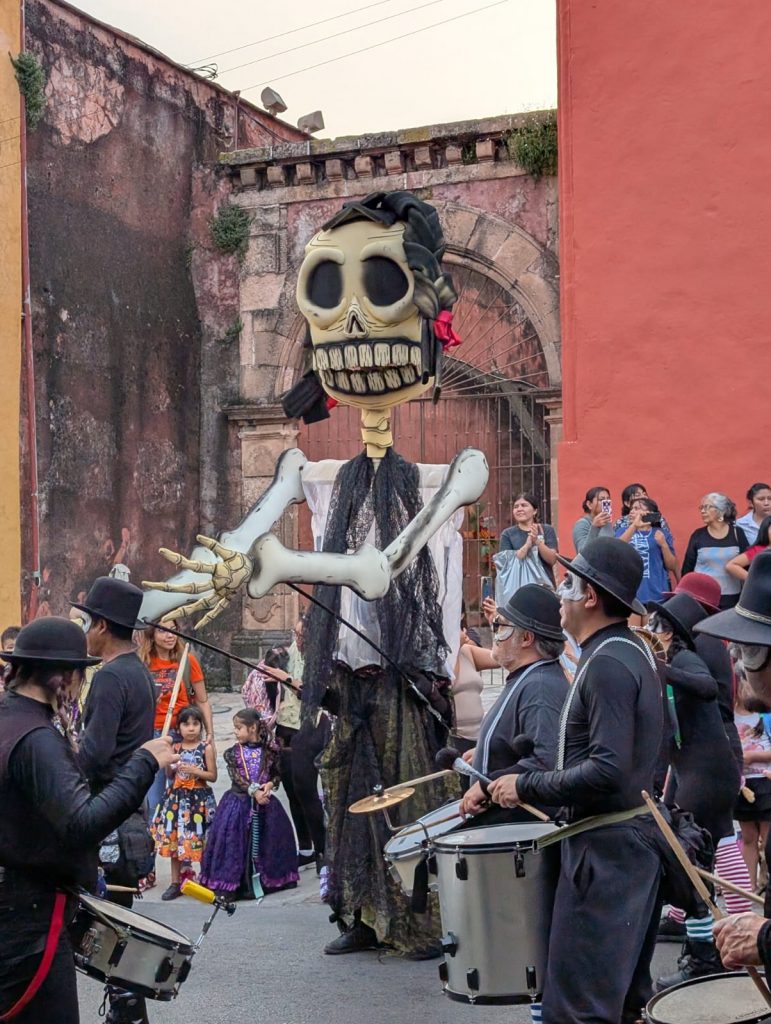
In the aftenoon of October 31st, the day before Day of the Dead, there is spectacular Day of the Dead parade in the center of Cuernavaca. Huge skeletal sculptures called mojigangas dance through the steets; alebrijes and other towering colorful characters of Mexican traditional folk-art follow them. Extravagantly costumed catrins and catrinas dance through the streets in choreographed routines; mariachi bands play. The parade has the wild anarchic feel of a huge carnival. It is an unmissable experience that captures the authentic essence of Mexico. We have been to many Day of the Dead parades in other cities in Mexico, including the parade in Mexico City, and this one is so much less touristic and more authentic.
The parade starts in the afternoon, usually around 4pm and finishes after dark, around 7pm. The transition from daytime to nighttime is also impressive. The intricate costumes and mojigangas are remarkable in the daytime, but at night – lit with flickering candles – they become spectral and otherworldly.
The route of the Cuernavaca day of the Dead parade has changed in the last few years. The parade used to start at the Calvario, to the north of the historical centre, and go down Avenida Morelos to the cathedral, but now (since 2025) it has started further down Avenida Morelos to the south of the cathedral, near the Mega Soriana, and now moves up Avenida Morelos to the cathedral. For the best view we would recommend standing on the corner of Avenida Morelos and Miguel Hidalgo. The parade is illuminated perfectly at this location and you also get Jardín Borda and/or the Parroquía de Nuestra Señora de Guadalupe as the background to your photos.
Ocotepec – One of the Most Unique and Authentic Day of the Dead Experiences in Mexico
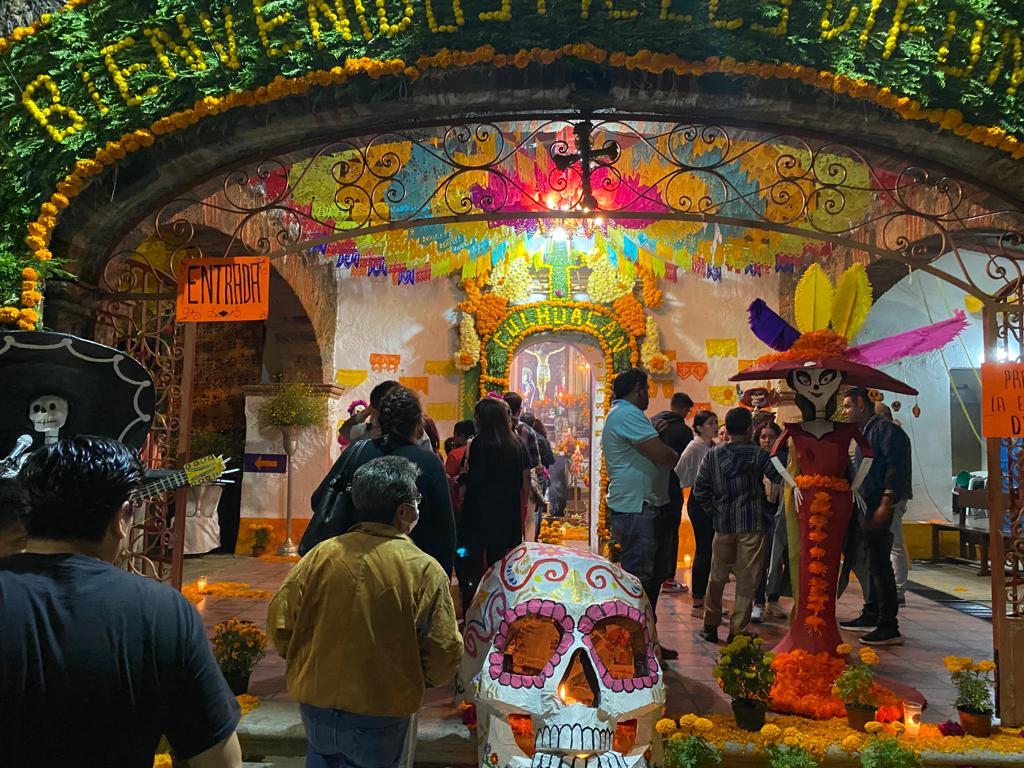
We have already described our first experience of Ocotepec back in 2022. Since then we have visited Day of the Dead celebrations in many other Mexican cities all accross the Republic but still nothing compares to Ocotepec. The celebration remains one of the most vibrant and authentic celebrations anywhere in Mexico. When we visit Ocotepec as part of our Iguana Abroad Spanish immersion courses we like to get there early, around 4pm, to check out the beautiful decorations in the local church and the main village square. We then go to buy wax candles that we can use as offerings when we go to visit the ofrendas later in the evening. If necessary we also go to buy mugs because the families who have the ofrendas will often offer you a cup of warm atole and it is better to arrive with your own mug rather than expecting ther family to give you a disposable cup that costs the family money and is bad for the environment. If you are forward thinking you can also bring a mug from home before you arrive too.
Once night falls, we like to wander around the town looking for ofrendas. As the ofrendas are not tourist attractions but rather real tributes to deceased members of the community, the location of these ofrendas changes every year. And of course, you need to pay the utmost respect as you enter each house. The family members of the deceased person are welcoming you into their home and you will always meet them as you pass by the ofrenda (often the widow or the widower of the deceased person is sat on a chair next to the ofrenda), so it is important to say a few words in Spanish to them to show your respect. Commenting on the beauty of the ofrenda and saying thank is the easiest way to do this.
As you hand them the candle say: “La ofrenda es muy bonita. Muchas gracias”.
This Day of the Dead tradition is one of the most authentic and intimate in Mexico. You are not going to a tourist attraction, you are being invited into someone’s house. It is a deeply personal and moving experience.
That said, it’s important to remember that concepts such as grief and death are different on Day of the Dead in Mexico compared to in other countries such as the USA or the UK. Day of the Dead in Mexico is not a sombre or melancholy event. It is a celebration of the deceased person’s life – a night when their spirit returns to earth to eat, drink and coexist with the living. That’s why the family surrounds the life-sized effigies of the deceased that you see in Ocotepec with their favorite foods, drinks, photographs and possessions. It’s why the orange cempasúchil petals are laid out on the street like a pathway – to guide the spirits’ path back to earth. It’s so the soul of the deceased person can come back to enjoy one more evening.
And one thing that we love about the ofrendas in Mexico, and in particular Ocotepec/Cuernavaca, is that the deceased person’s earthly enjoyments are not whitewashed or airbrushed by the family. If the deceased person loved cigarettes, beer, tacos, techno music, Hershey’s chocolate bars, mezcal (or anything else) then these are the objects that are placed around the effigy on the ofrenda. The the items that make up the ofrenda are for the enjoyment of the soul of the deceased person – not for anyone else.
Tepoztlán – a more touristic day of the dead experience than Cuernavaca but still interesting (if you get off the beaten track)
Tepoztlán is always beautiful. We love visiting there. And during Day of the Dead it is especially beautiful. Like Cuernavaca, orange colors are ubiquitous across the town: orange papel picado bunting, orange decorations, orange cempasúchil flowers.
Sure – it is more touristic than Cuernavaca, which means more crowds and slightly less authenticity in the town center than Cuernavaca city centre. But Tepoztlán is touristic for a good reason. It is a genuinely beautiful town to spend the weekend – whether during Day of the Dead, or during any other time of year.
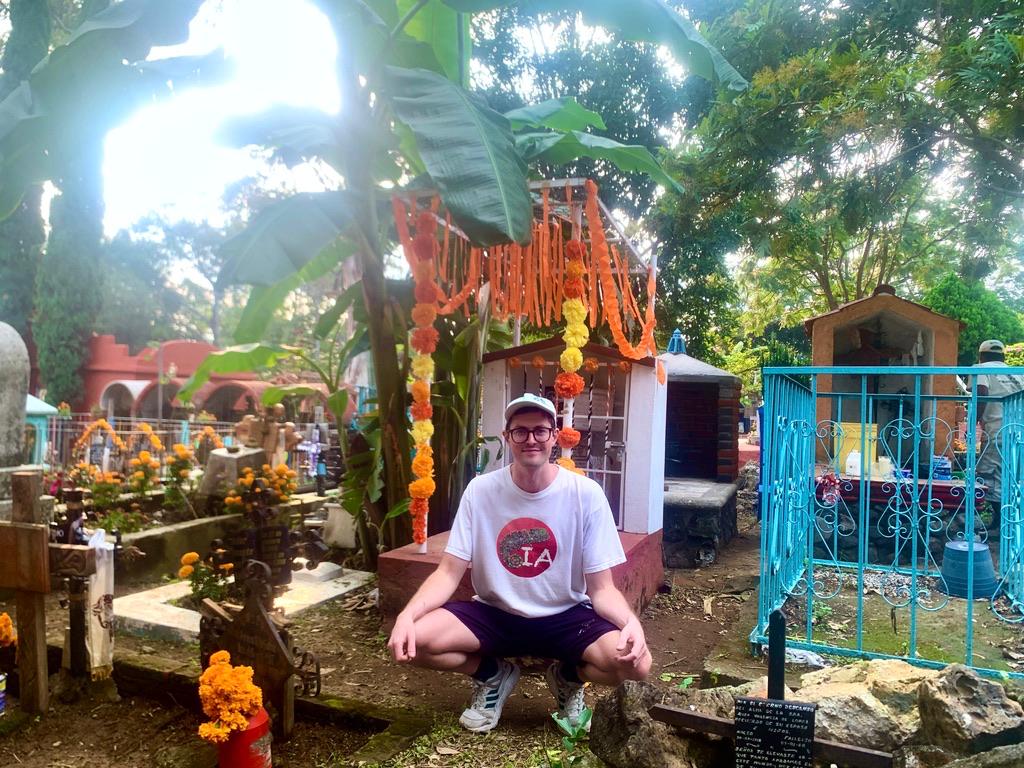
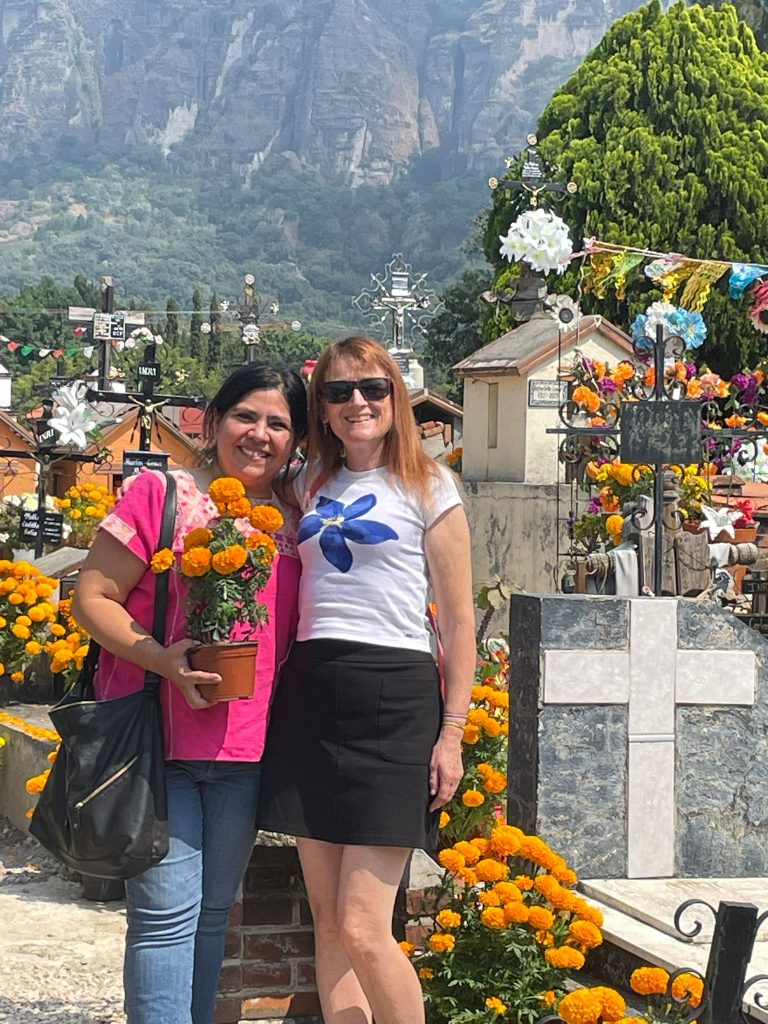
When we visit Tepoztlán during our Day of the Dead Spanish immersion course we like to take our participants off the beaten track to some locations that are less visited by tourists and Mexico City day trippers. One of our favorite Day of the Dead locations is the Panteón Municipal de Tepoztlán, the Tepoztlán cemetery. As the cemetery is quite far out of the centre (around 1.2km) the majority of Day of the Dead visitors don’t pay this location a visit, but it is absolutely worth the journey if you like authentic Day of the Dead locations slightly off the beaten track.
As with all cemeteries in Mexico, it is important to treat it with the utmost respect, particularly on Day of the Dead. We would recommend not drinking alcohol here, making excessive noise, and (especially) taking photos of people without their permission. But so long as you are respectful, it is a wonderful, authentic place to visit.
Mexican families visit here during Day of the Dead to pay their respects to their relatives and ancestors, leaving orange cempasúchil flowers and decorating the graves with papel picado bunting, food, drinks, photographs or personal mementos.
To get to the Panteón Municipal de Tepoztlán, the Tepoztlán cemetery, you can either take the local bus towards Amatlán, which leaves from Calle Galeana near the corner with Avenida del Tepozteco, or take a taxi. As of 2026 there is no Uber in Tepoztlán so the only options if you don’t have your own vehicle are the bus, taxi or walking. It is a a 10 minute drive or a 20 minute walk from the zócalo (the main square) of Tepoztlán.