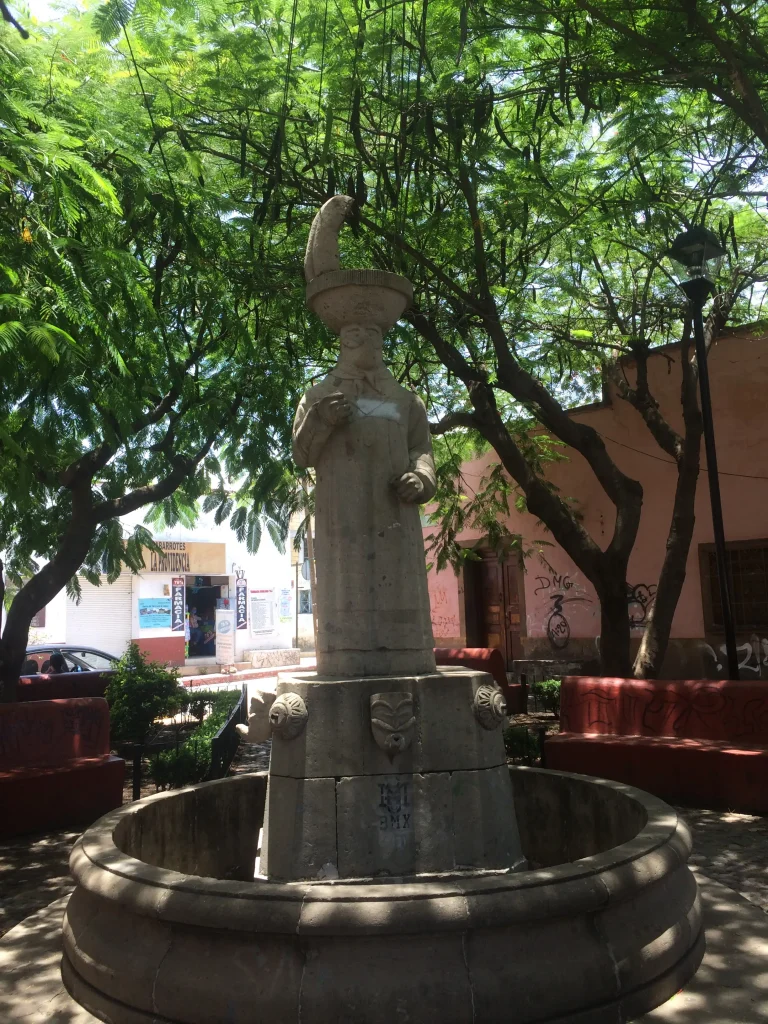
Tlayacapan is a small traditional village in Morelos state, around 50 minutes drive from Cuernavaca.
It is a gorgeous little village surrounded by mountains and famous for its Chinelos – the extravagantly-dressed folklore figures that are symbols of Morelos state.
But did you know that there are real mummies that you can visit there?
With halloween and Día de Muertos just around the corner – we thought that this could be the perfect spooky day trip to consider for the Day of the Dead weekend!
The Route There
Arriving in Tlayacapan from Cuernavaca is very easy if you have your own transport. Just take the highway towards Cuautla and take the Tlayacapan turn off. It’s just under an hour’s drive in normal conditions.
Arriving by public transport is more tricky. You’ll need to take the bus to Oaxtepec on the Cuautla bus, and then change at the Tlayacapan crossroads to a small minivan bus (colectivo) that passes through Oaxtepec to take you to Tlayacapan. It’s not the easiest place to get to by public transport, and we would seriously recommend speaking Spanish if you are going there on public transport because you will need to ask the driver of the first bus to drop you off just at the right spot to catch the second bus.
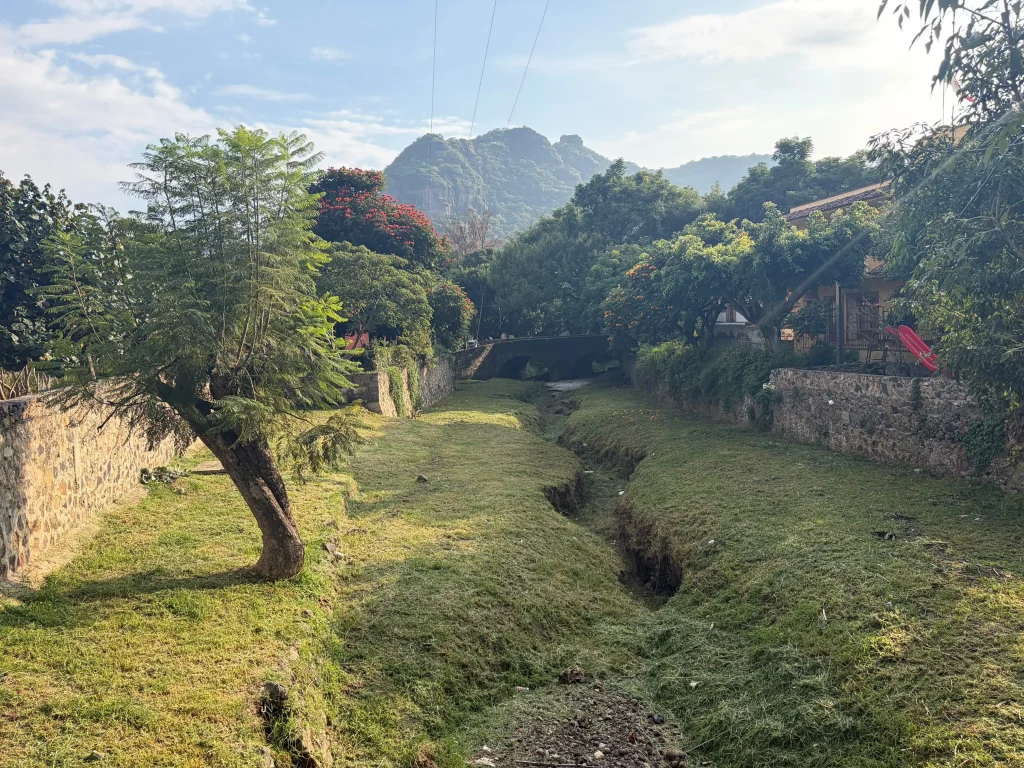
We are definitely biased, but we also think that this highway (autopista) is one of the most beautiful in Mexico. It passes right between the mountains of Tepoztlán and especially at this time of year – with the summer rains – everything is looking beautiful and green.
Nopales and Nature
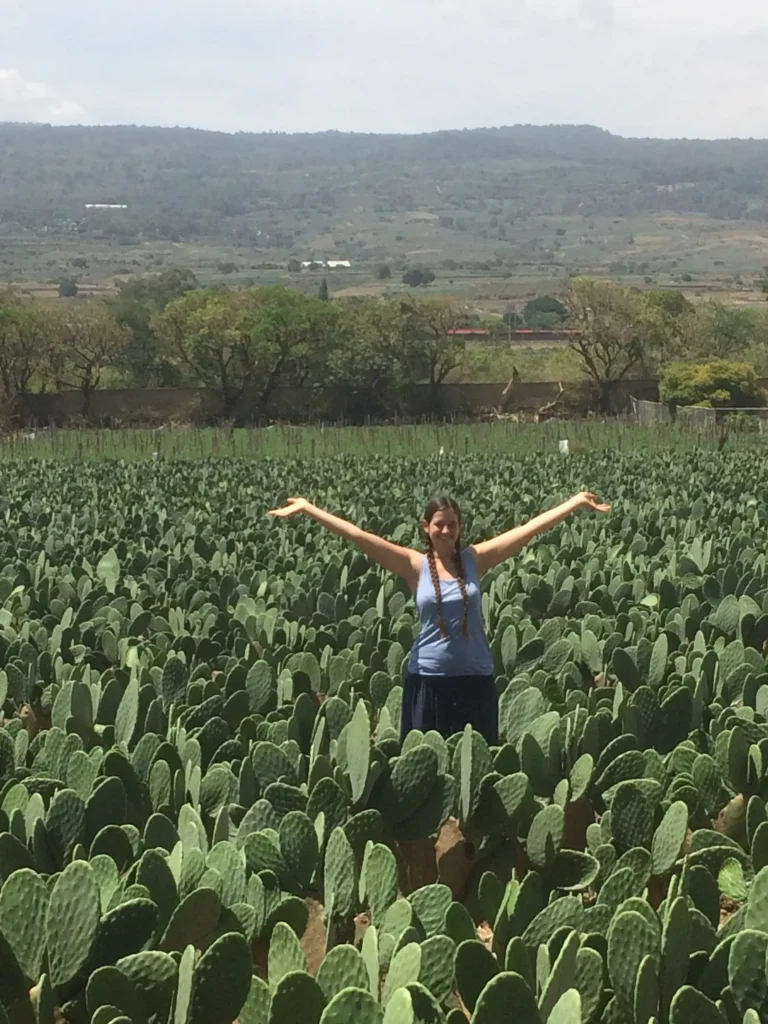
Tlayacapan is famous for a few different things. One of them is its beautiful fields of prickly-pear cactus (nopal) that grow all around the village. Nopal is one of Mexico’s most iconic plants (and foods!) and the fields look wonderful – especially with Tlayacapan’s famous mountains and rocky outcrops as a backdrop.
We heard an interesting story from Fabiola, one of our Spanish immersion teachers, about the nopal in Tlayacapan. She said that farmers in the region were encouraged to grow nopal by a very generous government subsidy several years ago. But then the subsidy stopped when the government changed and the farmers were left with huge fields of nopal that were now almost worthless.
Once you’ve planted several hundred thousand nopal cactus plants on your land, it’s not very easy to change them!
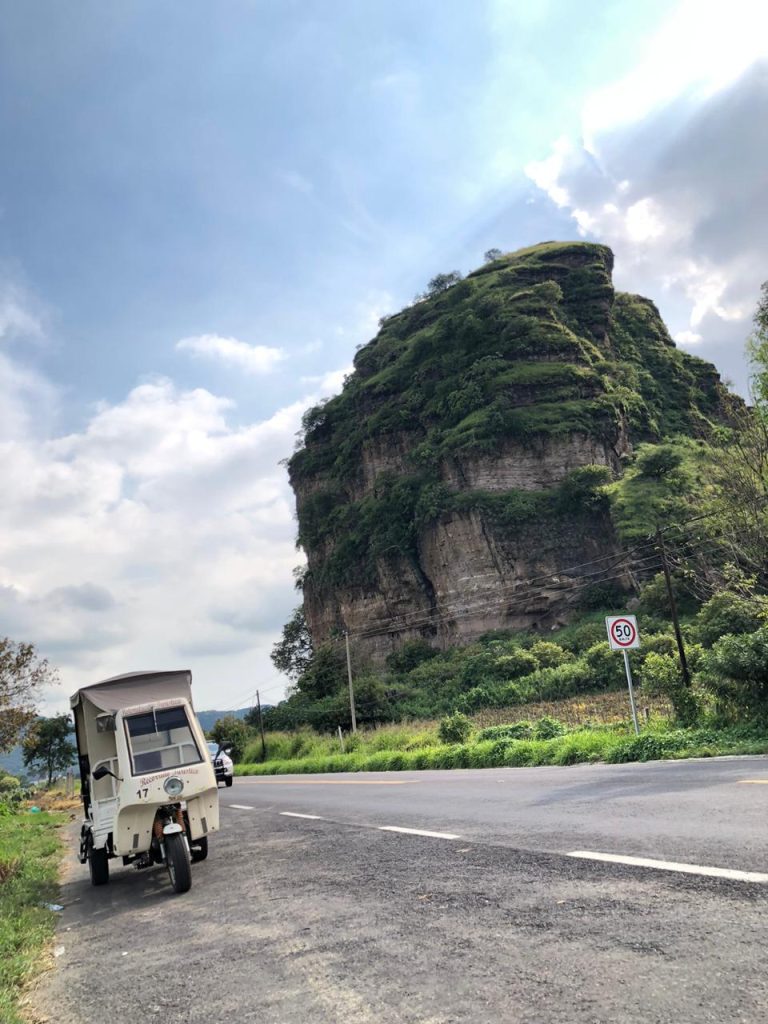
The Mexican Sphinx (Cerro de la Tonantzin)
One of the most iconic images of Tlayacapan is the rocky monolith that towers out of the nopal fields called the Cerro de la Tonantzin. Due to its strange shape it is also known as the Mexican Sphinx (La Esfinge Mexicana).
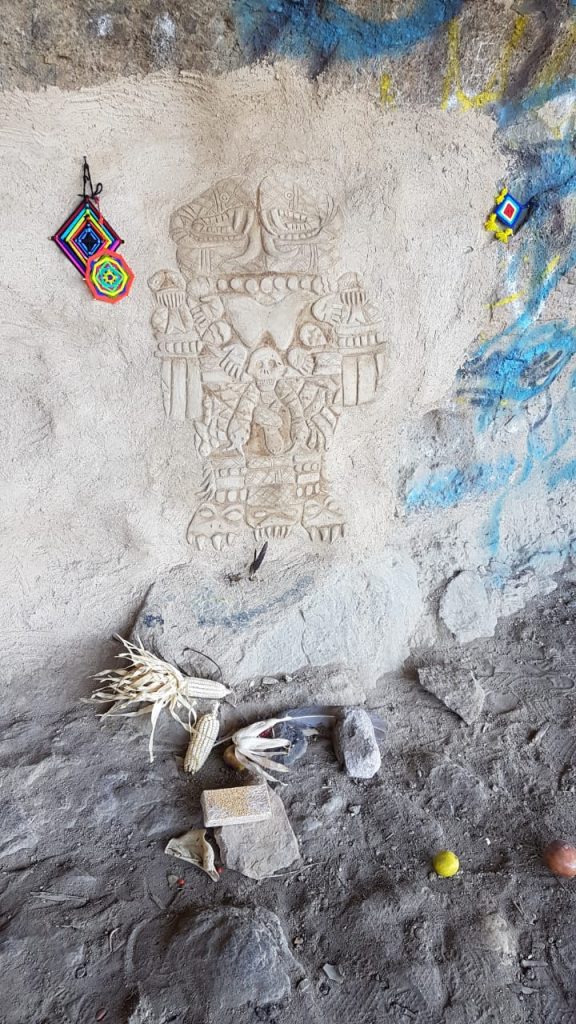
Cave Art
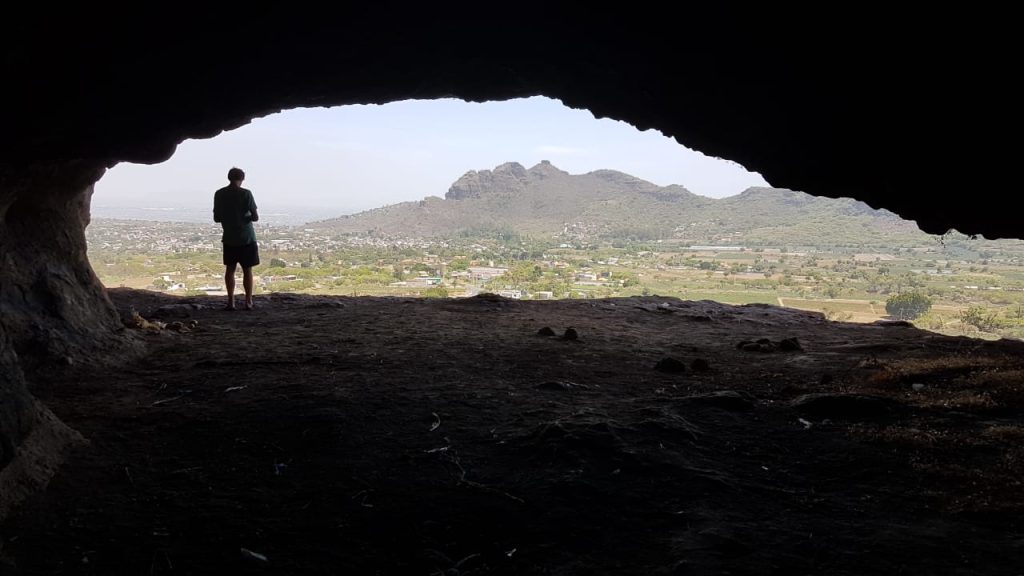
If you climb up the Mexican Sphinx there is an ancient cave in the rock that has some beautiful Mexican rock carvings (arte rupestre). There are also some incredible views back down the valley from inside.
Ancient Churches
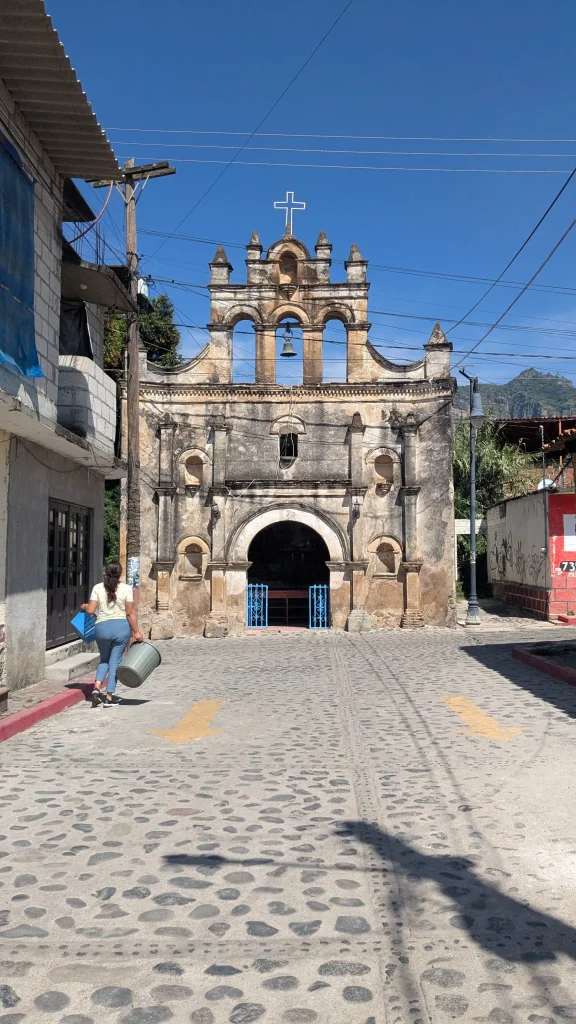
Hernan Cortes first arrived in Tlayacapan in 1521 and in the following decades and centuries of Spanish colonization the Spanish built a huge amounts of churches. There are seventeen churches in Tlayacapan from the 16th Century alone, and twenty six churches overall.
We particularly liked this one for its beautiful facade.
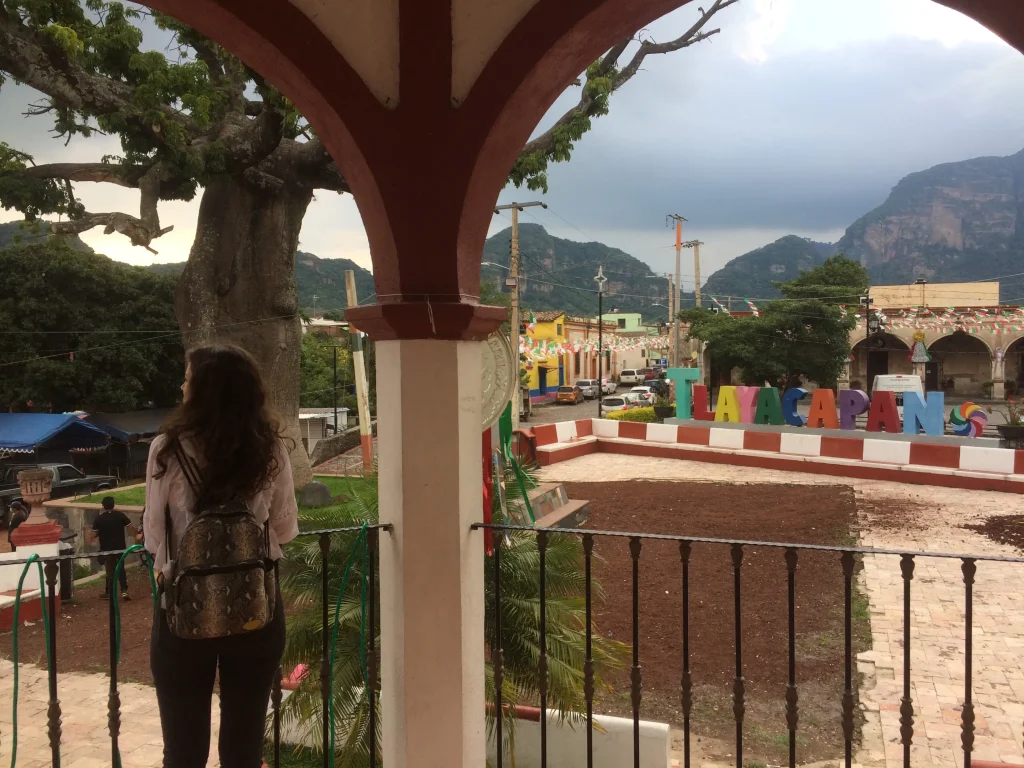
El Pochote
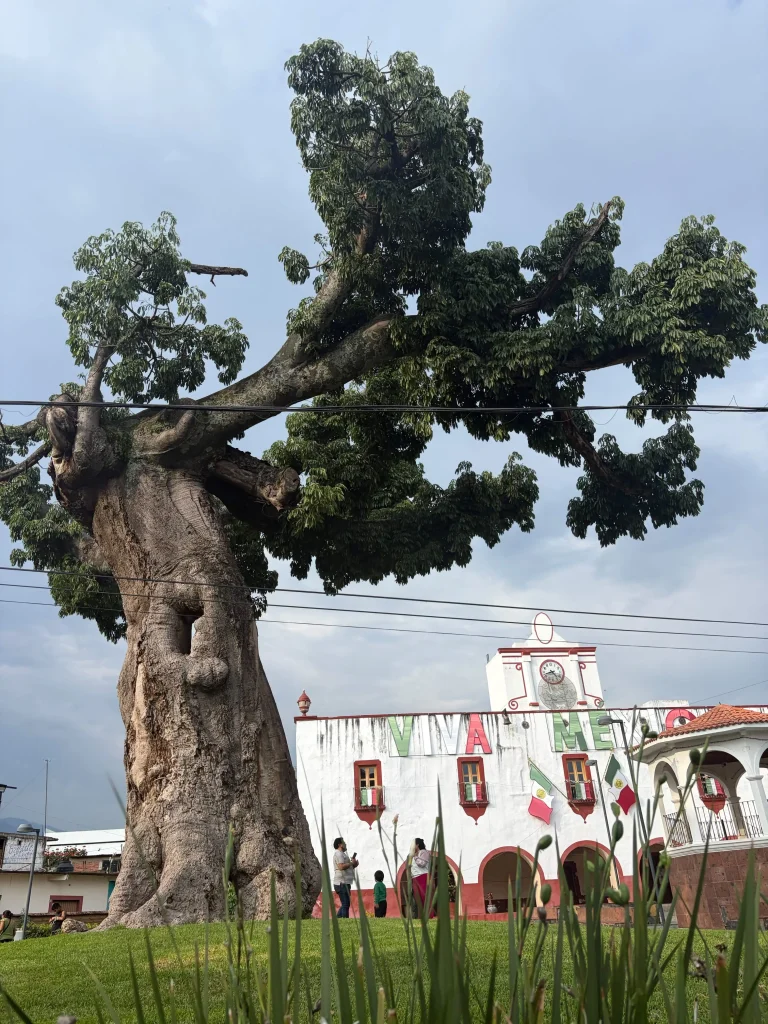
The main image of this blog post is Tlayacapan’s famous “Pochote” tree. It is an ancient ceiba that stands in the town square and is reputedly between 500 and 800 years old.
This tree has witnessed so much of Mexican history. It was there during the Spanish conquest of Mexico and has seen more than half a millennium of Mexican history. When you are there, standing underneath it, it is mind-blowing to think of all of the events that have happened in this tree’s lifetime.
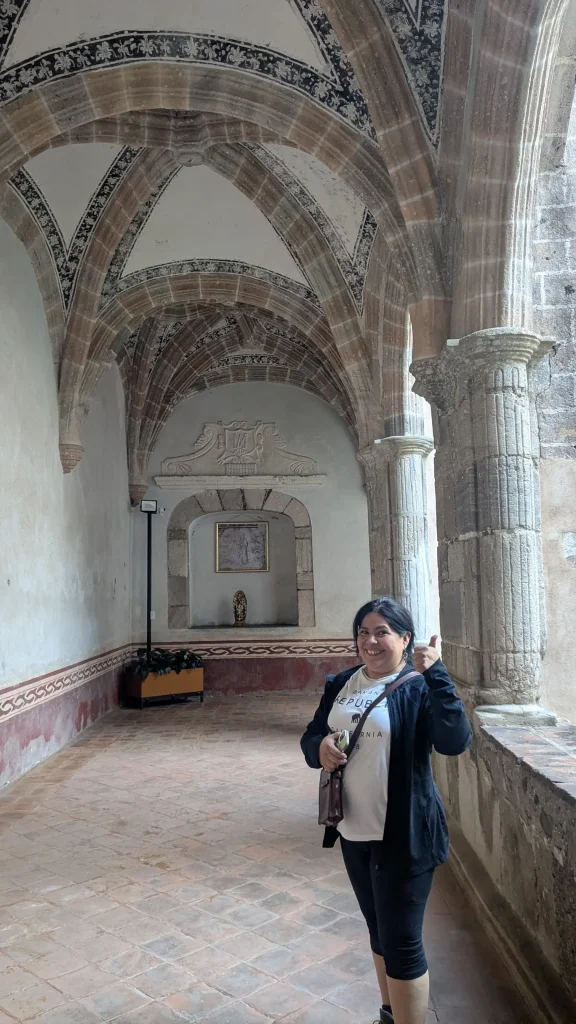
Tlayacapan Monastery
The monastery in Tlayacapan was built between 1534 and 1574. It is a beautiful building with ornately carved rib vault ceilings and 16th century artwork on the walls. The black and white wall art in in the monastery is very similar to the stunning monastery wall art in the San Salvador Monastery in Malinalco, with representations of indiginous-inspired animals and plants, as well as 16th Century Christian iconography.
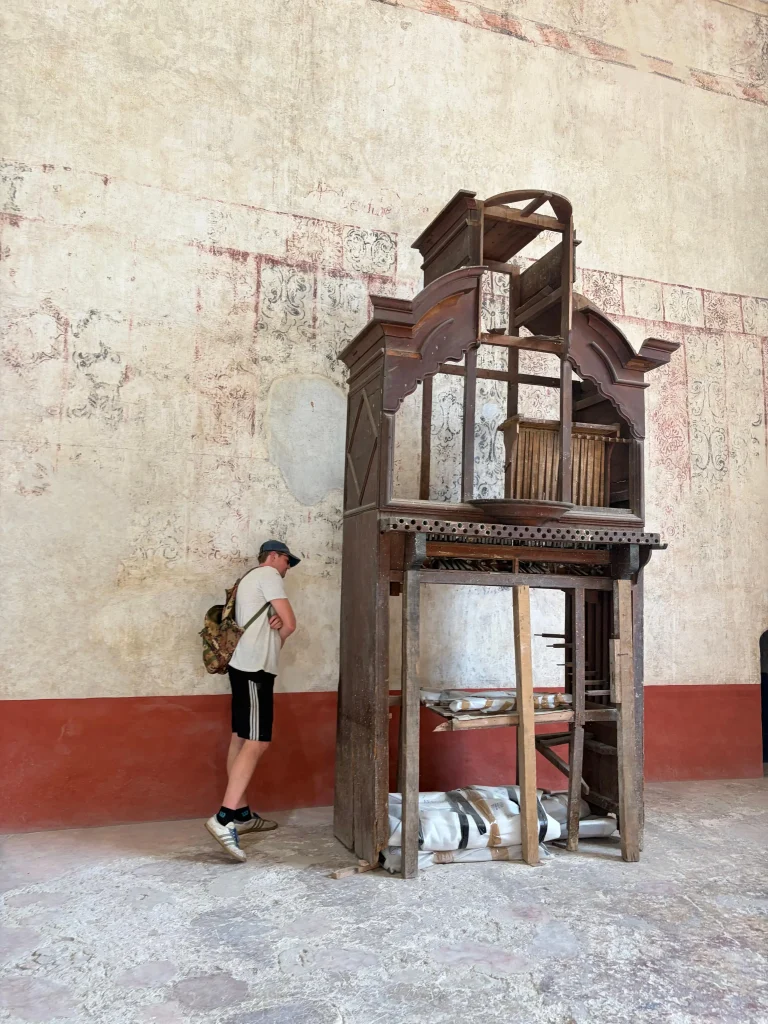
You can also see all sorts of ancient objects such as the 19th Century organ in the choir room on the second floor, overlooking the main church area.
The Mummies
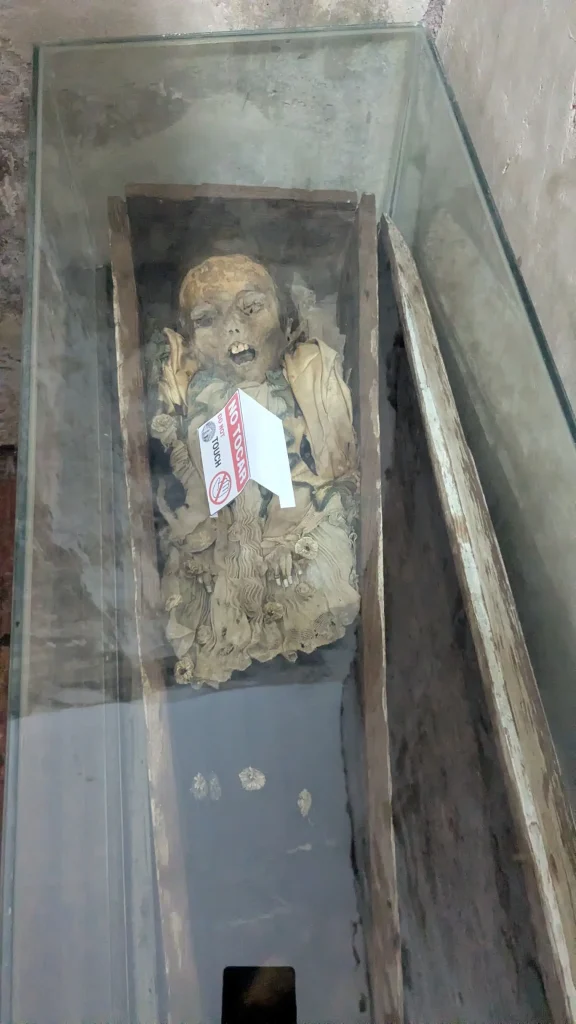
The mummies (momias) of Tlayacapan are tucked away at the back of the monastery. They are not easy to find! We had been to Tlayacapan several times before we even learned about them.
The mummies are human remains that were buried in Tlayacapan in the 17th, 18th and early 19th centuries.
They were never intended to be mummies – they were local residents that were buried here. Due to the unique pH of the soil and the climate of Tlayacapan, the bodies were naturally mumified. They were found underneath the church by excavation workers in 1982.
The experience visiting them is very strange. The skeletons are still dressed in their original burial clothes and their faces are still well preserved. It is interesting to see them, but it felt odd to see them there. Especially because their families never intended for them to be mummified or displayed in a museum.
But it is a curious thing to see in Morelos and absolutely worth visiting if you are in the village.