Did you know that in a small village in the mountains of Guerrero, one of Mexico’s poorest states, lie the remains of the last Aztec Emperor?
That is the story that we heard before visiting.
The story goes that a small village around 130 miles from Mexico City, the last emperor of the Aztec Empire – Emperor Cuauhtémoc – was buried after his brutal torture and execution by the Spanish in 1525.
But is it true?
And if not – does it matter?
We visited to find out more.
The road to Ixcateopan de Cuauhtémoc
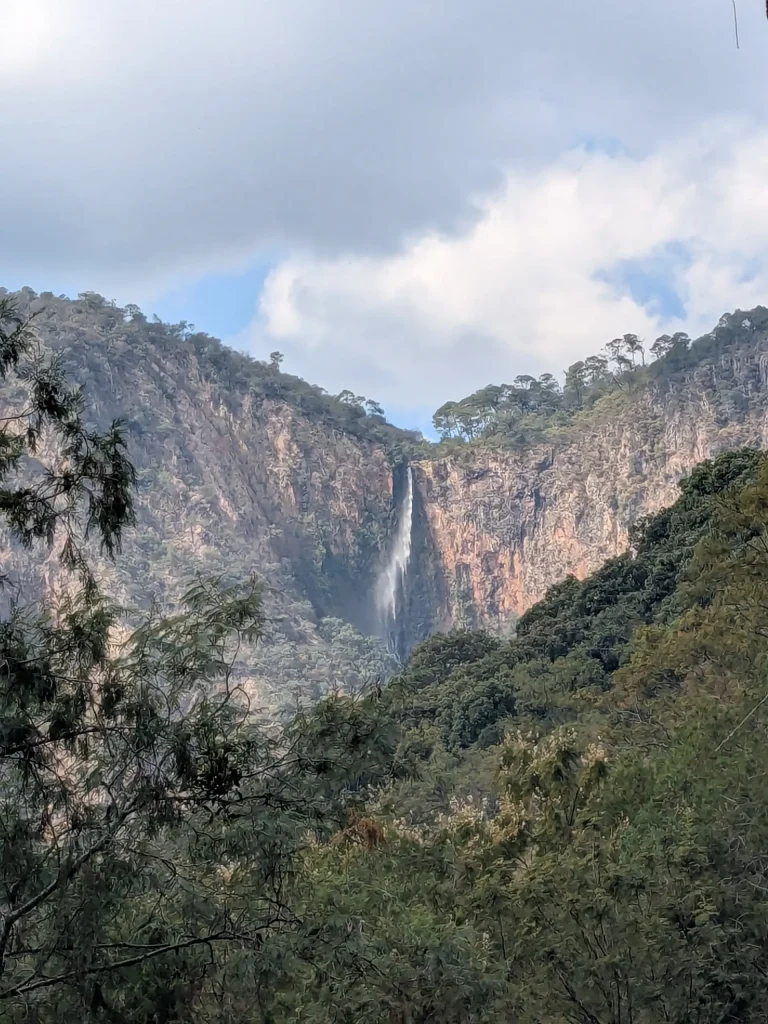
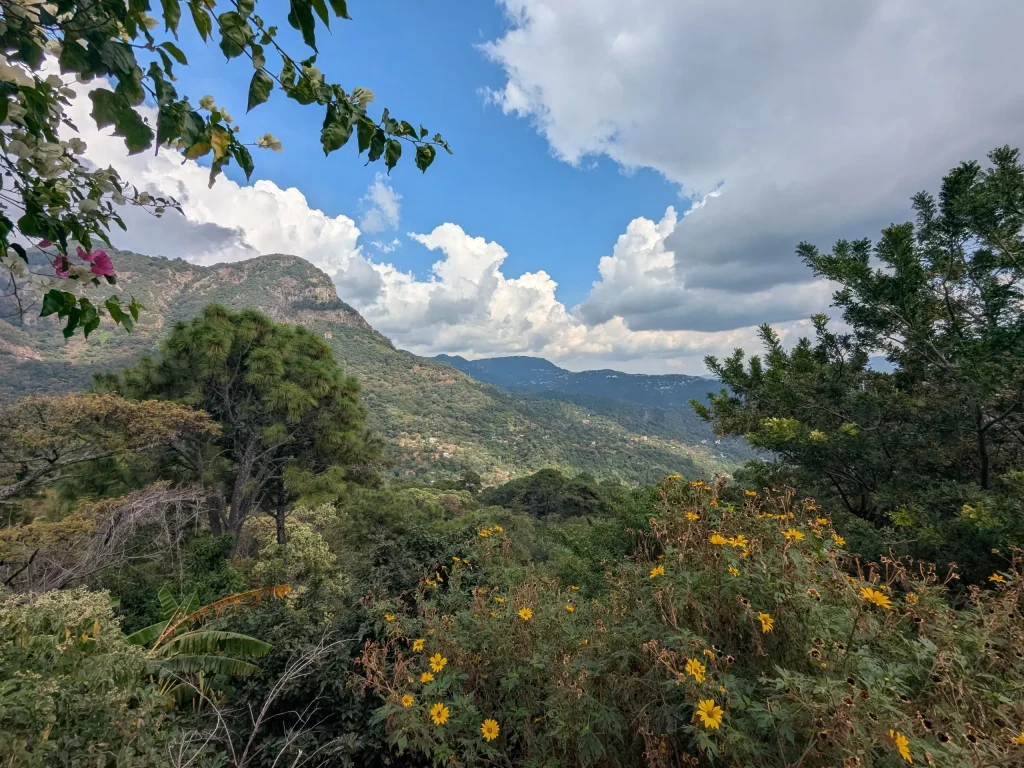
The road to Ixcateopan de Cuauhtémoc from Taxco is one of the most beautiful and least-travelled of Mexico. It traverses the side of a towering mountain ridge, segmented by deep ravines and tumbling waterfalls, with sweeping views down to the valley below, towards Iguala and beyond, and upwards towards the high mountain peaks. The narrow road winds its way through tropical deciduous forest, and, elsewhere, areas of oak and pine, as the road climbs and descends.
Lunch at Taxkfe, the Cat Café
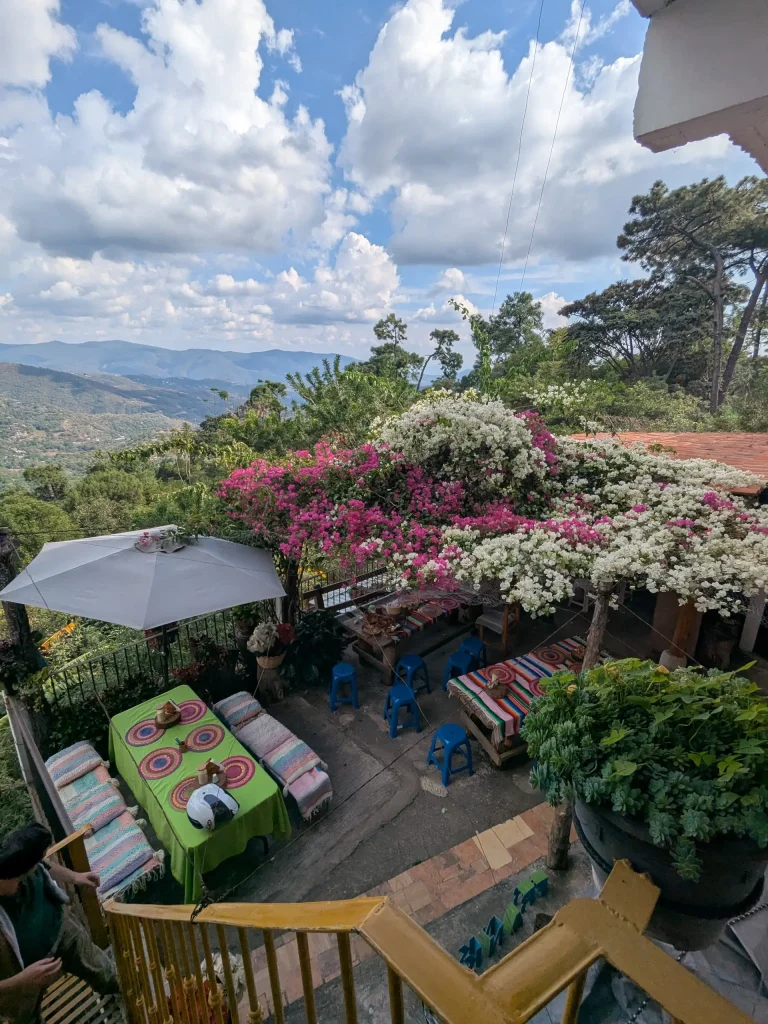
Some way along the road between Taxco and Ixcateopan de Cuauhtémoc, we passed a small cafe perched high above the valley. The café, called Taxkfe, is owned by a friendly family who offer a small menu of home-cooked dishes, as well as their own locally grown coffee. We tried the rabbit cooked in a chile guajillo sauce.
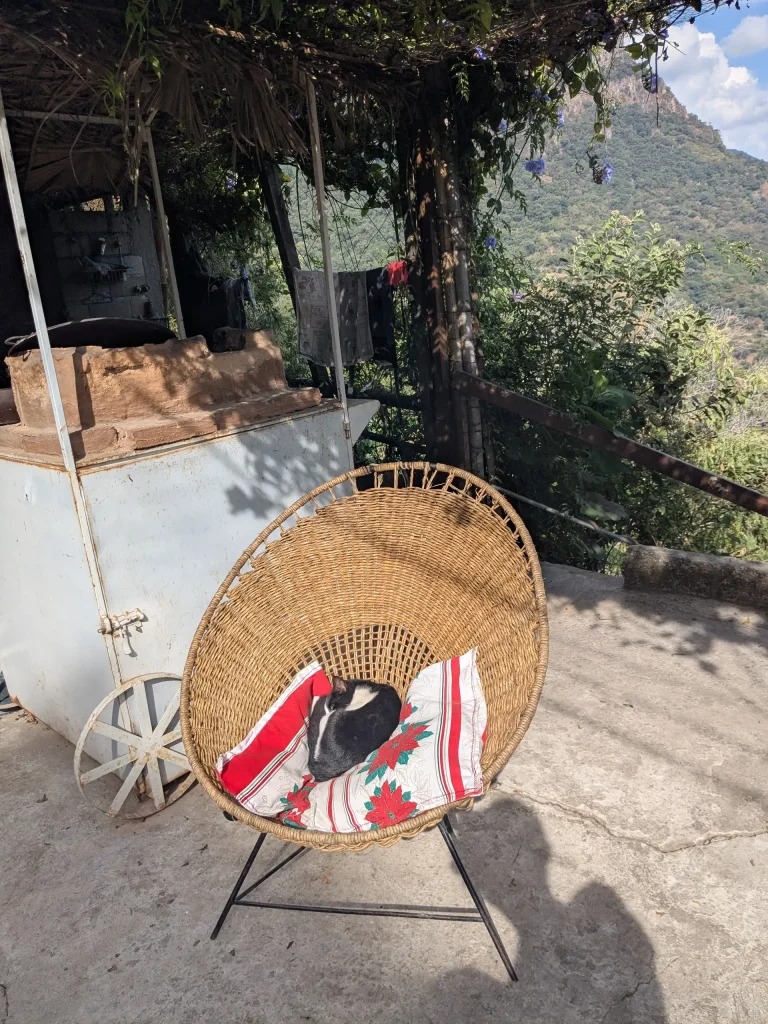
The entrance to Taxkfe is watched over by a cat that likes to sleep in a chair by the road, welcoming guests.
We recommend buying some coffee too – it is grown right there on their property, on the slopes of the hillside directly below the restaurant.
Arriving in Ixcateopan de Cuauhtémoc
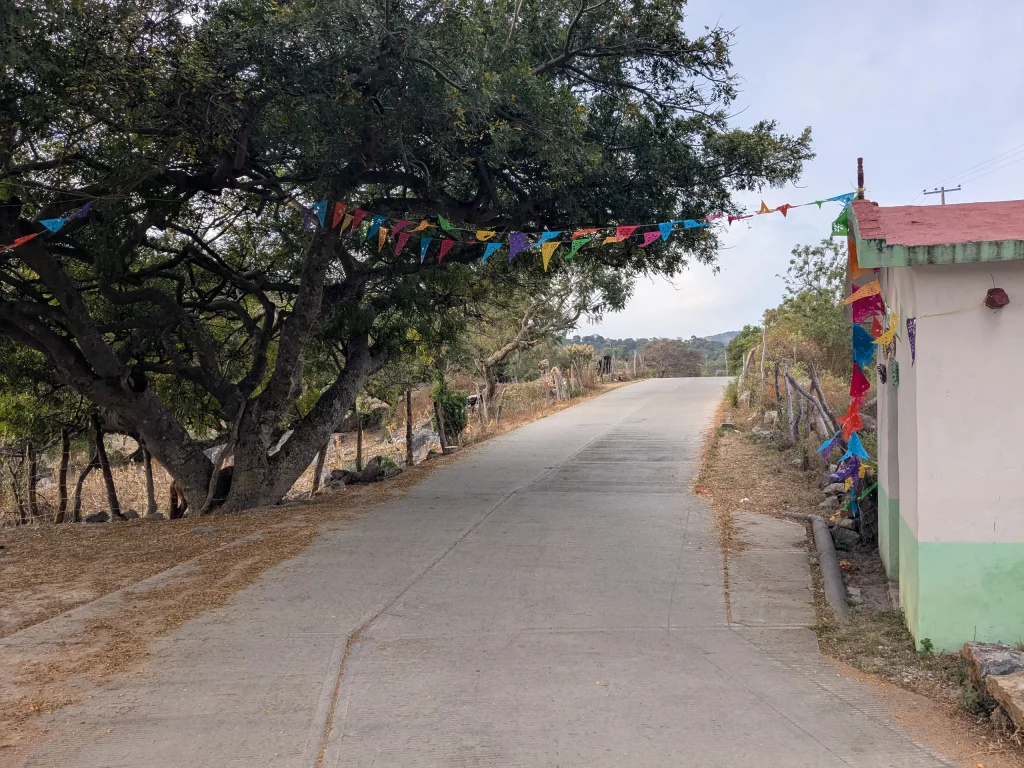
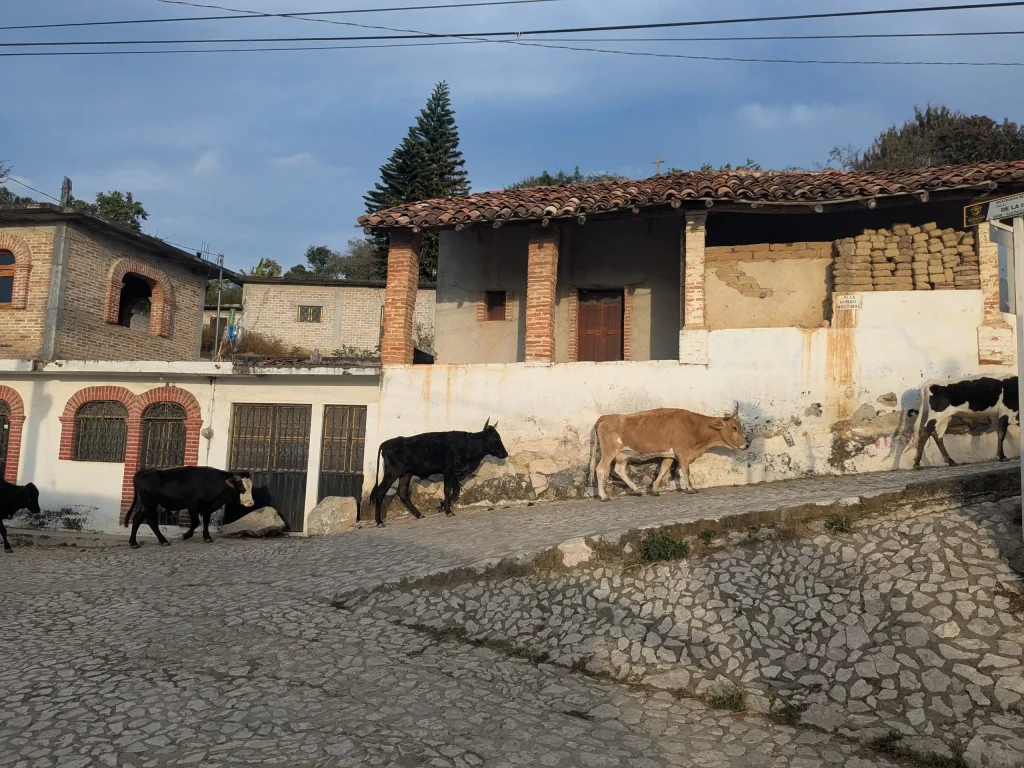
After a short section of poor-quality road, we arrived in the village of Ixcateopan de Cuauhtémoc. The village is pretty. White houses and churches with terracotta roofs are connected by narrow roads paved with white and grey cobblestones. As with many other villages in Guerrero, the imposing mountains of the Sierra Madre del Sur form an impressive backdrop.
Visiting the Los Gigantes stones
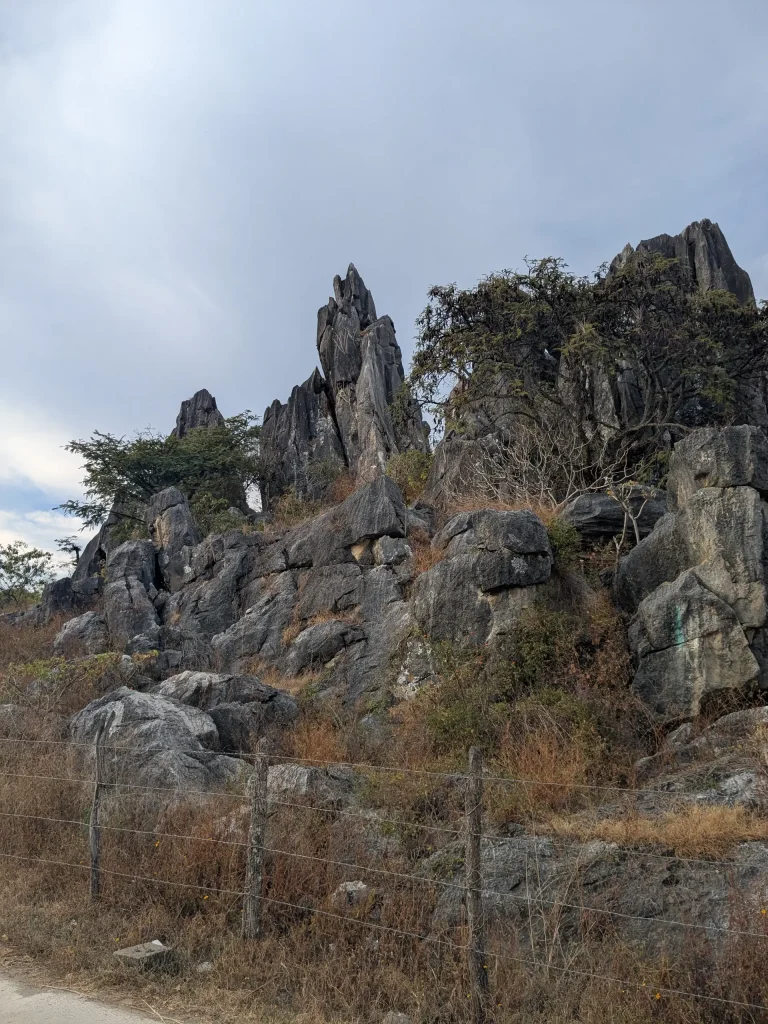
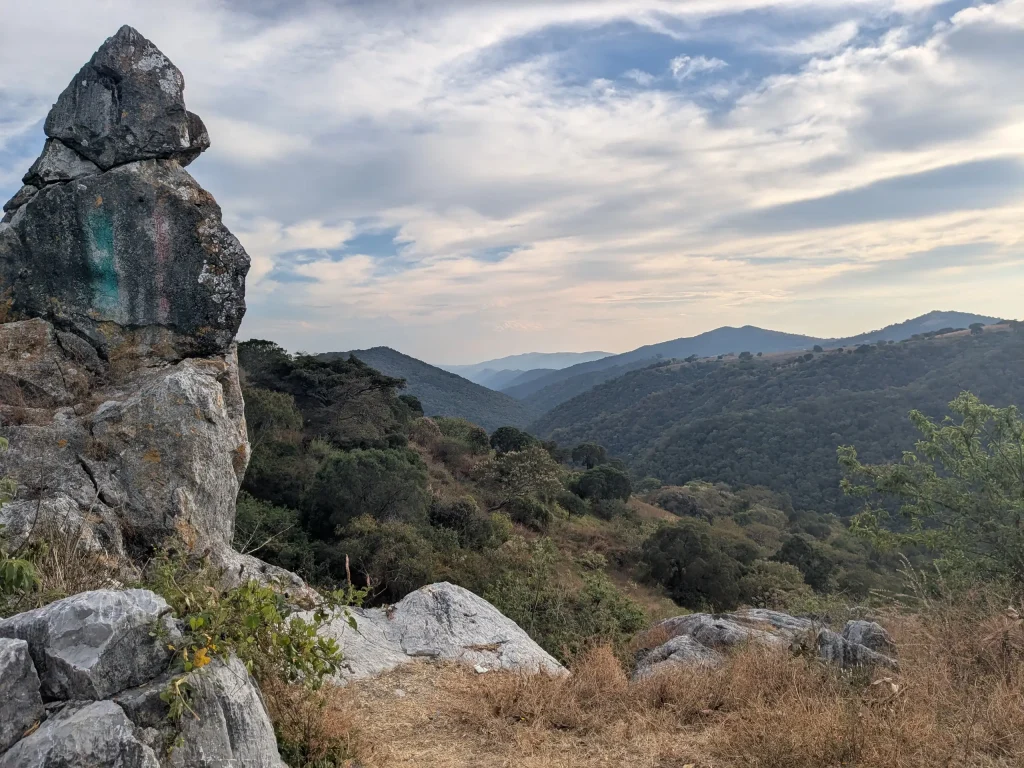
Near the town, is an area of limestone rocks called Los Gigantes (The Giants) or Los Vigilantes (The Watchmen). The unusual formations poke out of the earth at strange angles, forming evocative, sometimes human-like, shapes.
Leading the cows back from the pasture
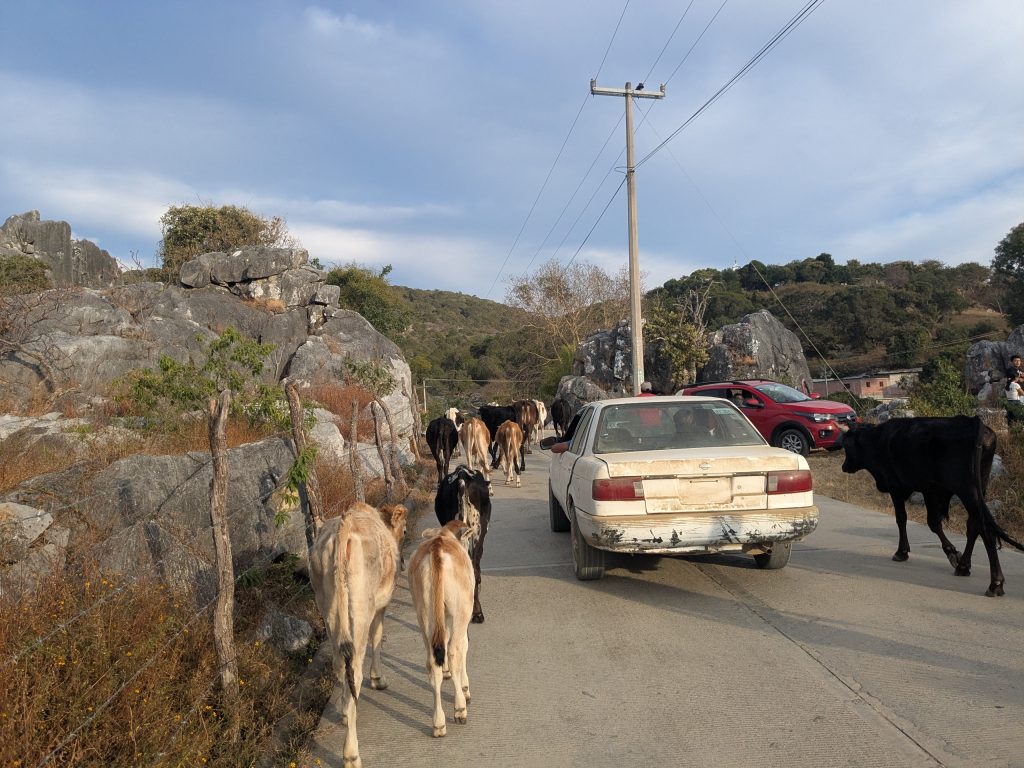
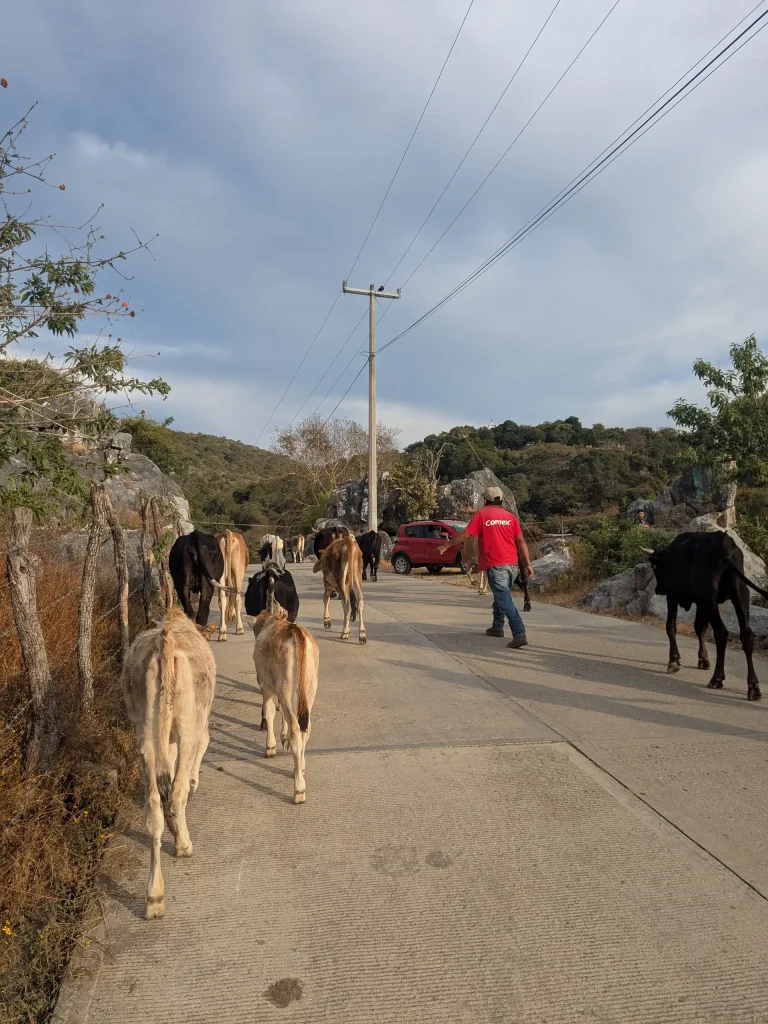
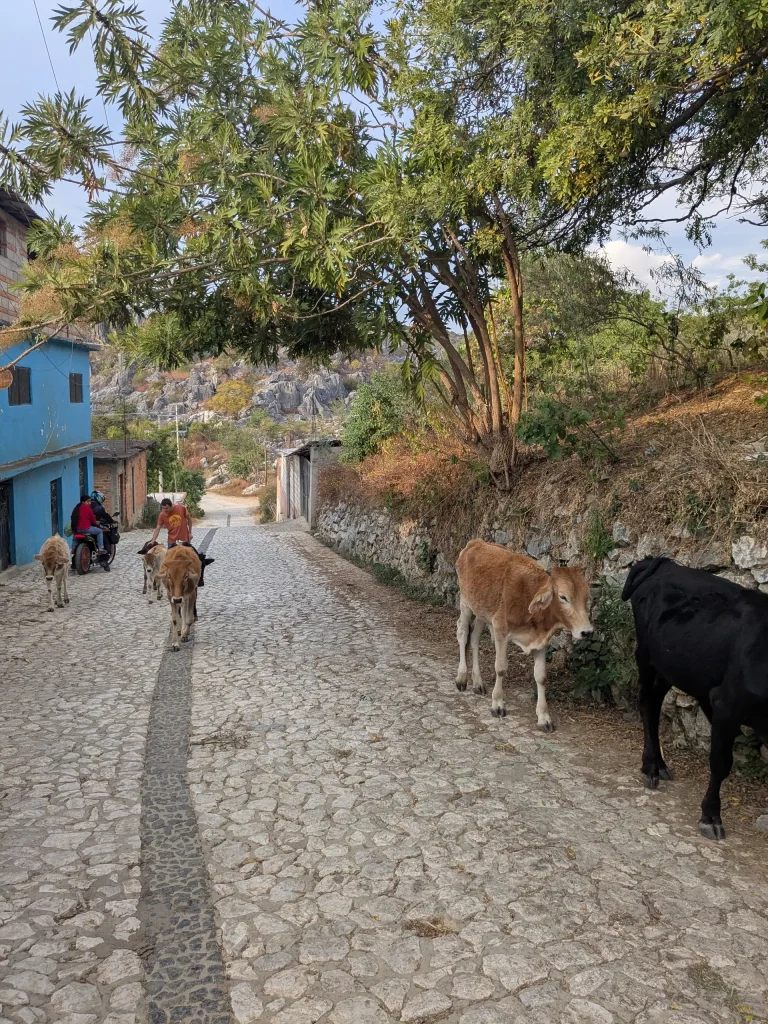
On the way back from the Los Gigantes stones we met Fernando, a friendly cowherd who was leading his cows back from their grazing field. We walked back down the lane with him towards the village.
This was when we first heard anyone from the village talk about the Aztec emperor Cuauhtémoc.
“He was buried right there under the Church,” he said.
It was also when we had our first suspicions.
“Why here in Guerrero?” we asked.
Guerrero is a long way from Mexico City.
“Because Aztec emperors were always buried in the same town they were born,” he said.
We hadn’t thought of that. It made sense.
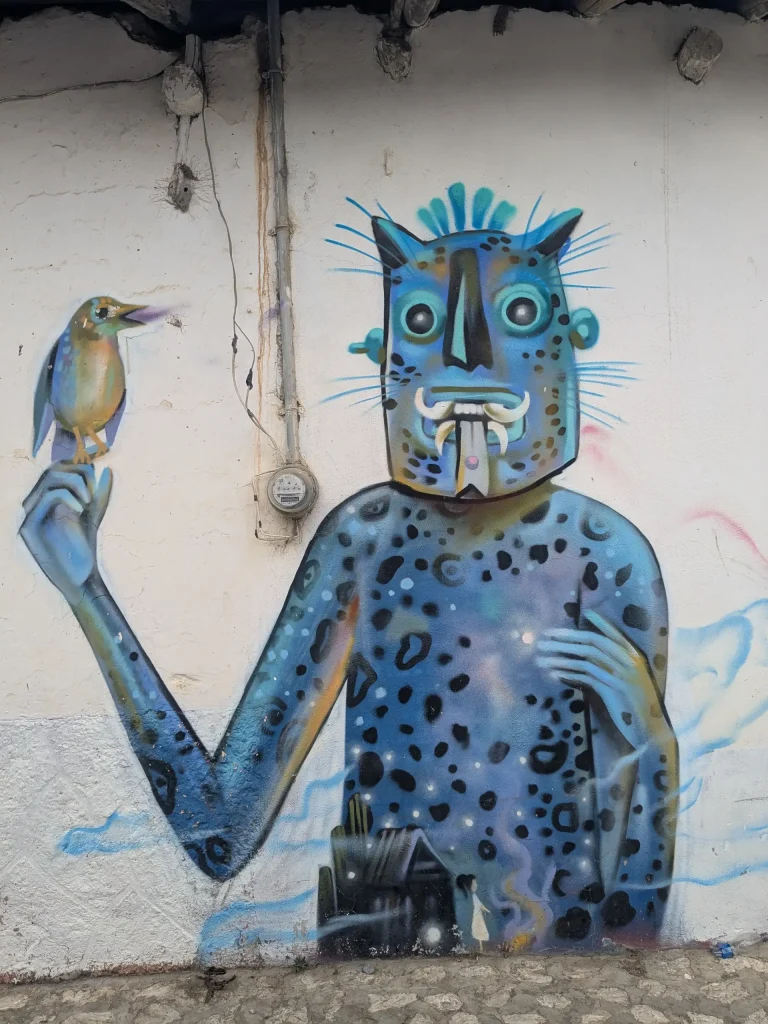
Street Art
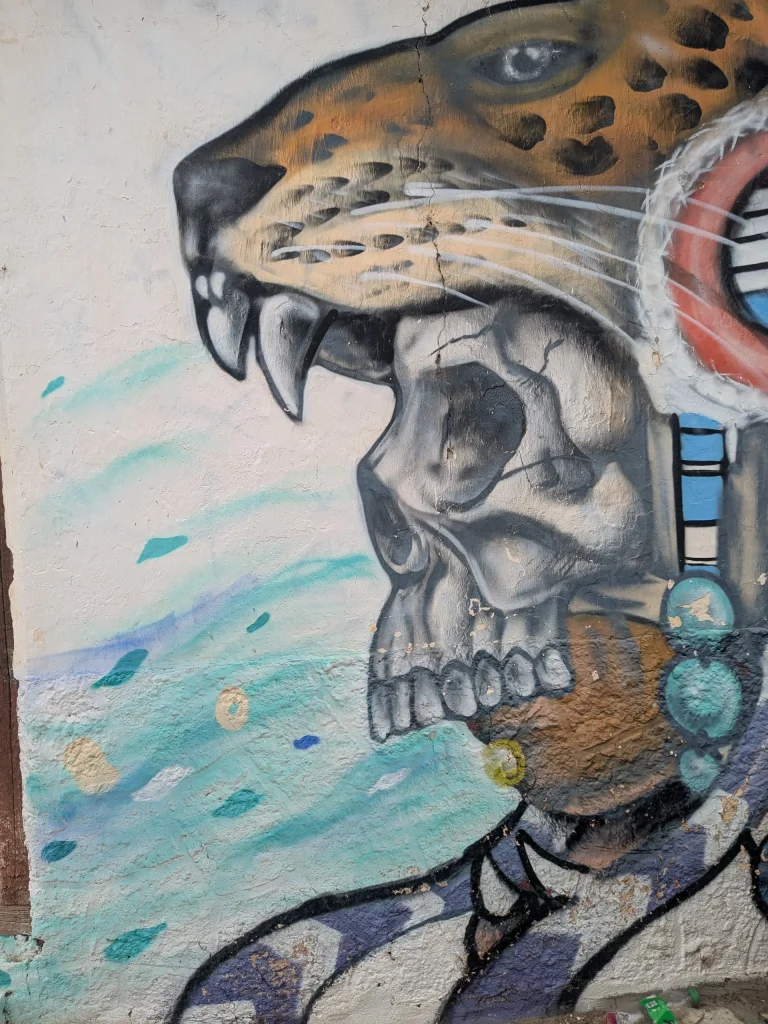
Ixcateopan de Cuauhtémoc, amongst the white, has flashes of vibrant color. Many pieces celebrate the pre-Hispanic culture of the town – the costumes, the animals and the traditions.
Visiting the bones of Cuauhtémoc
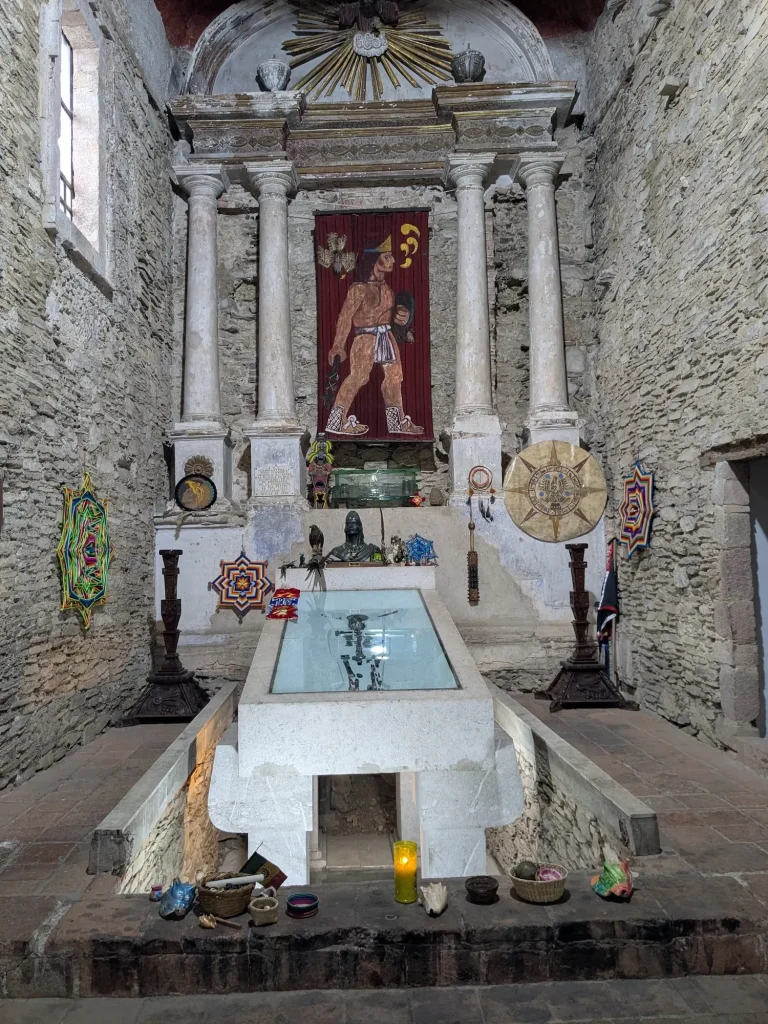
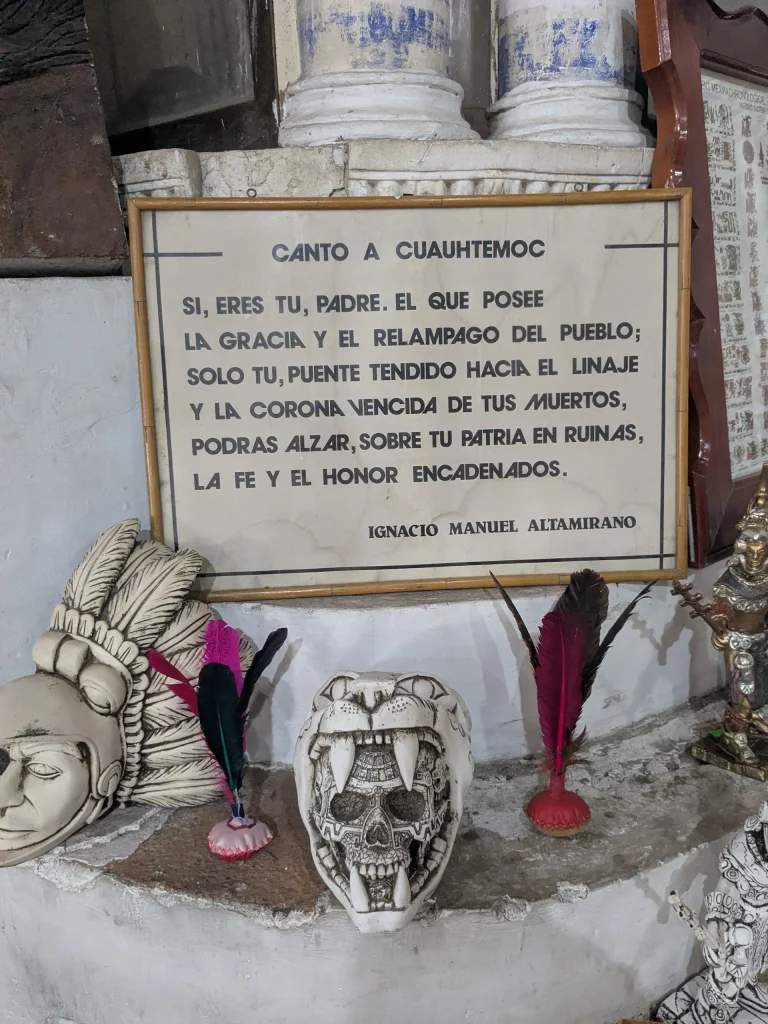
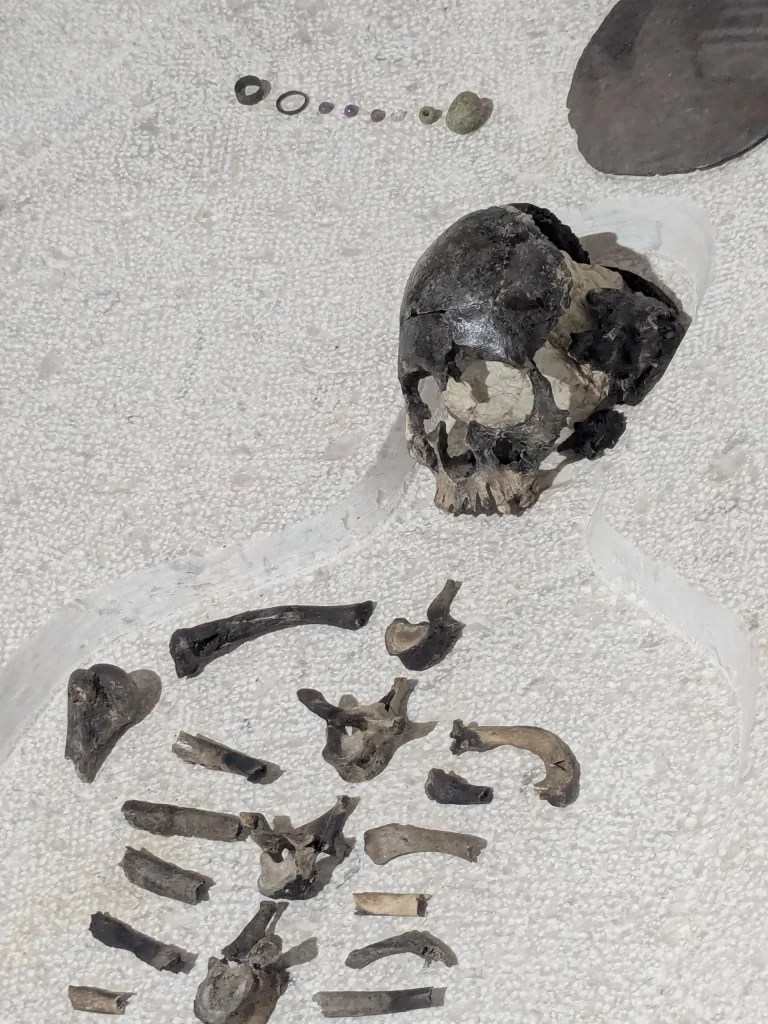
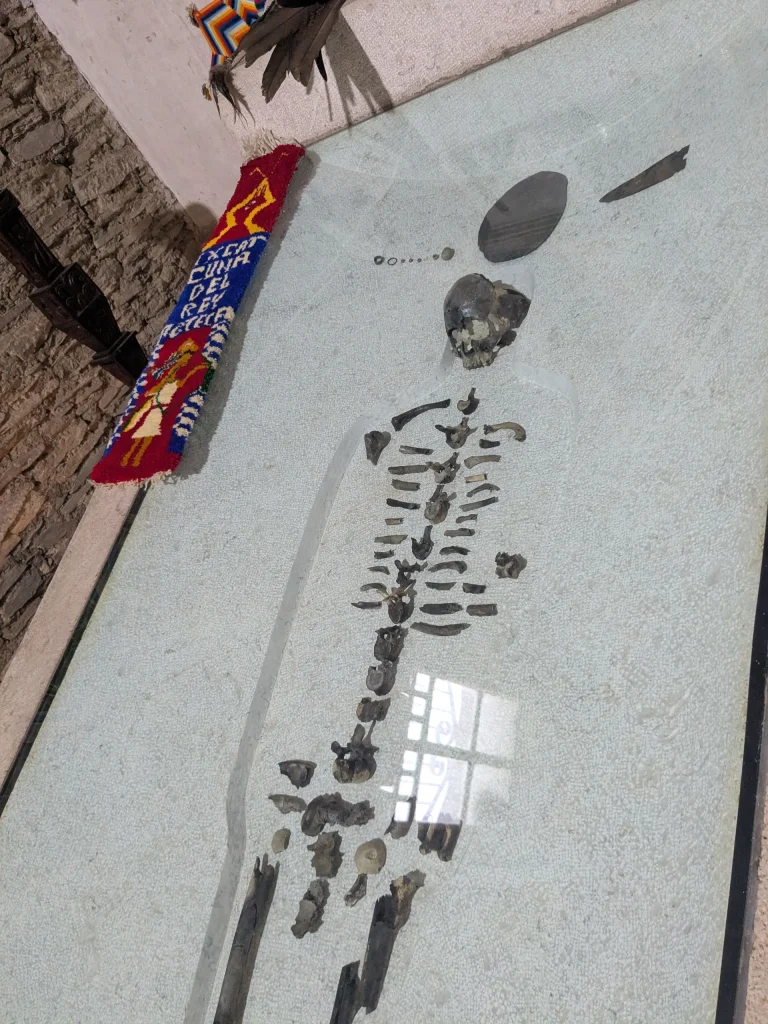
In the church we visited the bones of Cuauhtémoc.
The official Mexican Government website that promotes Mexico’s Magic Towns (Pueblos Mágicos) states that the bones displayed in the church here are Cuauhtémoc’s bones.
We had also spoken to many local people, including Fernando, who confirmed it.
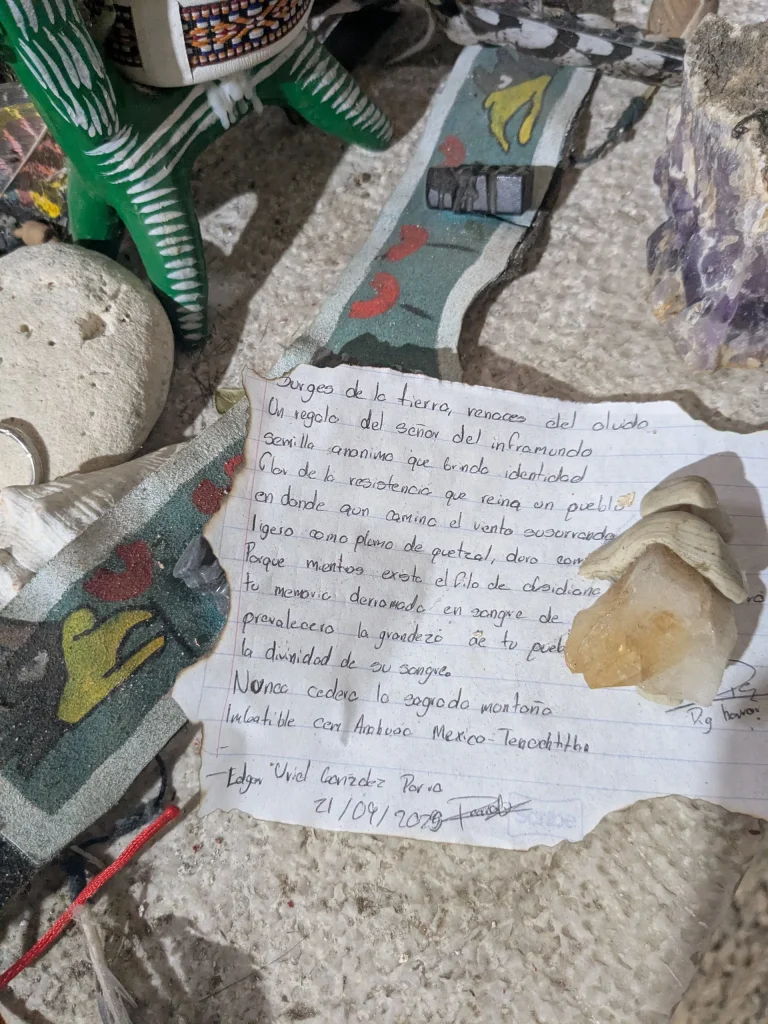
But we had some unanswered questions.
If it was true what Fernando said – that Aztec emperors were always buried in the same town they were born – the logistical challenges seemed considerable. In 1525, how did they transport his body more than 130 miles back from Tenochtitlán (the Aztec name for today’s Mexico City) to Guerrero when the roads were so bad and the terrain so rugged?
And why would the Spanish invaders honor the Aztec tradition?
And most importantly: how did someone from this tiny village in Guerrero come to be Aztec Emperor in the first place?
Ixcateopan de Cuauhtémoc today has just over 2400 inhabitants. In those days, surely, it had less.
The Hoax
After using Google to fact-check the suspicions we’d been having, we found that the bones displayed in Ixcateopan de Cuauhtémoc are not, in fact, those of Emperor Cuauhtémoc.
The controversy began in September 1949, when Mexican historian Eulalia Guzmán announced that she had discovered the emperor’s remains beneath the altar of a church in Ixcateopan. The discovery was supported by documents and a copper plaque that purported to establish the identity of the deceased. The news caused a sensation across Mexico.
But the discovery soon came under scrutiny. Investigations by historians and archaeologists raised serious questions about the excavation, the dating of the remains and the authenticity of the documents. In 1976, an official commission delivered its verdict: the bones belonged to eight individuals, dating from different periods, and there was no scientific basis for identifying them as Cuauhtémoc. The commission also concluded that the documents were fabricated and that the tradition identifying Ixcateopan as his burial place lacked the historical antiquity claimed for it.
So was it a hoax? The official findings certainly cast serious doubt on the story. But establishing precisely who created the documents, why they did so, and how the story became so widely accepted is a more complicated matter. The controversy has also become entangled with questions of Mexican nationalism, Indigenous identity and the politics of historical memory.
Perhaps, then, even if the bones are not authentic, the story itself is worthy of interest — if only in an oddly Borgesian way. A supposed tomb becomes a national symbol; a disputed discovery becomes local history; and a claim rejected by official investigators continues to shape the identity of the place where it was made.
Which brings us to two questions.
Why do some official Mexican government websites still present Cuauhtémoc’s burial in Ixcateopan as an established fact, rather than explaining the controversy?
And why do local people, like Fernando, continue to believe the story?
Who cares?
Maybe in reality it doesn’t matter if it’s true or not. Without the hoax, Ixcateopan de Cuauhtémoc would most likely not have Pueblo Mágico status, and without Pueblo Mágico status we most likely never would have visited.
And that would have been our loss.
Ixcateopan de Cuauhtémoc is a beautiful town in one of the most naturally beautiful places in the country.
We will visit again.
Whether Emperor Cuauhtémoc is there or not.