
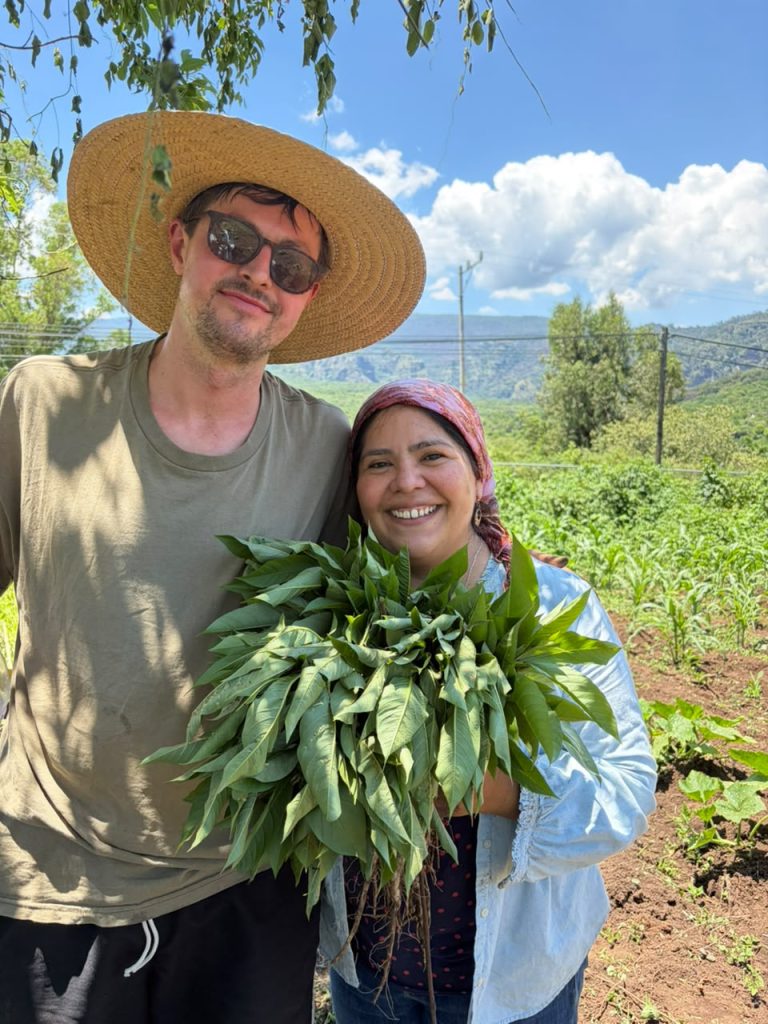
This year (2026) the “El Niño” weather phenomenon has been particularly strong. In Cuernavaca, Tepoztlán, and other places in central Mexico, this has contributed to warmer, drier weather, and less rain than usual.
At Iguana Abroad we have experienced this first hand.
The usual “rainy season” summer rains have almost completely stopped in September, which is extremely unusual.
What is “El Niño”?
“El Niño” is a natural global climate phenomenon that develops irregularly, usually every few years, and affects weather patterns across the world. In simple terms, it occurs when the Pacific trade winds weaken, allowing unusually warm surface waters to shift eastwards towards the Americas. Its effects vary from place to place, but in parts of central Mexico it can contribute to drier conditions and changes in rainfall patterns.
Individual El Niño events can last for several months, and sometimes persist for a year or more.
According to Mexico’s National Water Commission (CONAGUA), El Niño was established in the tropical Pacific in 2026 and is expected to strengthen during the second half of the year. CONAGUA notes that the effects vary depending on the region and time of year, but that El Niño can contribute to warmer conditions and a deficit of moisture in parts of Mexico during the spring and summer.
A failing harvest in Tepoztlán
One immersion activity we like to do with our students on our Iguana Abroad Spanish immersion courses is visit Tepoztlán and some of the surrounding villages in Morelos state. One of our favorite places to visit is a wonderful rural community project based near Amatlán called Casa Tecmilco. Casa Tecmilco is a unique social project that focuses on sustainable community initiatives, working with people of all ages and backgrounds from the local community.
Nestled among the beautiful mountains and valleys of Amatlán, Casa Tecmilco hosts workshops, cultural activities and community events, with a focus on local culture, sustainable living, education and community organising. The site includes a garden, a small organic farm and other ecological projects, as well as an adobe-and-wood auditorium. On the weekends there are arts and crafts workshops there, as well as theatre events, talks, poetry events, and concerts with local musicians.
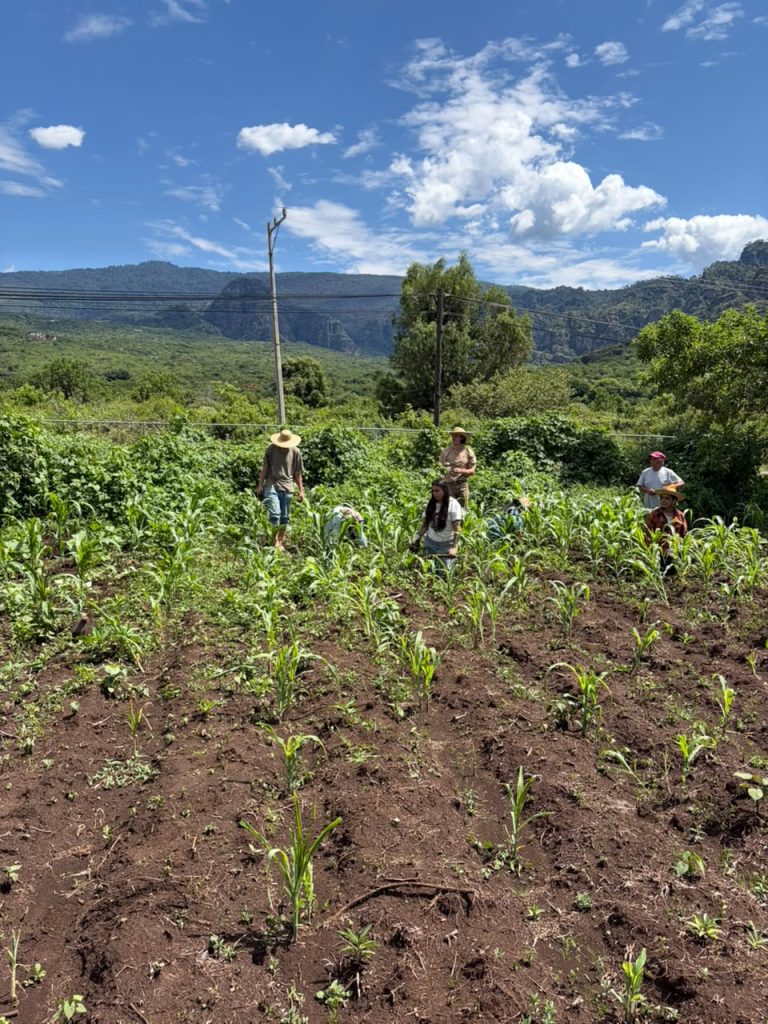
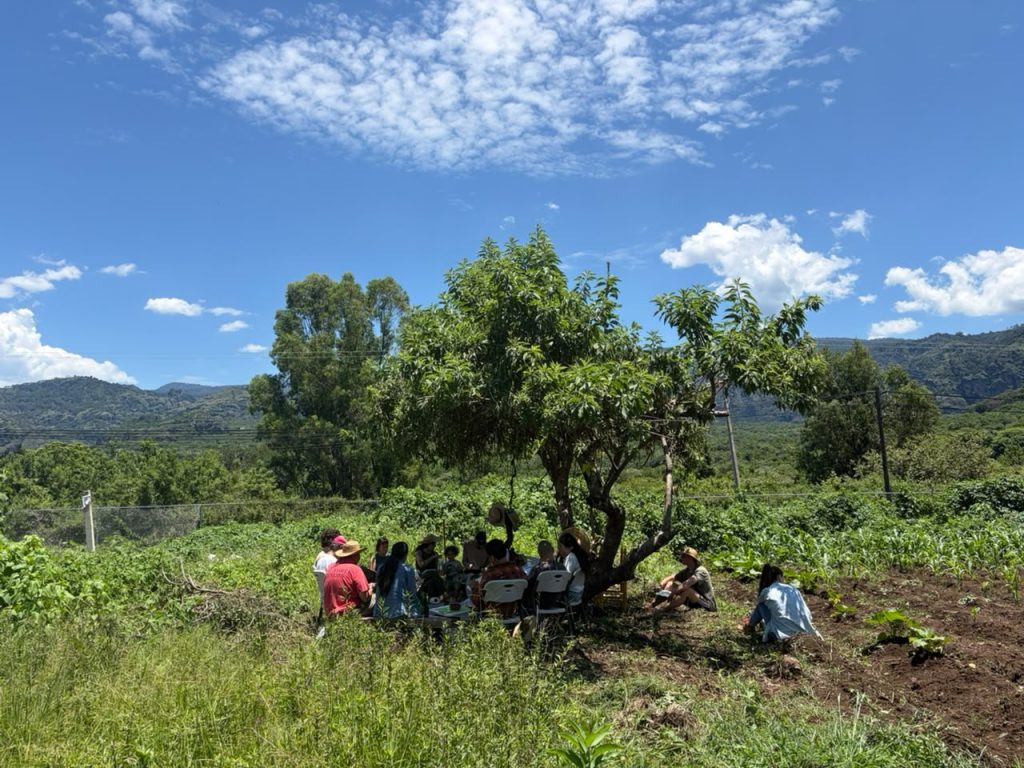
Back in July, we took some Iguana Abroad Spanish immersion participants to Casa Tecmilco to help plant organic corn in the community garden.
Members of the local community got involved, and it was a really special day of learning about traditional Mexican corn-planting methods. By the end of the day we had collectively planted over eight hundred corn seedlings.
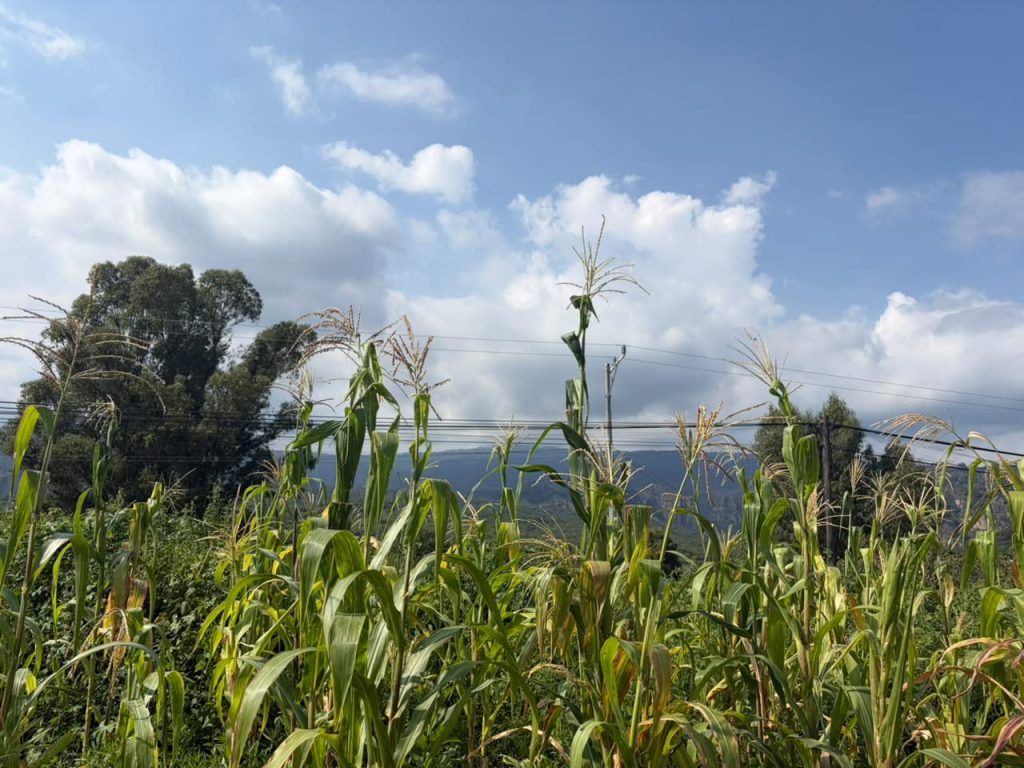
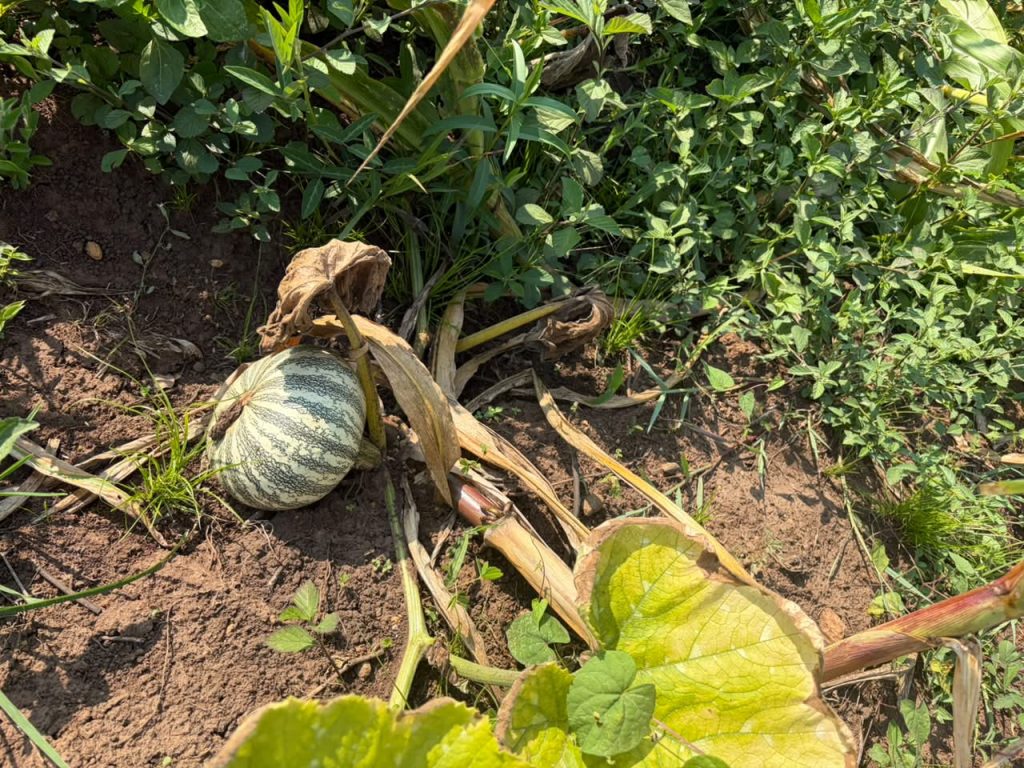
But sadly “El Niño” has affected the harvest at Casa Tecmilco.
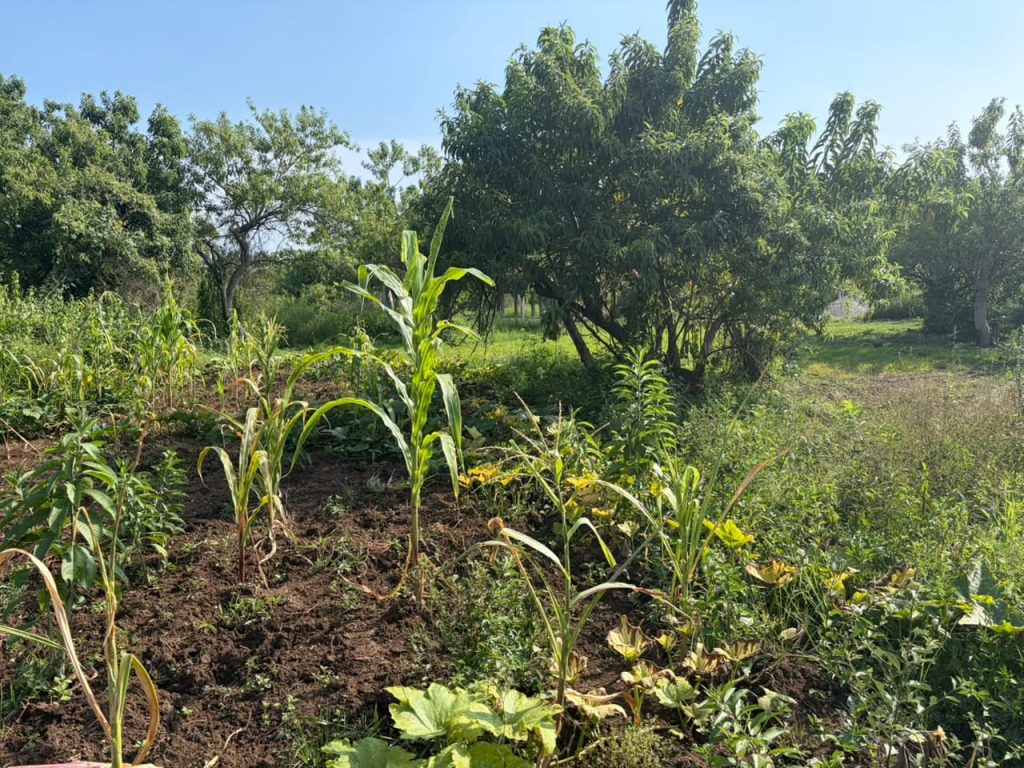
In late September, when normally we would be almost ready to harvest the corn, the unseasonably dry weather has meant that many of the plants are smaller than usual, and some have died altogether.
The impact on local Mexican farmers
The organic garden at Casa Tecmilco is luckily not an essential food source for any of the villagers.
Unfortunately, this is not the case for many of the farms in Tepoztlán, Amatlán and elsewhere in Morelos.
Many farmers in Morelos state are suffering from the prolonged period of dry weather. In many places, harvests are smaller than usual, and in some areas crops have failed altogether.
The situation is serious enough that the Government of Morelos has activated emergency protocols and agricultural insurance to support farmers affected by the lack of rain. In a September 2026 report, the state government said that some of the areas surveyed had suffered losses of 70% or more, although it stressed that these figures did not yet represent an estimate for the state as a whole. Rain-fed maize corn has so far been among the crops most affected.
For rural communities that depend on seasonal rainfall for their crops, a poor harvest can have serious consequences. The unusually dry conditions of 2026 are therefore creating a particularly difficult year for many agricultural communities across Morelos.
For our students, it has been a reminder that visiting rural Mexico isn’t simply about seeing beautiful landscapes and experiencing traditional activities. It is also an opportunity to understand the challenges faced by the communities who live and work here.
What does El Niño mean for Tepoztlán?
For visitors to Tepoztlán, the effects of El Niño might not always be immediately obvious.
The mountains are still green, the days are warm and sunny, and Tepoztlán’s famous landscape remains as beautiful as ever. But for the people who live and farm here, the difference can be much more significant.
The summer rains are an important part of the agricultural cycle in Morelos. When those rains fail, or arrive at the wrong time, the consequences can continue long after the clouds have disappeared.
That’s one of the things we value about taking our students beyond the usual tourist experiences in Mexico. Visiting places such as Casa Tecmilco gives our students the opportunity to learn about Mexican culture and rural life directly from the people who live here.
When we planted those corn plants in July, we expected to return later in the year and see a healthy crop ready for harvest. Instead, the dry conditions have given us a very different lesson.
For us, this is one of the most important parts of Spanish immersion: learning Spanish while seeing, experiencing and understanding the realities of everyday life in Mexico.
And, hopefully, the rains will return soon.
Community and Resilience in Tepoztlán
The situation also reminds us why community projects such as Casa Tecmilco are so important. Traditional knowledge, sustainable agriculture and community cooperation can all play a role in helping rural communities adapt to a changing climate.
We don’t know yet what the rest of 2026 will bring. But when we next visit Amatlán with our students, we’re hoping to see the garden green again — and perhaps plant another crop.