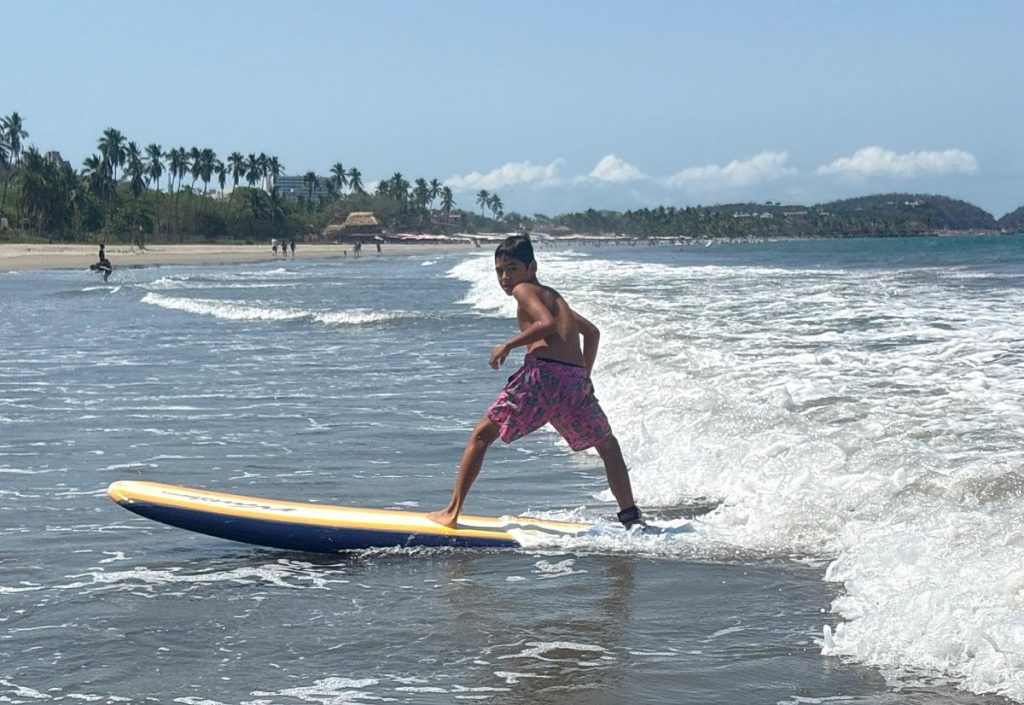
Thinking of staying in Mexico after completing your Iguana Abroad Spanish immersion program? Attracted by the idea of using your newly learned Spanish in a new environment, learning a new skill and exploring more of what Mexico has to offer?
Since our first Iguana Abroad Spanish immersion program back in February 2020 we’ve lost count of how many of our students have asked us for recommendations about ideas for what to do after their program ends. Of course, many Iguana Abroad participants like to return home after their Spanish immersion program finishes – either to return to their jobs, studies or families, or maybe simply to recharge their batteries and rest at home after an intense few weeks in Mexico – but many like to stay in Mexico, continue exploring this vibrant country and – most importantly – keep practicing their Spanish.
We have also noticed that many of our students have asked about recommendations for surf schools.
And as keen recreational surfers ourselves, with over a decade of experience exploring Mexico’s best beaches in our free time, we’ve certainly developed a few personal favorites.
So here goes – here is our personal selection of Mexico’s best surf schools. We hope that some of you may find this list useful!
These are some to consider, in no particular order.
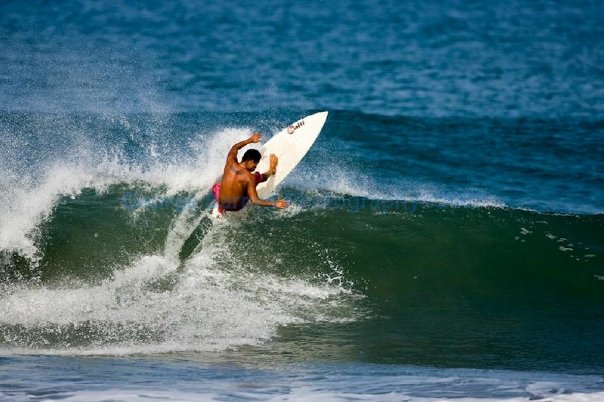
Zicazteca Surf School, Puerto Escondido, Oaxaca
We love the Oaxacan coastline and you can’t mention Oaxaca’s surf culture without talking about playa Zicatela in Puerto Escondido.
If you’re looking for a surf school with a genuinely local connection to Puerto Escondido, Zicazteca Surf School is a particularly interesting option. The school was founded by Julio Soto Noyola, a Puerto Escondido native whose family has lived in the area for generations, and Julio has spent his entire life surfing the waters around Zicatela. His own surfing story apparently began as a child, when he and his brother would catch waves on a broken piece of boogie-board foam — not a bad way to start a lifelong relationship with the ocean!
What we particularly like about Zicazteca is that it feels much more personal than a large commercial surf operation. Julio’s approach is centred around safe, friendly and enjoyable lessons, particularly for beginner and intermediate surfers, and he knows the local beaches and conditions extremely well. Lessons can also be conducted in either English or Spanish, which makes this an especially nice option for anyone coming to Mexico after an immersion programme and wanting to keep practising their Spanish while learning to surf.
And there is a nice creative side to Julio too: alongside surfing, he is an artist who has painted surfboards, murals and designs for local projects. So if you’re spending some time in Puerto Escondido after your Spanish immersion programme, Zicazteca offers a chance to learn from someone who isn’t simply running a surf business here — he’s a local surfer, artist and part of the community who has spent his whole life around these waves.
👉 Visit the Zicazteca Surf School website to find out more.
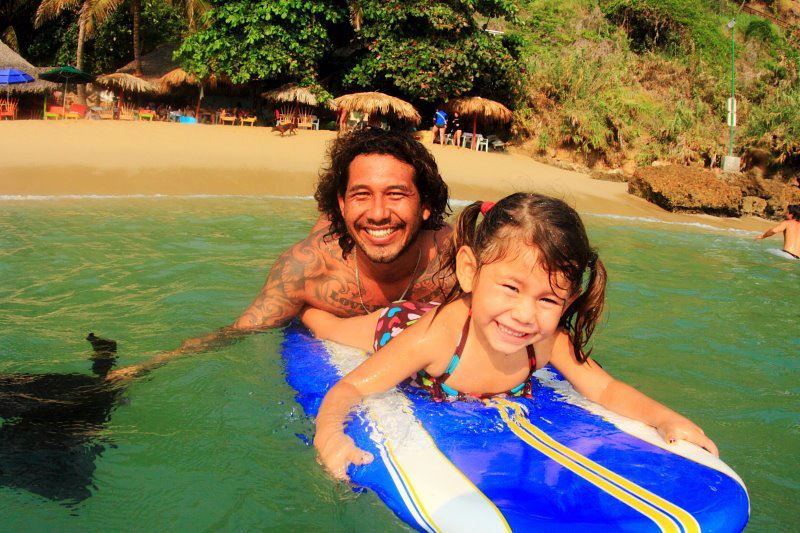
Las Palmeras Surf Resort, Playa Brasil, Salina Cruz, Oaxaca
If you’re looking for somewhere that feels genuinely connected to the local surfing community, Las Palmeras Surf Resort is a particularly special option. It is the first locally owned and operated surf resort in Salina Cruz, and the story behind it is very much a family one. Head surf guide David Ramirez was born and raised in Salina Cruz and has been working as a surf guide since 1992. He now runs the resort alongside his wife, Karla, and their two sons, Dylan and Zion, with the family living right here in the area. Their philosophy is wonderfully simple: they want guests to feel more like friends than clients.
What we particularly like about Las Palmeras is the combination of local knowledge and the sheer variety of surfing around Salina Cruz. The resort sits directly on Playa Brasil, between the famous point breaks of Punta Conejo and Punta Chivo, and the team searches the coastline each day for the best conditions. With David having spent more than three decades guiding surfers here, you’re not simply being taken to the same beach every day — the guides know the coastline extremely well and can choose different waves depending on your experience and the day’s conditions.
And there is something particularly appealing about the atmosphere at Las Palmeras. This isn’t just somewhere to turn up, surf and leave again: the family has built a beachfront home and resort where guests eat together, spend time by the pool and get to know the people who live and work there. Karla is also passionate about cooking and dancing, and the resort provides three meals a day, including traditional Oaxacan food. For anyone finishing a Spanish immersion programme and wanting to experience a completely different part of Mexico while continuing to use their Spanish, a few days with the Ramirez family on the Oaxacan coast could be a pretty memorable way to finish your Mexican adventure.
👉 Visit the Las Palmeras Surf Resort website to find out more.
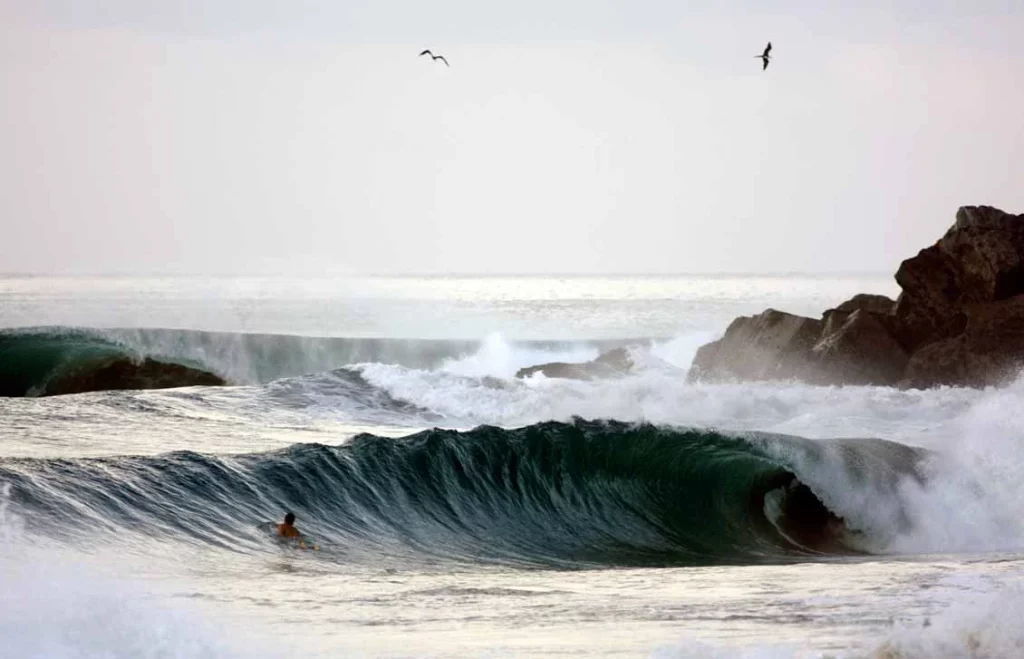
La Cruz Surf School — La Cruz de Huanacaxtle, Nayarit
If you’re looking for a surf school in the Banderas Bay area, La Cruz Surf School is a nice option for experiencing some of the area’s local surf culture without going for a large, commercial operation. The school works with local instructors who know the waves around the bay well, and lessons are kept relatively small, with private, two-person and small-group options available. What particularly appeals to us is the flexibility: rather than simply taking every student to the same beach, the instructors can choose the best available spot depending on the conditions and the surfer’s level.
What makes the area especially interesting is that La Cruz de Huanacaxtle sits right in the middle of the Riviera Nayarit surf scene. You’re within easy reach of several different breaks, including La Lancha near Punta de Mita, and the school offers a free shuttle with every lesson covering La Cruz, Bucerías, Sayulita and Punta Mita. La Lancha itself is particularly appealing for beginners, with gentler waves, warm water, a sandy beach and jungle-covered surroundings.
Another thing we like about this surf school is the way they keep the lessons small and personal. You can book a private lesson, go with a friend or partner, or join a small group of just three to five people, so you’re not simply thrown into a big class of beginners. They also provide the surfboard and equipment, and the instructors tailor the session to your level and goals. Most importantly, they say they’ll choose the best available surf spot depending on the conditions rather than sticking rigidly to one beach — a pretty useful approach when you’re learning to read the waves.
For someone who has just finished a Spanish immersion programme and wants to continue exploring Mexico, this could be a particularly fun way to spend a few days. You get the relaxed atmosphere of a Pacific coast town, plenty of opportunities to practise your Spanish, and the chance to learn a completely new skill while exploring some of the beautiful beaches around Banderas Bay.
👉 Visit the La Cruz Surf School website to find out more.
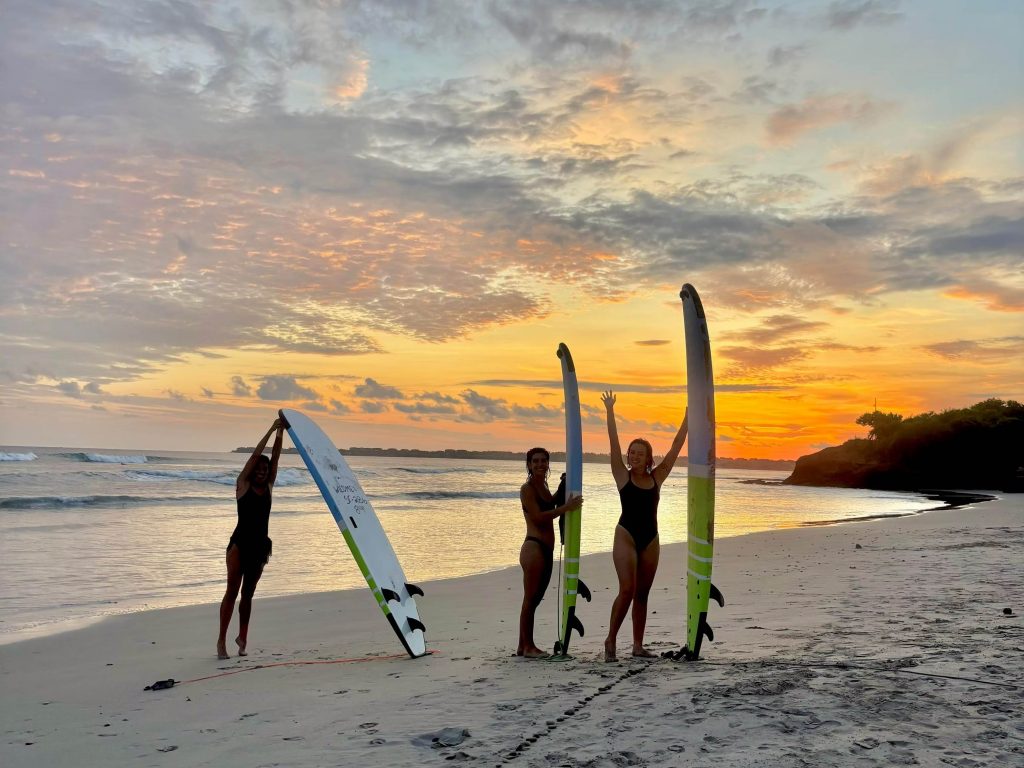
Marea Surf School — Sayulita, Nayarit
If you’re looking for a surf school in Sayulita with a genuinely local and personal feel, Marea Surf School is one that caught our attention. The school started in Sayulita in 2015 with little more than an umbrella and four surfboards, with the idea that a surf school should feel more like a community than a transaction. A decade later, they’ve grown into a small surf shop in the centre of town, but they say they’ve deliberately kept the same family-owned approach and small-team atmosphere. We love that story — particularly because Sayulita is a place where it’s easy to see how surfing has become such an important part of the local culture.
What particularly appeals to us about Marea is their emphasis on small groups and proper coaching. Groups are limited to a maximum of four surfers per instructor, while private and semi-private lessons are also available. Lessons take place on Sayulita’s main beach, which has a sandy beginner break as well as more challenging left and right waves for intermediate and experienced surfers. Marea also takes students out to La Lancha, a quieter beach about 25 minutes away, where the waves tend to be longer and there are fewer crowds.
And there’s something particularly nice about the way Marea describes what they want their students to experience: they want people to feel like family rather than customers. That seems to fit Sayulita particularly well. It’s the sort of place where you can spend the morning learning to surf, wander into town for lunch afterwards and then find yourself chatting to other travellers or locals over a drink as the sun goes down. For anyone finishing a Spanish immersion programme and wanting to keep exploring Mexico while practising their Spanish and learning something completely new, a few days surfing with a small local school like Marea could be a pretty perfect next chapter.
👉 Visit the Marea Surf School website to find out more.

Mario Surf School — Los Cerritos Beach, El Pescadero (near Todos Santos), Baja California Sur
For a smaller, more low-key alternative to the bigger Cabo and Sayulita operations, Mario Surf School on Cerritos Beach (just outside Todos Santos, in the Pescadero area of Baja California Sur) is a solid option. It was founded in 2008 by Mario Becerril, and the school has stayed centred on his approach to personalized instruction — lessons are built around private and small private-group formats rather than large-scale group classes, with sessions tailored to whatever level the surfer is coming in at.
Cerritos itself is part of what makes this a nice pick if you’re after something quieter: it’s a smooth, sandy-bottomed beach with gentle, forgiving waves, a fair bit calmer and less commercial than the surf towns further south. The school also seems to take its role in the local community seriously — beyond lessons, they run the Mario Surf School Foundation, and their blog has documented local initiatives like community beach-cleanup days around Todos Santos, with local hotels and businesses pitching in alongside them.
It’s a more understated operation than some of the flashier schools nearby, but that’s part of the appeal — Mario Surf School reads like a small, owner-led business that’s been doing the same thing carefully, on the same beach, for close to two decades.
👉 Visit the Mario Surf School website to find out more.
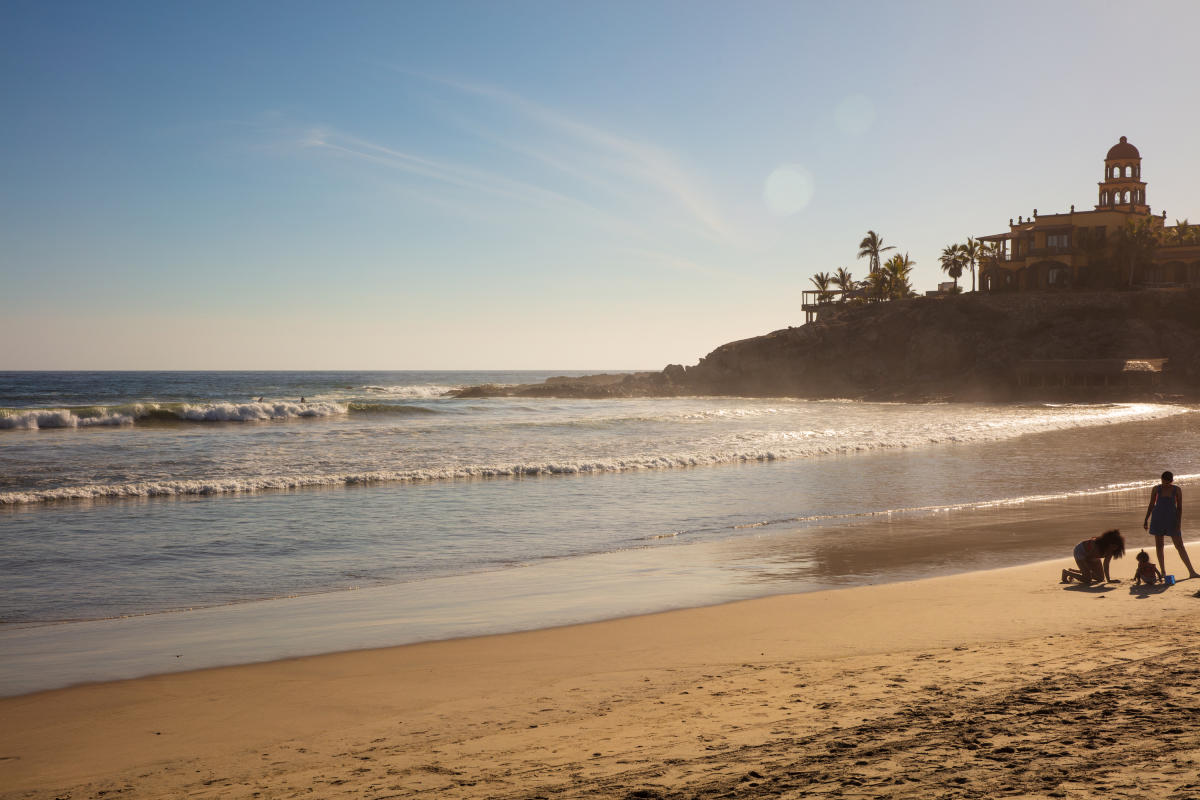
Ticla Surf School — La Ticla, Michoacán
If there’s one surf destination on this list that feels particularly different from the others, it’s Ticla Surf School. La Ticla is a small coastal community on Michoacán’s Costa Nahua, and what makes the place so special is that tourism here is closely connected with the Indigenous community of Santa María Ostula. Rather than being a conventional resort destination, La Ticla has developed a much more community-based approach to tourism, with local residents involved in accommodation, food, surfing and the protection of the surrounding environment.
The setting is spectacular. La Ticla sits where the Río Ostula meets the Pacific, with the river, jungle-covered hills and long stretches of relatively undeveloped coastline all coming together around the beach. It’s a world away from the big resort areas of Mexico’s Pacific coast, and that’s exactly what we love about it. The surf is the main attraction, with a famous point break that can produce long rides, while the beach itself remains wonderfully rustic. There are simple cabañas, camping areas, palapas and local restaurants rather than rows of hotels and apartment complexes.
What makes the surfing here particularly meaningful to us is that the community itself has embraced surf tourism while maintaining a strong connection to its land and traditions. The local community manages the tourist facilities and has developed ecotourism around the area, with an emphasis on protecting the natural environment. Surf lessons are also offered by instructors from the region, so learning to surf here means spending time in a place where surfing has become part of a much broader community-run tourism project.
For us, that’s what makes La Ticla such an interesting destination after a Spanish immersion programme. You’re not simply going somewhere beautiful to learn to surf; you’re experiencing a very different side of Mexico, meeting people from a local Indigenous community and spending time in a part of the country that has remained remarkably untouched by mass tourism. If you’re the sort of traveller who prefers a hammock, a simple beachfront cabaña and an incredible sunset to an all-inclusive resort, La Ticla is definitely worth putting on your list.
👉 Visit the Ticla Surf School Facebook page to find out more.
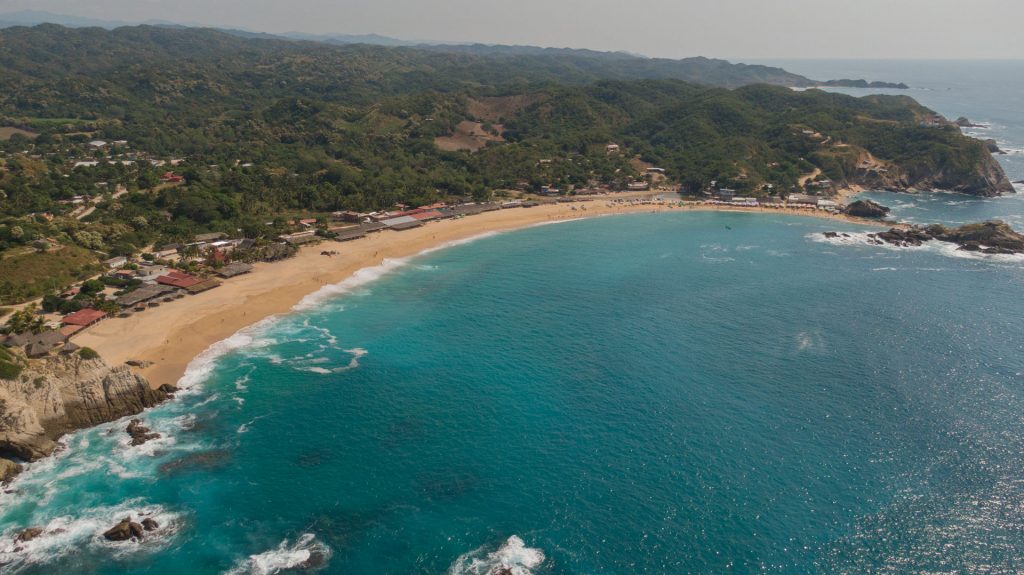
Fuga Surf Camp — La Saladita, Guerrero
If you’re looking for somewhere that combines surfing with a really relaxed Pacific-coast experience, Fuga Surf Camp in La Saladita is an interesting option. La Saladita is famous for its exceptionally long left-hand wave, making it particularly well suited to longboarding, and Fuga has built one of its main experiences specifically around women who want to improve their longboarding in this beautiful part of Guerrero. Their Women’s Longboard Surf Retreat combines daily coaching with surf-skate sessions, video analysis and plenty of time in the water, while accommodation is right by the ocean.
What particularly caught our attention about Fuga is the women’s retreat concept. Rather than simply offering women-only surf lessons, the retreat is designed as a complete experience for women who want to spend several days surfing, improving their technique and enjoying La Saladita together. There’s something very appealing about the idea of waking up beside one of Mexico’s best longboard waves, spending the morning in the water and then having the rest of the day to relax and explore. And because La Saladita is a relatively small, laid-back surf community rather than a major resort destination, it feels a world away from the busier tourist areas further north on the Pacific coast.
And La Saladita itself is a big part of the attraction. The wave can peel for hundreds of metres along the point, and the warm water, palm trees and relatively undeveloped coastline give the whole place a wonderfully relaxed atmosphere. Fuga also offers experiences beyond surfing, including trips to less-crowded nearby breaks and fishing adventures with local fishermen, which gives you an opportunity to see a little more of the area beyond the main surf break.
For someone finishing a Spanish immersion programme and wanting to continue exploring Mexico, La Saladita would be a fantastic place to slow down for a few days. You can spend your mornings practising your longboarding, your afternoons relaxing beside the Pacific and, if you’re staying longer, get out and explore some of the smaller coastal communities and beaches around Guerrero.
👉 Visit the Fuga Surf Camp website to find out more.

Catcha L’Ola Surf School — Ixtapa, Guerrero
If you’re looking for a surf school with deep roots in the Ixtapa-Zihuatanejo area, Catcha L’Ola is a particularly interesting one. The school has been teaching people to surf here since 1990 and is run by Leonel Pérez, who has been an important part of the local surf community for decades. Catcha L’Ola isn’t just about lessons either — Leonel has also been involved in organising local surf events, including the annual Ruco Surf Contest at Playa Linda, which brings together surfers from the local area and visitors from further afield.
One of the things we particularly like about Catcha L’Ola is that Ixtapa is really just the starting point for exploring the area’s surfing. Their usual lessons take place at Playa Linda, but the school also organises surf trips to places such as La Saladita, El Rancho, Troncones, Playa Manzanillo and other breaks along the Guerrero coast. That means you can use Ixtapa as a base while gradually discovering some of the less-developed beaches further along the coast. And with the warm Pacific water, jungle-covered hills and long stretches of coastline around Zihuatanejo, there is plenty to explore when you’re not in the water.
Another thing that appeals to us is the small, local feel of the school. Catcha L’Ola offers private lessons as well as small group sessions, and the instructors work with everyone from complete beginners to more experienced surfers. Playa Linda is particularly convenient for beginners, while the more adventurous can arrange trips to some of the area’s better-known breaks. There’s also a nice tradition behind the business: the Ruco Surf Contest is specifically aimed at older surfers and is as much about friendship and having fun as it is about competition.
For someone finishing a Spanish immersion programme and wanting to continue travelling through Mexico, Ixtapa-Zihuatanejo could make a fantastic next stop. You can spend your mornings learning to surf, explore the beautiful beaches and fishing communities around the coast, and then head further south towards La Saladita and Troncones if you want to keep chasing waves. Catcha L’Ola has been part of that local surf scene for more than three decades, which makes it a particularly interesting place to start.
👉 Visit the Catcha L’Ola Surf School website to find out more.