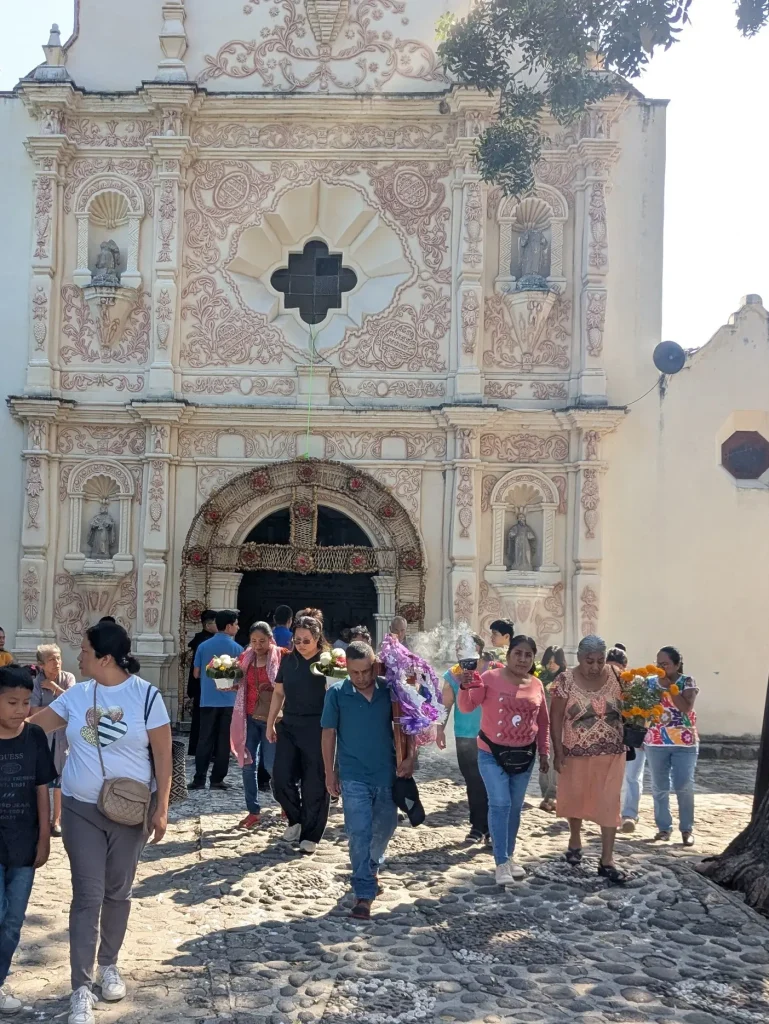
Looking for an off the beaten path, authentic place to visit for Day of the Dead in Mexico? Somewhere without crowds of tourists? This traditional rural village – Coatetelco – close to Mexico City and Cuernavaca, is a great place to visit for Day of the Dead.
Sure – Michoacán, Mexico City and Oaxaca might steal the headlines. But this Day of the Dead location in Morelos has something that the more famous Mexican Day of the Dead locations don’t: authenticity, peace and quiet, and a locals-focused Mexican Day of the Dead experience away from the crowds.
How to get to Coatetelco
Coatetelco is a small village in Morelos state, located near two side-by-side lagoons (called the Laguna de Coatetelco and El Rodeo). It is quite close to Mexico City and Cuernavaca: around 1 hour 50 minutes from Mexico City, and less than 40 minutes from Cuernavaca.
To get there, take the highway down from Mexico City/Cuernavaca and turn off at Alpuyeca. The village is not far from there.
Coatetelco is also located fairly close to the Xochicalco Archeological Zone – so if you are visiting Coatetelco for Day of the Dead, you could turn it into an overnight excursion and visit the ancient Xochicalco pyramids too.
Day of the Dead in Coatetelco, Mexico
Coatetelco is a particularly interesting village. In 2017, it became an autonomous Indigenous municipality (municipio indígena autónomo), giving it a degree of independence from the rest of the state and allowing it to govern itself according to its own customary laws (usos y costumbres). It is one of just three autonomous Indigenous communities in the state of Morelos.
Its name in the Nahuátl language means “the place of the serpents in the stone mounds” or “place where there are erected mounds in honor of snakes”. The etymology of place-names around Cuernavaca (and in Mexico more generally) is always fascinating!
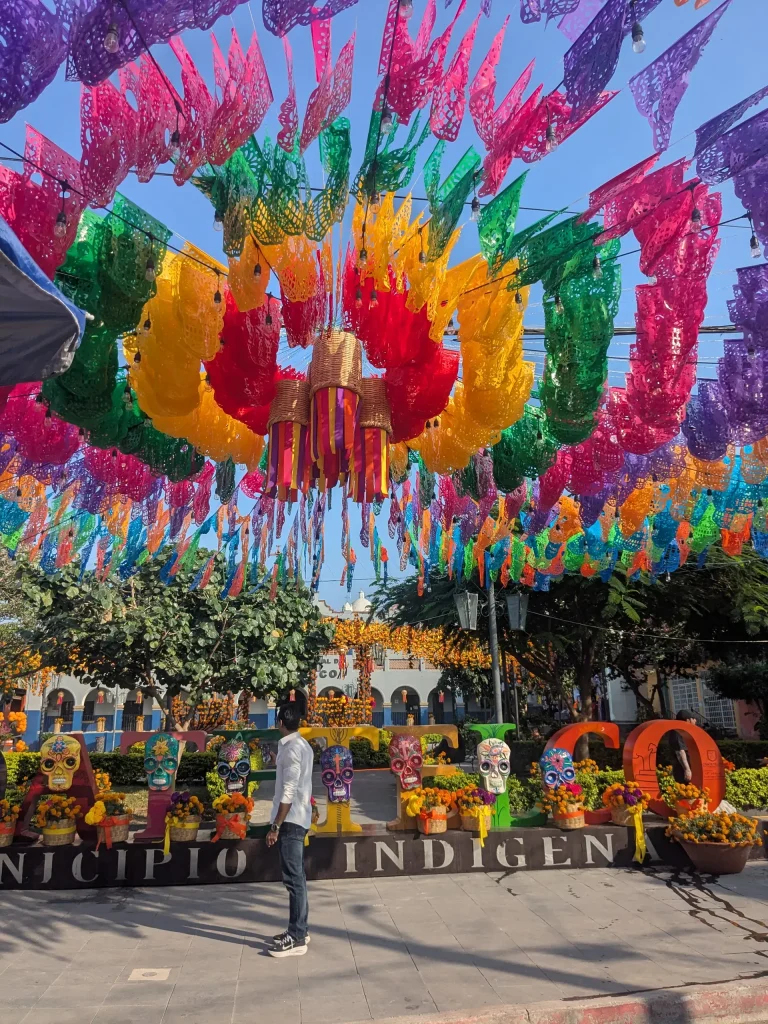
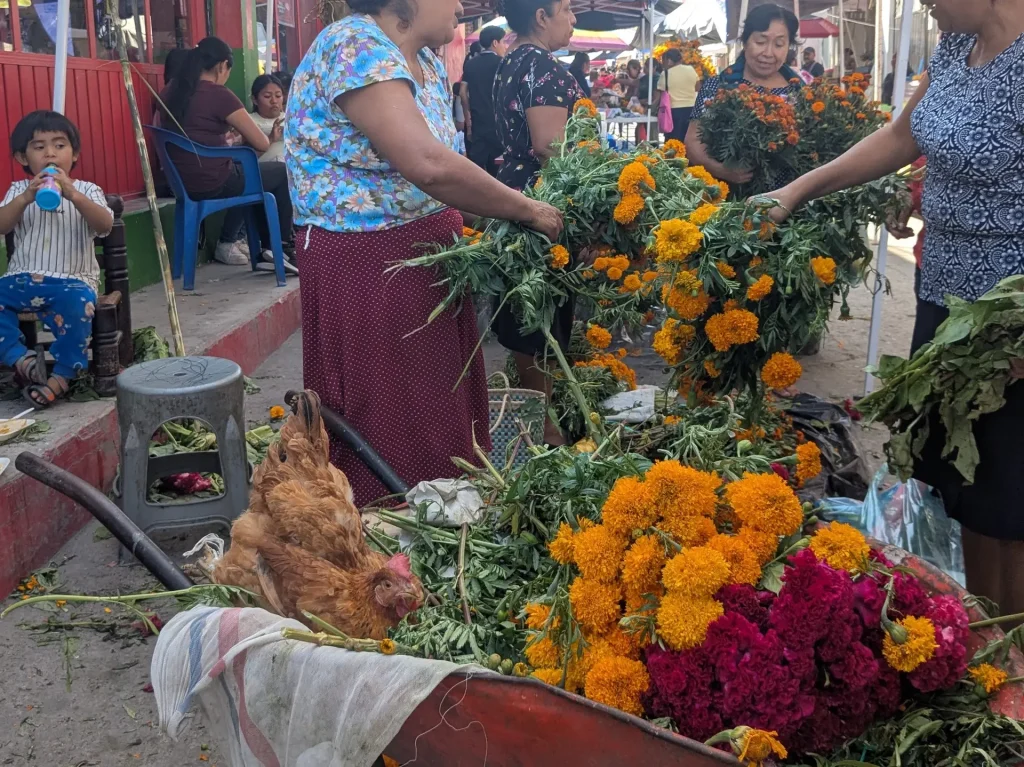
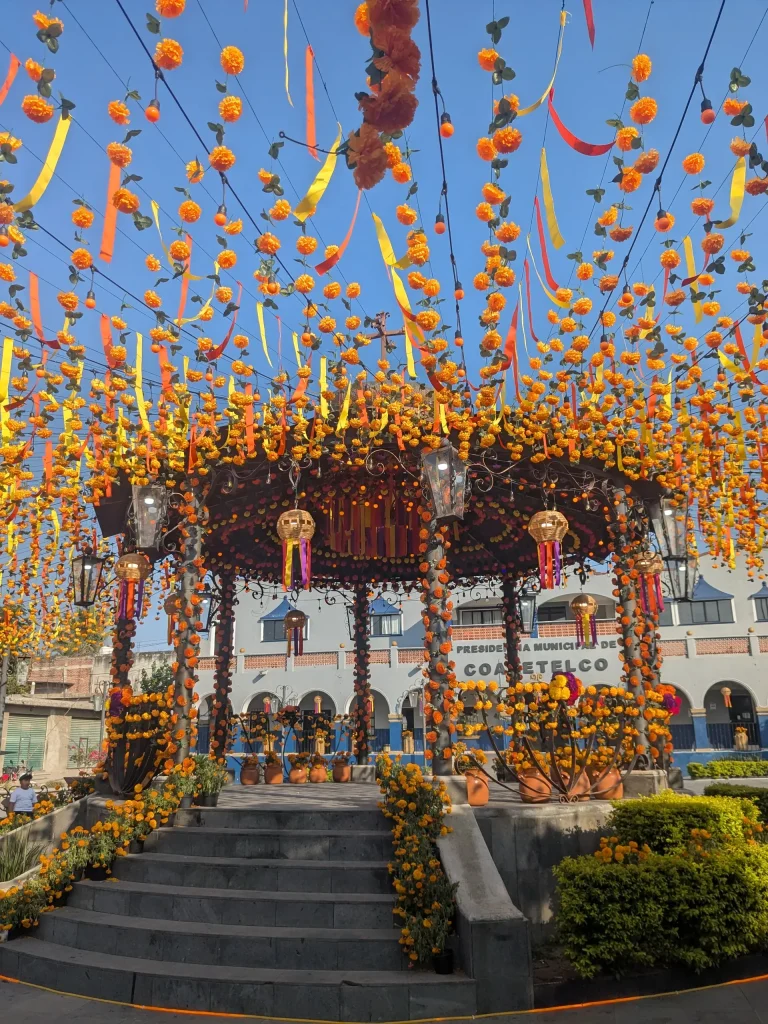
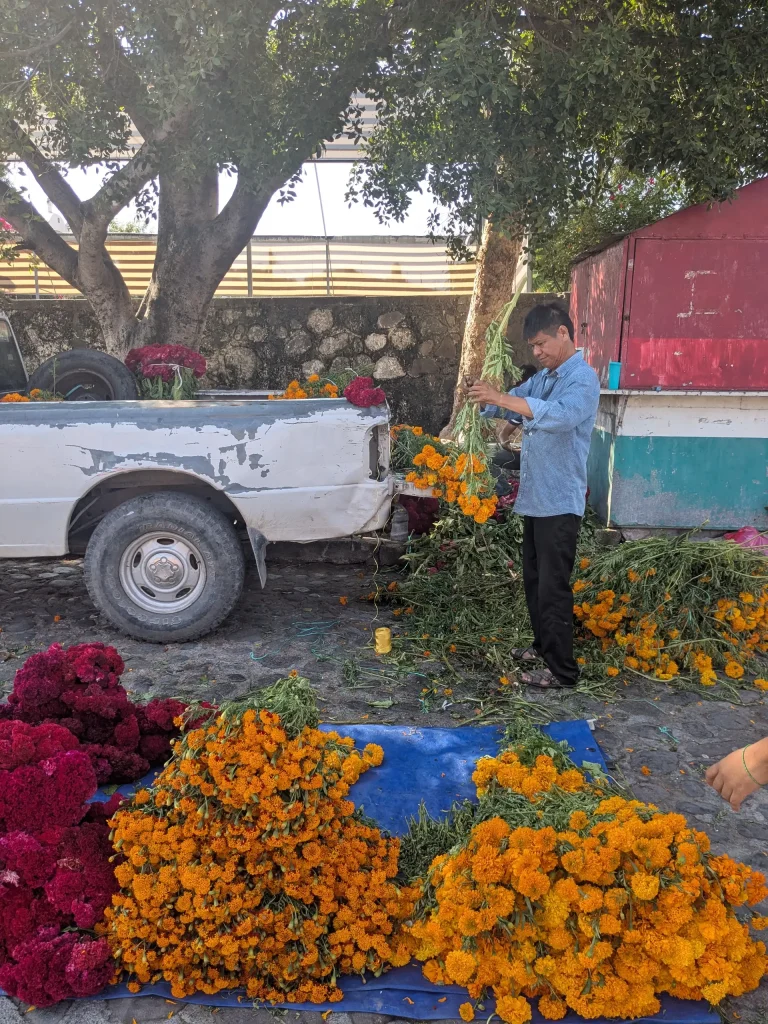
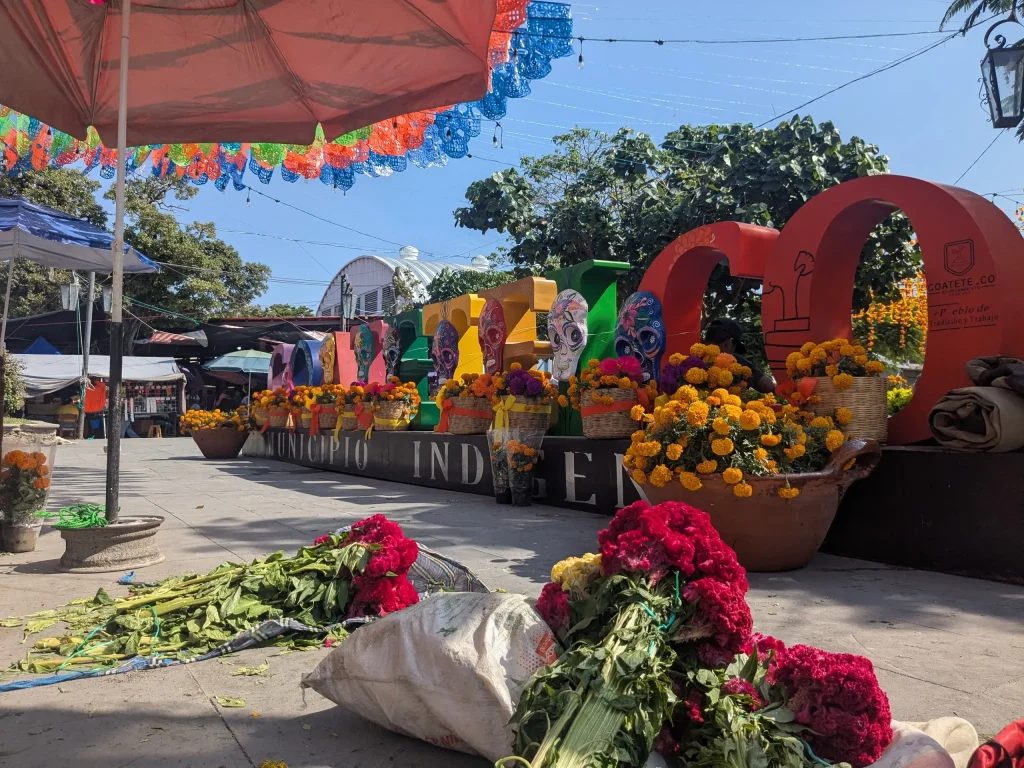
On Day of the Dead the village main square (zócalo) is decorated with brightly colored bunting and orange marigold flowers (cempasúchil). There are marigold vendors everywhere and lots of stalls selling Mexico’s delicious Day of the Dead sweet bread (pan de muerto).
Coatetelco Archeological Zone
The “serpents in the stone mounds” most likely refer to the series of small pyramids and stone platforms in the Coatetelco Archeological Zone. These can still be visited today.
According to local legend, there also used to be a giant carving of a snake with an open mouth at a sacred spot near the lagoon, but this has unfortunately now been lost (or perhaps it was mythological rather than an actual carving).
Are There Really Hanging Day of the Dead Altars in Coatetelco?
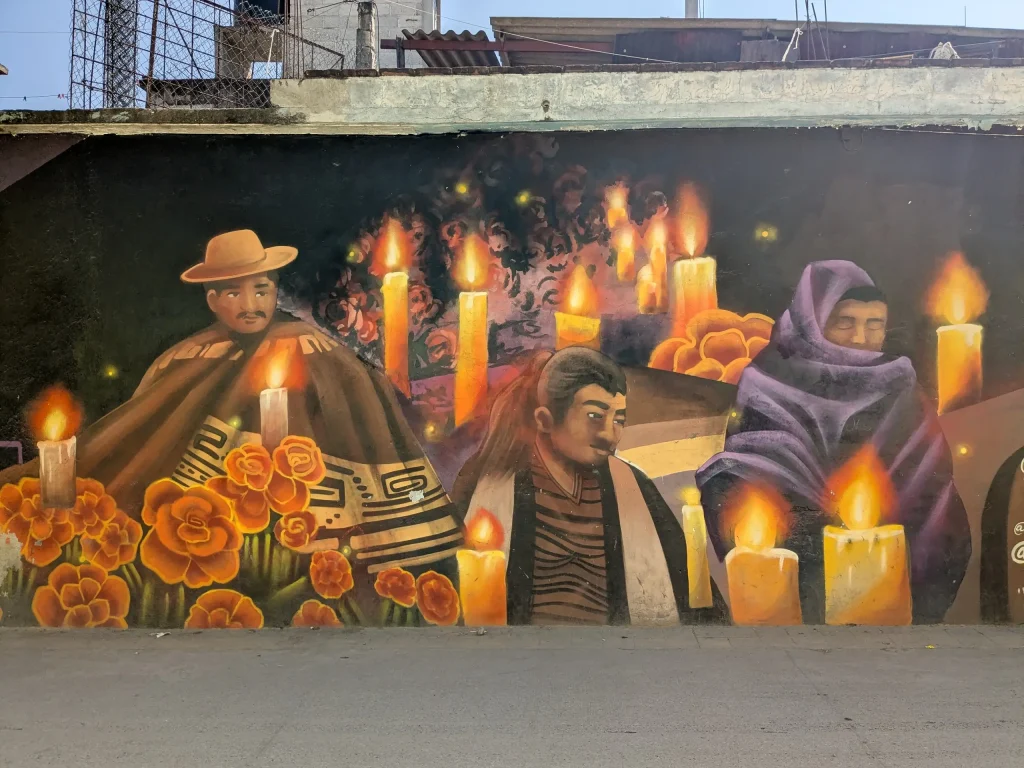
Before visiting Coatetelco, we had read about the unique style of Day of the Dead altar that is traditional here. The altars are called hanging altars (ofrendas colgantes) and, unlike traditional Day of the Dead altars found elsewhere in Mexico, these ones are suspended off the ground by string or ropes. This gives them a ghostly, ethereal presence – especially at night, when they are lit up with candles, and they appear to hover above the ground.
These altars really do exist here and are traditional.
However, because Coatetelco is not a place designed for tourists, these altars are typically located in local people’s houses. They are not on display for visitors to see. Some years Coatetelco does display some Day of the Dead altars in the main square, but this is not the case every year.
This is when you know you are in a truly off the beaten track place for Day of the Dead – when the traditions are fully local and fully authentic. Not a display created for tourists.
In Coatetelco, like in thousands of traditional villages accross Mexico, the meaning of the Day of the Dead altar is very personal to each family.
Respecting traditions
We think that there is something quite beautiful about Day of the Dead remaining a quiet, private, family-focused celebration.
Because in the end of the day, that is what Day of the Dead is about – it is about each family connecting with their deceased relatives. It is not supposed to be a tourist attraction.
That’s why it was such a joy to visit Coatetelco. We met local people, we heard their stories, and we experienced how an ordinary village celebrates this magical time of year.